
News
Biel Mesquida receives the Premi d’Honor de les Lletres Catalanes at the Palau de la Música
Barcelona experienced an evening of literary recognition at the Palau de la Música Catalana. Writer Biel Mesquida received the Premi d’Honor de les Lletres Catalanes, one of the most important awards in Catalan culture, in a ceremony marked by emotion, music and the defence of the language.
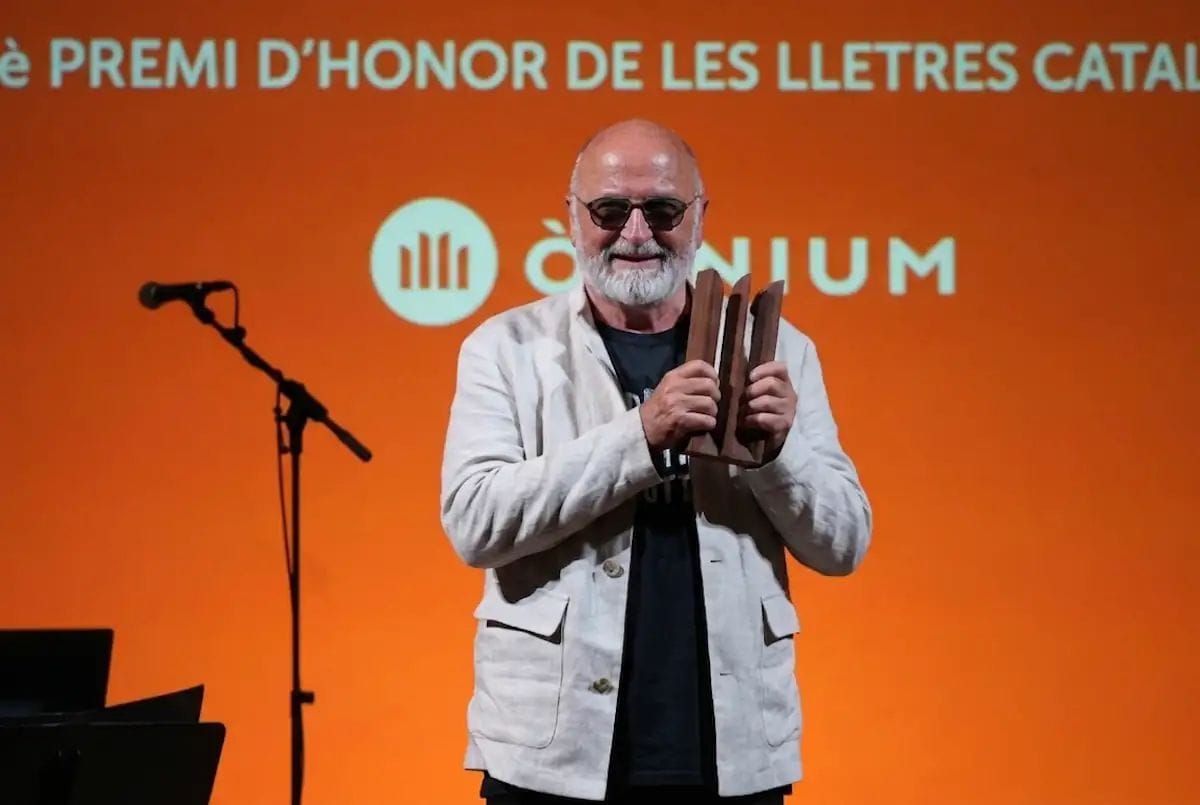
The award recognises a long, diverse career that is difficult to categorise. Mesquida has written novels, poetry, theatre, literary criticism, articles and texts intervening in cultural debate, always with a very personal voice and an intense relationship with Catalan as a language of creative expression.
The jury highlighted precisely that versatility and his role as an unsettling, independent author attentive to the margins. His work broke new ground at times when writing about desire, identity or dissent was not easy, especially in a culture that also had to contend with censorship and a lack of spaces of its own.
Among his best-known books is L’adolescent de sal, which won the Premi Prudenci Bertrana and encountered problems with censorship before publication. Also notable is El bell país on els homes desitgen els homes, a pioneering poetry collection for its treatment of male homosexuality in Catalan, which took years to see the light of day.
The ceremony avoided being merely an institutional event. Lluís Llach and Maria del Mar Bonet performed alongside Borja Penalba, and one of the most moving moments came when Mesquida joined them to sing La balanguera. Poets including Blanca Llum Vidal, Mireia Calafell and Adrià Targa also took part, reading verses by the writer being honoured.
In his speech, Mesquida championed the unity of the Catalan language and the role of teachers in passing on culture. He also defended Catalan-medium schooling as a space for rootedness, resistance and continuity, at a time when the language debate remains very much present in Catalonia and the Balearic Islands.
The writer adds this recognition to a list of awards that already included the Crítica de la Narrativa Catalana award, the Ciutat de Barcelona, the Premi Nacional de Literatura and the Creu de Sant Jordi. But the Premi d’Honor has a special value: it recognises not just a work, but a life dedicated to literature and Catalan culture.
For Barcelona, the evening at the Palau was more than a tribute to an author. It was a way of recalling that Catalan literature remains alive when it is read, sung, debated and defended in public, through figures who have built their work from freedom and discomfort.