
News
Barcelona will erect monuments to Cerdà, Freddie Mercury and Montserrat Caballé
In 2027, the City Council will launch a new public art plan with sculptures dedicated to Ildefons Cerdà, Freddie Mercury and Montserrat Caballé, as well as calls for emerging artists who will transform Barcelona's squares and streets.
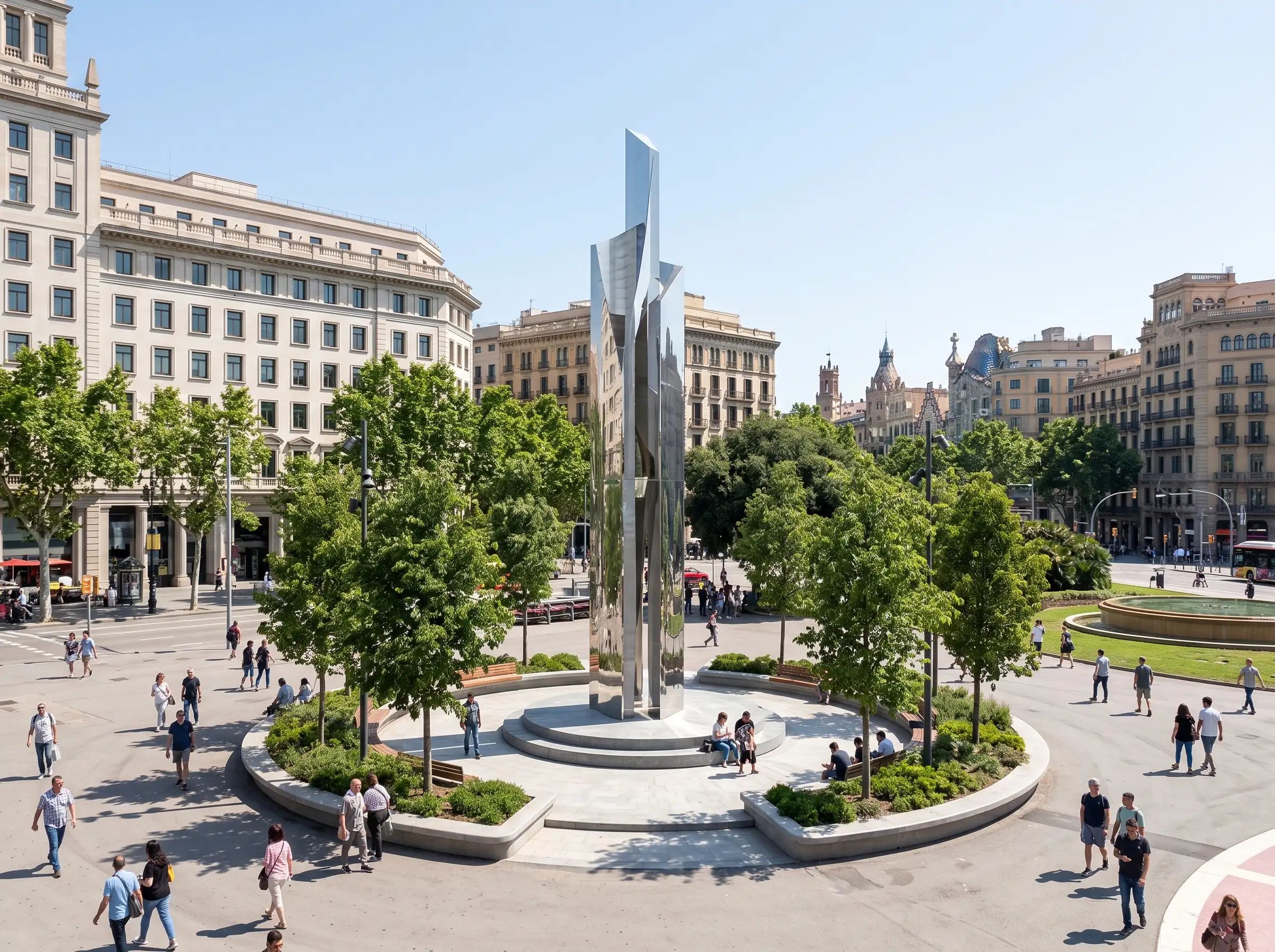
Barcelona is preparing new monuments for 2027. Cerdà, Freddie Mercury and Montserrat Caballé will have sculptures at key points in the city. The plan seeks to turn squares and streets into public-art spaces. There will be opportunities for established and emerging artists. The initial budget is 1.5 million euros.
Barcelona is preparing for a visible change in its urban landscape: in 2027, the city will add sculptures dedicated to iconic figures such as Ildefons Cerdà, Freddie Mercury and Montserrat Caballé. The announcement, made by Mayor Jaume Collboni alongside Culture Councillor Xavier Marcé, marks the beginning of an ambitious municipal plan intended to turn squares and streets into a genuine open-air museum.
The tribute to Cerdà, the engineer who designed the Eixample grid, will be installed in Plaça Universitat and will be ready in the first quarter of 2027, coinciding with the 150th anniversary of his death. The joint sculpture of Freddie Mercury and Montserrat Caballé will be located in Plaça de les Glòries, while the tribute to the city’s entrepreneurs, promoted by Pimec, will be placed in the 22@ district, although its exact location has yet to be defined.
These three pieces will be created by established artists selected through a restricted call. In addition, the plan includes a second call open to local and emerging creators, who may submit proposals for three further sculptures that must also be ready in 2027. In this case, the themes and techniques will be unrestricted but adapted to the proposed spaces, and Barcelona’s art schools will collaborate.
The total budget for both calls amounts to 1.5 million euros, divided between 2026 and 2027. The City Council is already working on a map of the city to identify up to 40 potential locations for future artistic interventions, with the intention of maintaining annual calls and decentralising public art across neighbourhoods.
Consell d’Art Públic, made up of municipal museums, Instituto de Cultura and the office of the Arquitecta Jefa, will coordinate the rollout of this programme, which aims to establish itself as a long-term initiative in Barcelona’s cultural life.
Ildefons Cerdà remains fundamental to understanding contemporary Barcelona. His urban vision, expressed in the design of the Eixample, transformed the city in the 19th century and laid the foundations for its modern growth. The layout of broad, grid-like streets not only facilitated mobility and ventilation but also enabled the integration of new neighbourhoods and the coexistence of different social classes. Today, Cerdà’s legacy continues to influence how Barcelona is conceived and lived in, and his public recognition strengthens the urban identity of the Catalan capital.