
News
Barcelona will replace thousands of plane trees to cope with the heat and provide more shade in the city
The City Council plans to replace more than 24,000 plane trees in the coming years and diversify the tree population to help Barcelona adapt to extreme heat, reduce health risks, and increase shade coverage in response to climate change.
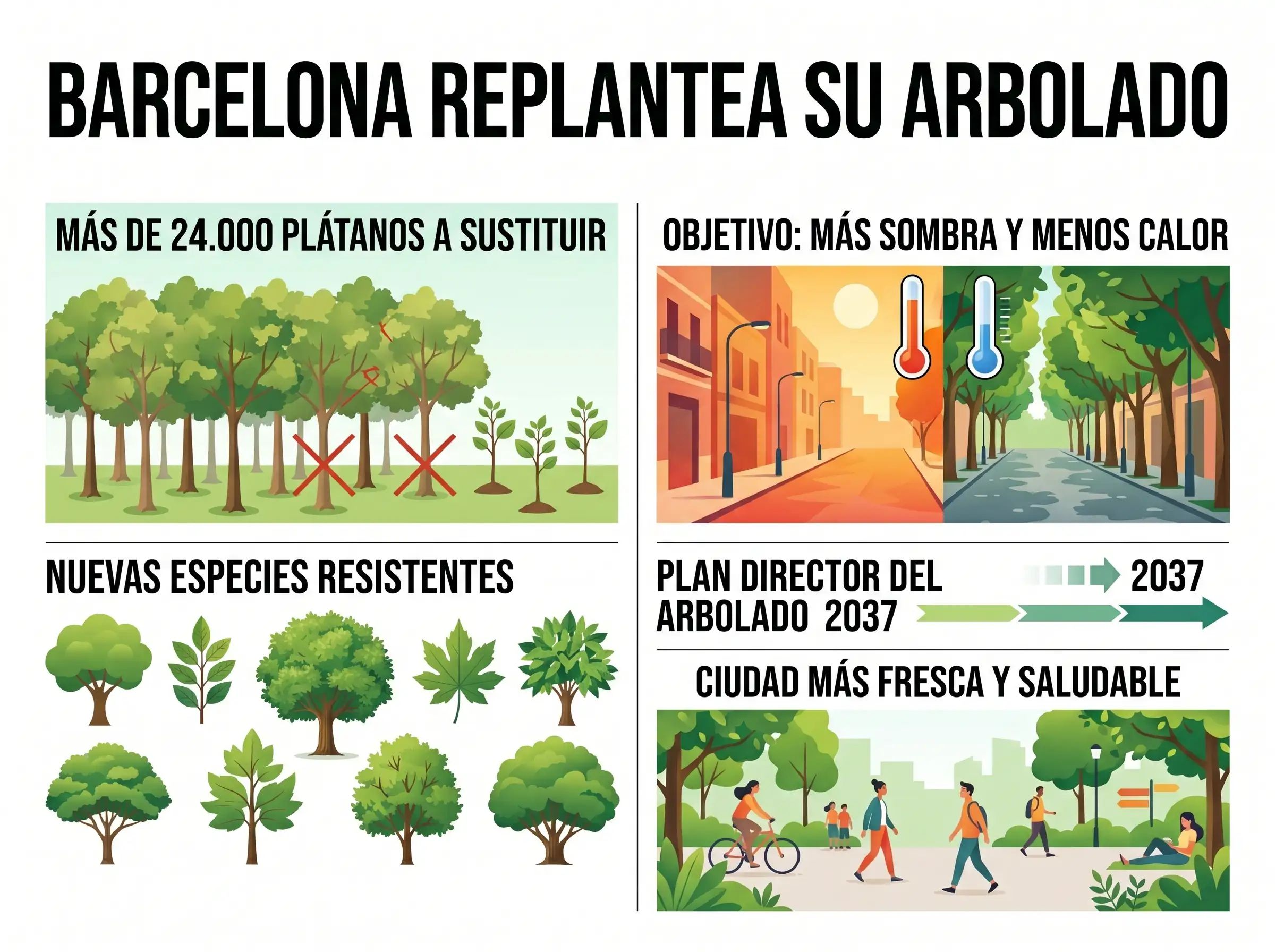
Rising temperatures are forcing Barcelona to rethink its urban tree stock. The City Council plans to replace thousands of plane trees and diversify species. The goal: a cooler, healthier city in the face of climate change.
Extreme heat is no longer an exception in Barcelona, and the transformation of its streets will be visible over the next decade. The increase of 1.5 degrees since the pre-industrial era and the forecast of reaching up to 4 °C more by the end of the century have put the urban tree model under strain. The City Council has decided to accelerate replacement of plane trees, which today account for almost a third of the city’s trees, with species more resistant to heat and less problematic for public health.
Barcelona currently has around 152,000 trees across 13 main species. Plane trees dominate the landscape, closely followed by hackberry trees. However, the Council wants to prevent any species from exceeding 15% of the total, which will mean replacing more than 24,000 plane trees in the coming years. This transition will not be immediate or entail mass felling; instead, urban remodelling and trees’ natural life cycle will be used to introduce new species.
The challenge is ambitious: increase tree cover by 5% so that almost a third of the city is in shade and ensure that 40% of species are adapted to the future climate. To achieve this, trees such as jacaranda and grevillea, which are more heat-resistant, will be prioritised, while species that tolerate cold better, such as black locust and purple-leaf plum, will be reduced. The aim is for each district to have species suited to its specific conditions, since the Raval microclimate is not the same as Vallvidrera’s.
Diversification is key, according to botany experts, who stress the importance of designing multidisciplinary strategies and taking factors such as allergies into account. The aim is thus not only to combat heat, but also to improve residents’ quality of life and health, allowing them to avoid areas with high pollen concentrations at critical times.
The process, however, is full of obstacles. Economic and logistical constraints slow the replacement of species, and the supply of nurseries specialising in warm-climate trees remains scarce in Europe. In addition, cold winters that still occur in the city make mass introduction of Mediterranean or subtropical species difficult. Despite these challenges, the City Council maintains its roadmap for 2037, although it recognises that meeting all targets on time will be difficult.
The Barcelona Tree Master Plan, in force until 2037, is the instrument guiding this transformation. This strategic document not only sets the pace for replacing species, but also supports expanding green space and making it more resistant to pests and climate change. The plan takes account of the reality of each district and seeks to balance warm- and cold-climate species according to the vulnerability of the population and territory to high temperatures.
Urban trees in Barcelona are not merely an aesthetic matter. Their role in reducing temperatures, improving air quality and creating healthy leisure spaces is fundamental to the city’s wellbeing. The transformation ahead will be slow, but it will shape the future of Barcelona’s streets and squares in the coming decades.
The Barcelona Tree Master Plan is one of the city’s most ambitious commitments to climate adaptation. Extending to 2037, it sets concrete goals to diversify species, increase green cover and adapt trees to new weather conditions. It also provides for the participation of experts from different disciplines and the involvement of districts to respond to the specific needs of each area. Its implementation is an example of how cities can anticipate the challenges of climate change and prioritise the health and comfort of their inhabitants.
One factor complicating the process is the shortage of European nurseries specialising in warm-climate trees. Demand for jacarandas, grevilleas and other subtropical species has grown across Europe as cities adapt their tree plans, but the supply of large specimens is not growing at the same pace, forcing the City Council to plan every replacement far in advance.