
News
Can Framis recovers the conceptual period of Robert Llimós
Between 1969 and 1973, Robert Llimós explored new ways of engaging with painting. The exhibition he conceptualised during his lifetime arrives at Can Framis as a tribute following his death in October.
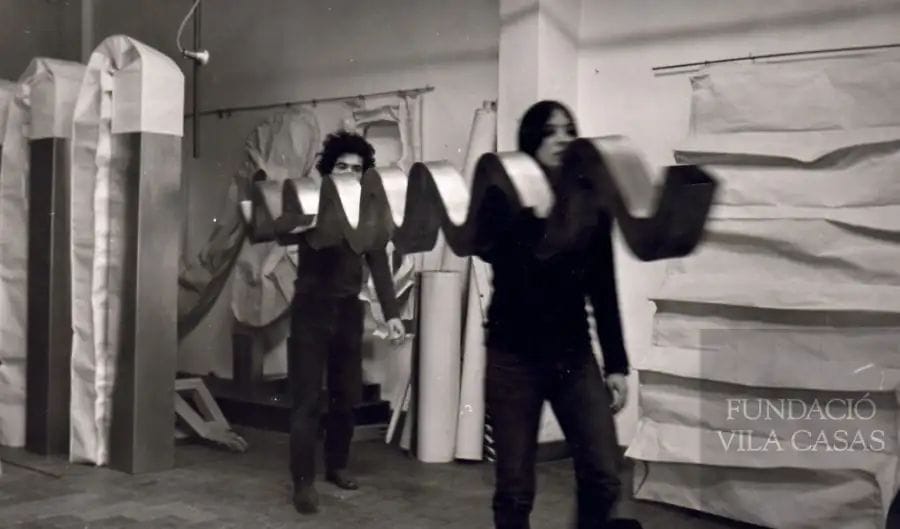
The exhibition at Fundació Vila Casas traces the artist's experimental period and becomes a tribute to his legacy.
Between 1969 and 1973, Robert Llimós went through a brief and intense experimental phase. This period is the focus of the exhibition “És que encara no hi ha prou ulls a la cara?”, which opens at Museu Can Framis.
The artist died on 26 October at the age of 83. The exhibition, conceived with him while he was alive to highlight his work within Catalan conceptual art, now takes on new meaning as a tribute to his legacy.
Four years of experimentation
Curated by Blanca Arias, the exhibition brings together works from the late 1960s and early 1970s. Llimós was unable to take part in the installation, but he did contribute to its conceptualisation.
Arias argues for the artist's continued relevance and invites visitors to explore this period through a variety of materials: metal, canvas, watercolour, and video. For her, those years marked a change in the way of working with painting and, especially, with abstraction.
From conceptual art to figurative painting
Robert Llimós i Oriol was born in Barcelona in 1943. Winner of the Premio Arts Plàstiques from the Generalitat in 1994, he began as a painter of the new figuration and later explored conceptual art between 1969 and 1973.
He later returned to figurative painting with an expressionist style in which colour played a prominent role. His work also includes sculpture and graphic art, as well as murals and posters.
Bernat Puigdollers, art director at Fundació Vila Casas, highlighted Llimós's decisive role in introducing and consolidating conceptual trends during the 1970s. He also emphasised his willingness to try different approaches and incorporate the artistic trends of the time to open up new paths.
Cultural coverage in Barcelona also includes the fifteen years of Mira.