
News
Almost two months a year in front of a screen: how children and teenagers in Spain spend their time
If you add up all the hours that children and teenagers spend in front of a screen, it comes to almost two full months of the year. Mobile phones, tablets, computers or television now add up to an average of 56.9 days of 24 hours each year among those aged 8 to 16 in Spain. And just a few years ago, it was four days less.
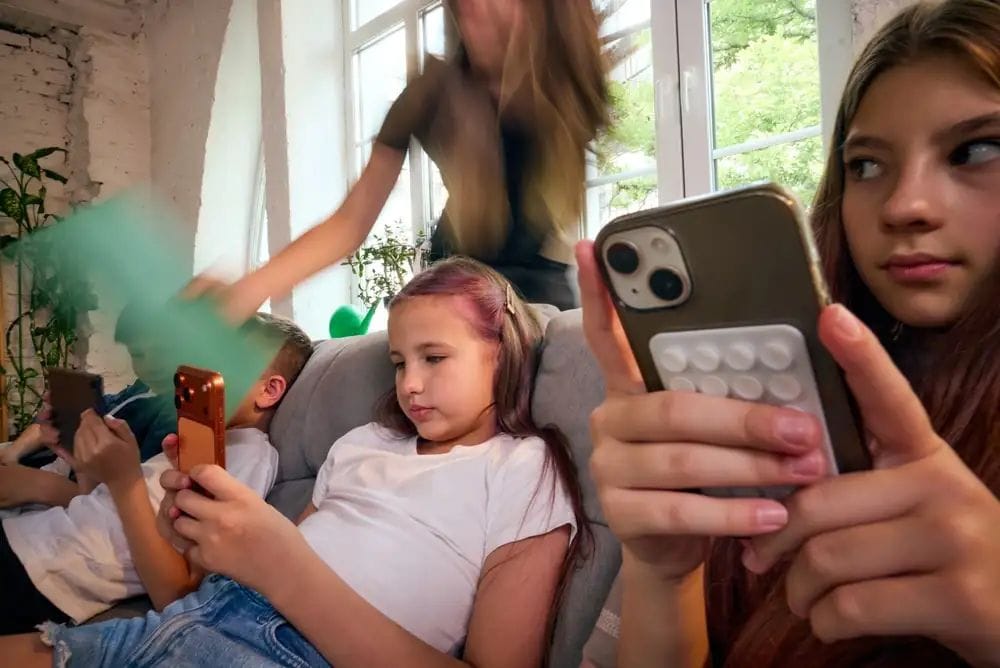
Three hours and 45 minutes. That’s the average amount of time someone aged between 8 and 16 spends on screens each day, according to data analysed by the Gasol Foundation in its PASOS study.
Seen like this, it might just seem like another part of the daily routine. But the figure takes on a different scale when you look at the yearly total: 1,366 hours. Or, to put it another way, 56.9 full days, not counting nights, meals, or breaks. That’s almost an entire summer.
Seventeen more minutes a day might not sound like much. Until you add it up.
A comparison between the PASOS studies from 2019 and 2022 shows where the trend is heading.
In 2019, the average was 3 hours and 28 minutes a day. Three years later, it had risen to 3 hours and 45 minutes. The difference is just 16.9 minutes per day, but by the end of the year, that adds up to more than 100 extra hours.
In total, young people have gone from spending around 1,264 hours a year on screens to about 1,366.
Photo by Andrii Iemelianenko / Shutterstock / FOTODOM
Two hours is already a hard limit to stick to
69.6% of the children and teenagers studied exceed the 120 daily minutes of screen time used as a reference in the report. That’s almost seven out of ten.
And there are two devices that play a particularly big role: the mobile phone and the tablet.
With just these two, almost one in three young people spent more than two hours a day on weekdays in 2022. At the weekend, the proportion rises to 44.7%.
Boys spend more time connected, but girls are closing the gap
Boys still show higher usage. In 2022, they spent an average of 4 hours and 3 minutes a day in front of screens. For girls, it was 3 hours and 27 minutes.
However, the gap between the two groups is narrowing. Since 2019, the increase has been greater among girls: 20.6 more minutes a day, compared to 11.7 minutes more for boys.
Not all households show the same pattern
The report also finds differences linked to families’ socioeconomic situations.
Screen time is higher among young people living in households with a lower average income per person. The same trend appears when their parents or guardians do not have university degrees or are not working.
These differences aren’t limited to weekends: they appear throughout the week and are seen in both editions of the study.
When “a bit of time on the phone” ends up being almost two months
Perhaps the most striking figure in the report isn’t about a particular afternoon or a weekend spent especially online. It’s in the sum of all those small everyday moments.
A video, a game, a series, messages, social media, and another bit of time with the tablet. On their own, they’re just minutes and hours. Together, by the end of the year, they add up to almost 57 full days on the calendar.