
News
Catalonia raises fines for graffitiing trains to up to €900,000
Graffitiing trains in Catalonia can become much more expensive. Parliament has approved reform of the Catalan railway law to toughen penalties for people who paint, damage or alter trains and railway infrastructure, with fines in the most serious cases reaching €900,000.
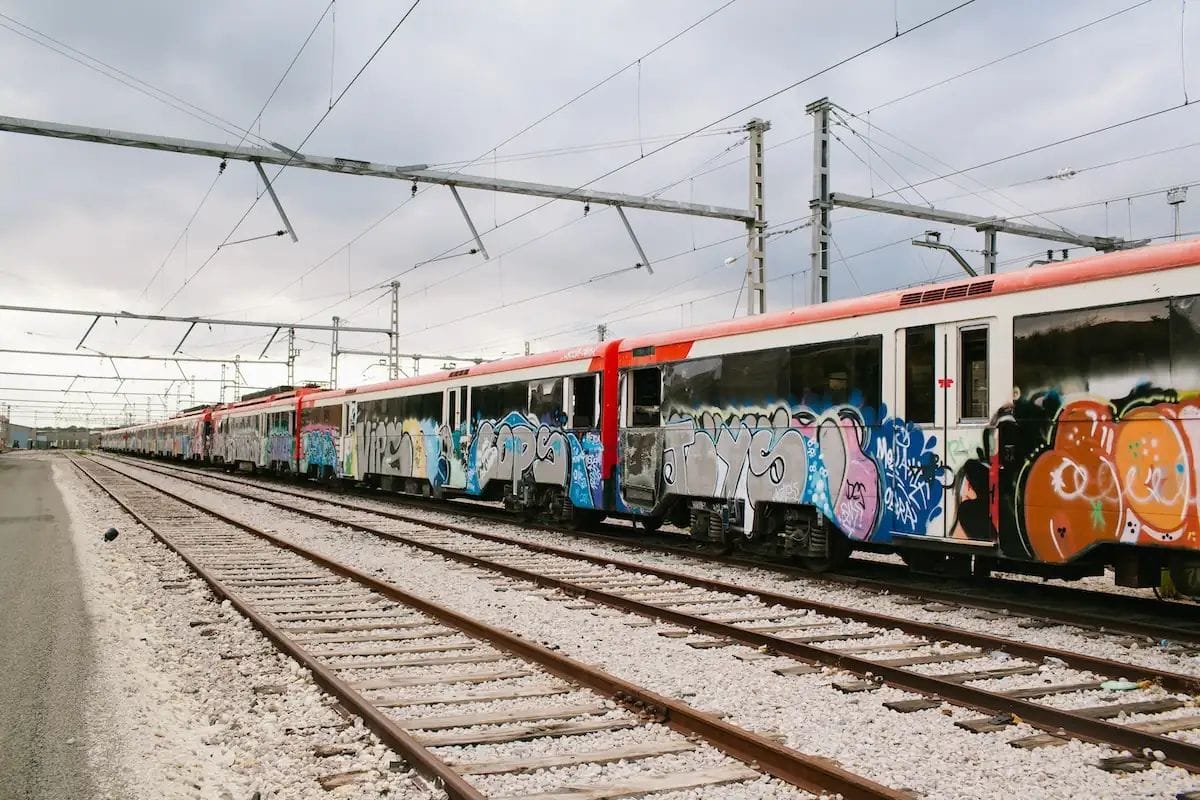
The amendment triples the current penalty regime and establishes three levels of infringement. Minor offences may end in a warning or fines of up to 18,000 euros; serious offences will range from 18,001 to 90,000 euros; and very serious offences will range from 90,001 to 900,000 euros.
The reform has passed with broad support in the Parlament. It was promoted by the PSC and backed by almost all groups, except Comuns and the CUP, who were left alone in their attempt to reduce the scope of the penalties.
The stated aim is to curb a problem that directly affects the network’s day-to-day operation. Graffiti does not only dirty trains: it can also put trains out of service, reduce visibility, force units to be withdrawn and cause delays or lower capacity at times of high demand.
The economic cost is no less significant. Renfe has put annual spending on graffiti cleaning in Catalonia at more than 11 million euros, a very large share of the nationwide total. In addition, in 2024 around 3% of trains were inoperative at some point because of graffiti that affected their use or safety.
The Generalitat and railway operators have been strengthening surveillance at workshops, depots and sensitive points on the network for some time. In recent years, guards, canine units and drones have been used to try to reduce intrusions, although companies in the sector insist that economic penalties were a missing part needed to deter organised groups.
For users, the debate is not only about graffiti. On a network such as Rodalies, where any incident can cause waits, cancelled trains and crowded platforms, every train withdrawn because of vandalism ends up affecting everyday mobility. The new law seeks to convey that idea: damaging a train is not only an attack on a public asset; it can also disrupt the routine of thousands of people who depend on it to work, study or travel around the metropolitan area.