
News
Catalonia puts the first European 6G laboratory into orbit and turns space into its new testing ground
Catalonia has decided not to wait for the future to arrive by land: it has sent it into space.
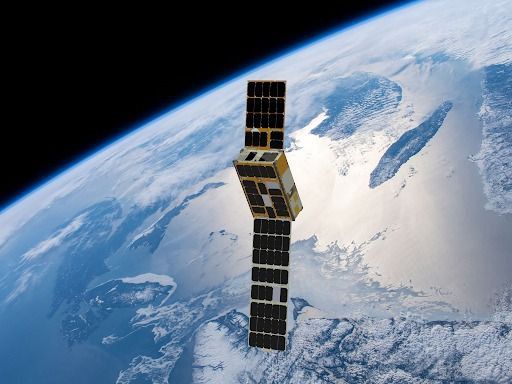
The 6GStarLab satellite, manufactured entirely in the region, is already orbiting Earth after taking off on 28 November from SpaceX’s base at Vandenberg, California. It is not a conventional satellite, but the first open European 6G research laboratory in low Earth orbit, designed to test technologies that do not yet exist on the market.
The mission places Catalonia in an unusual position for a region without a heavy aerospace industry: at the forefront of non-terrestrial networks, those that rely on satellites or high-altitude platforms to do what traditional infrastructure cannot. The satellite will operate as a remote test bed, where researchers and companies can run real experiments without leaving the planet. The first will be operational in early 2026.
Its purpose goes far beyond download speed. Hybrid networks —a combination of terrestrial and non-terrestrial networks— underpin services that until now depend on chance: remote healthcare in remote areas, uninterrupted digital education, fire and disaster monitoring, or the safe deployment of autonomous vehicles. In other words, space technologies to solve earthly problems.
The project is complemented by a pioneering facility: a ground optical station in Móra la Nova, in Terres de l’Ebre, from which tests will be controlled and bidirectional laser communications with the satellite established. It is key infrastructure for transmitting data at high speed and without congestion, with applications ranging from scientific research to civil security.
In a global ecosystem where 6G is still a concept under construction, Catalonia has chosen to get ahead and build a laboratory in which to test theory in real conditions. Not to look at the cosmos, but to improve what happens at ground level.