
News
Chamartín reopens its grand concourse after four years of works
Anyone passing through Chamartín-Clara Campoamor these days will notice the change as soon as they enter. After four years of works, the station has reopened its main concourse with a much larger, brighter space designed to better organise the flow of travellers between Cercanías, high-speed rail, Metro, taxis and other services.
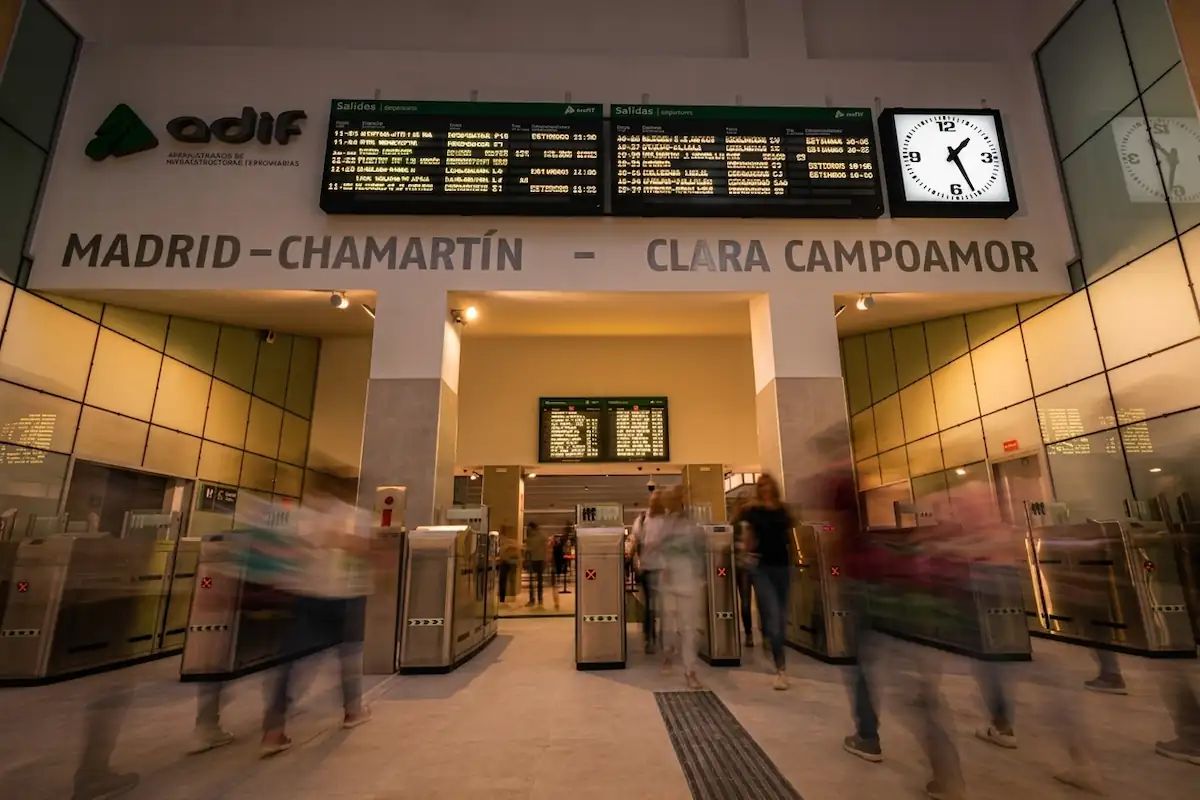
The new concourse covers 18,000 square metres, four times more than before. The large glass vault lets in natural light and protects from rain, while the wider corridors are designed to prevent crowding in a station that serves as an entry and exit point for thousands of people every day.
The layout has also changed. The space is organised into three areas: one for high-speed trains, another for Cercanías, and a common area with waiting space, food outlets, shops, renovated toilets, mobile charging stations, ticket machines, and information and ticket sales offices.
One of the most visible new features is in Cercanías. For the first time, access includes control turnstiles, a measure aimed at better organising entry to the platforms and strengthening security. New LED screens and information panels have also been installed, providing clearer details about arrivals, departures, and platform changes.
The renovation goes beyond the concourse. Chamartín has doubled its capacity for high-speed trains, increasing from six to twelve operational tracks. Beneath the tracks, a new underpass connects with taxis, Metro, VTC, car rentals, and the P2 car park, which should make connections much easier for those arriving in a hurry or with lots of luggage.
The investment is around 560 million euros, with support from European funds. The figure gives an idea of the scale of a project that aims not only to beautify the station, but also to prepare it to handle more passengers and become a stronger rail hub for Madrid and the rest of the country.
Chamartín-Clara Campoamor had been operating for years amid barriers, temporary routes, and a sense of ongoing construction. The reopening of the concourse does not eliminate all the remaining work, but it does give travellers back a station that is easier to navigate and less uncomfortable. For many people in Madrid, the change will be noticeable in something very simple: entering, finding your way, and connecting to another mode of transport without feeling that every journey is a small obstacle course.