
News
The Pabellón Mies van der Rohe hosts open-air cinema this summer
The Pabellón Mies van der Rohe will once again be transformed this summer into an open-air cinema. The Pantalla Pavelló series offers three nights of films connected to Barcelona, with tickets at two euros and limited capacity, in one of the most unique architectural spaces in Montjuïc.
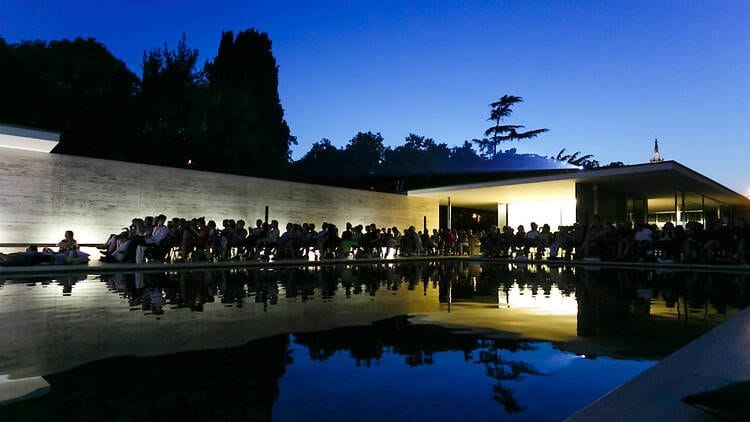
The proposal has something of a hidden plan about it, even though the building is one of the city’s icons. It is not every day that you can sit in the Pavilion at nightfall to watch films surrounded by marble, glass, water and urban silence, far from the usual format of commercial cinemas.
This year, the programme revolves around Barcelona and the many ways of looking at it. The three selected films travel through different periods, neighbourhoods and realities: the vanished city of Somorrostro, Barcelona in the 1990s, and a more recent look at the everyday lives of people who work door to door.
The series will begin on 6 July at 21:30 with “Los Tarantos”, by Francesc Rovira-Beleta. The film, freely inspired by “Romeo y Julieta” and “Bodas de sangre”, recovers the memory of Roma Barcelona and the former Somorrostro neighbourhood, with the unforgettable presence of Carmen Amaya.
The screening will be introduced by the director’s children, which adds a special layer to the showing. It will not simply be a matter of watching a historic film, but of returning to a Barcelona that no longer physically exists, yet remains part of the city’s cultural memory.
The second event will arrive on 3 August, also at 21:30, with “Costa Brava (Family Album)”. Presented by Marta Balletbò-Coll and Celia Marín, the film tells of the beginning of a relationship between Anna, a tourist guide with artistic aspirations, and Montserrat, an American engineer, between Barcelona and the Costa Brava.
The film offers an intimate, luminous and somewhat nostalgic view of the 1990s, with humour, desire and Mediterranean landscapes. In the context of the series, it works as a way of seeing the city through its affections, its getaways and its ties to the coast.
The programme will close on 7 September at 21:00 with “Seis días corrientes”, by Neus Ballús. The film delves into the routine of three real plumbers who travel through houses, courtyards, stairways and streets, showing a Barcelona that is less monumental and much more immediate.
That final screening connects especially well with the idea of the series: looking at the city from places that normally go unnoticed. Not postcard Barcelona, but the one that appears behind a shutter, in a domestic repair or in a brief conversation between neighbours.
Tickets are available online and it is advisable to buy them in advance. The price, two euros, makes the plan very accessible, but the Pavilion’s limited capacity may leave out those who wait too long.
The Mies van der Rohe Pavilion was built for the 1929 International Exposition and has become a worldwide reference point for modern architecture. Its location next to Montjuïc, between the Magic Fountain and the area’s major cultural venues, makes it a particularly powerful setting for watching films about Barcelona.
Pantalla Pavelló offers something more than three summer screenings. It is an invitation to look at the city at a different pace: to sit outdoors, enter an exceptional building and discover how cinema also preserves neighbourhoods, memories and ways of life that Barcelona does not always reveal at first glance.