
News
Cirque du Soleil’s OVO comes to Madrid: dates and prices at the Movistar Arena
The Movistar Arena hosts OVO, the Cirque du Soleil show that transforms the world of insects into an unforgettable visual and acrobatic experience.
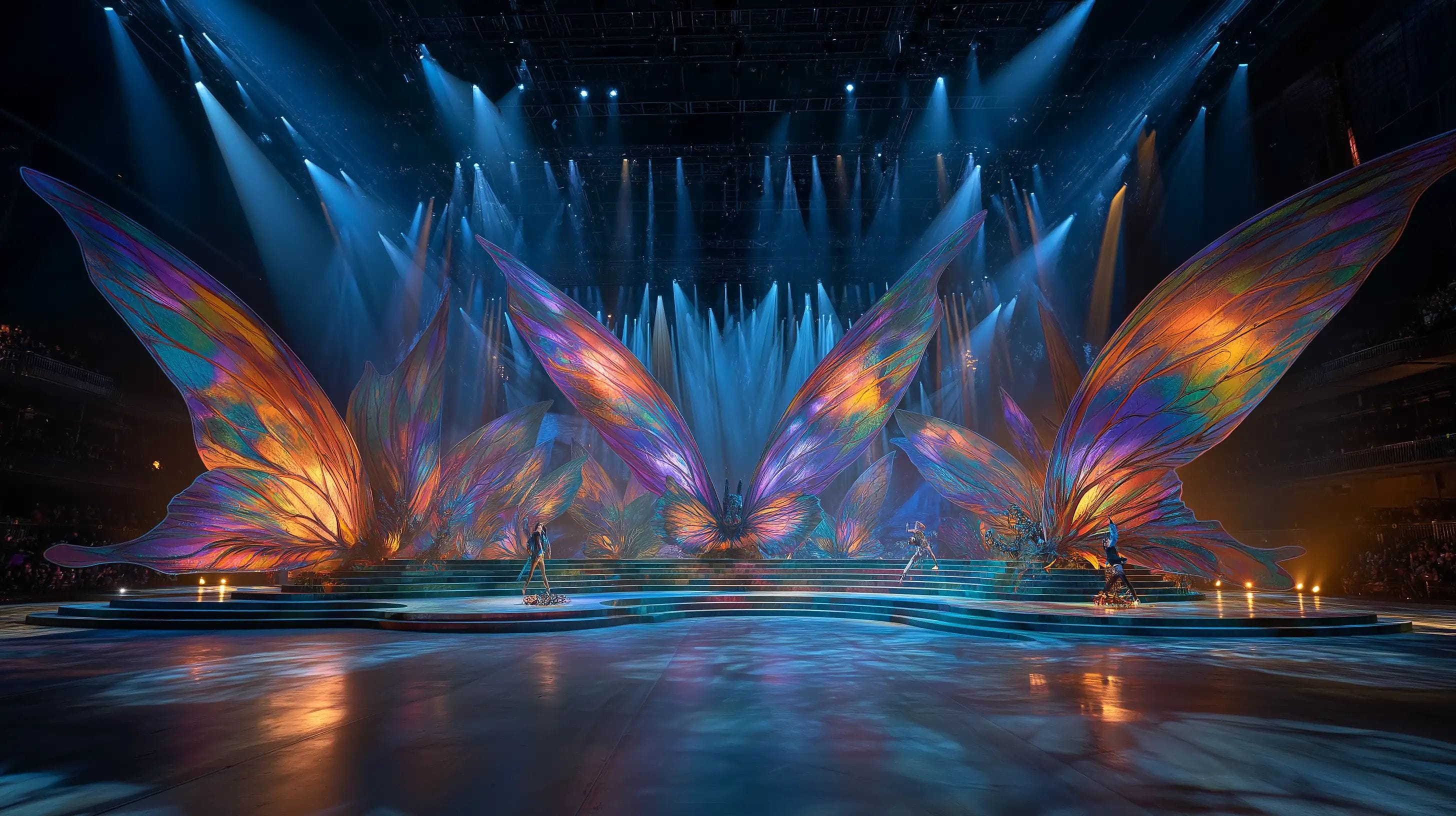
In the days leading up to the premiere, both Cirque du Soleil and Movistar Arena itself have been building anticipation on social media with videos and previews of OVO, stressing that Madrid will have between six and seven unique performances over four days and reminding audiences that tickets, available on platforms such as Ticketmaster, El Corte Inglés and Vincuticket, are selling out quickly for some time slots.
Madrid is preparing for one of March’s most colourful and talked-about shows. OVO, Cirque du Soleil’s celebrated production, arrives at Movistar Arena with a proposition that turns the world of insects into an explosion of acrobatics, humour, music and colour that captivates from the first minute.
For a few days, Madrid will cease to look like Madrid. Movistar Arena will be transformed into an ecosystem overflowing with colour, acrobatics and impossible creatures with the arrival of OVO, one of Cirque du Soleil’s most recognisable and visually striking productions. The engagement runs from 19 to 22 March 2026, with several performances across those four days.
It is neither a conventional circus nor a simple succession of spectacular acts. OVO offers an immersion in a microworld inspired by insects, where movement never stops and where a minimal, almost poetic story provides the common thread: an awkward, strange insect falls in love with a ladybird amid a frenzied community that lives, works, plays and bustles around a mysterious egg. That egg, in fact, gives the show its name: “ovo” means “egg” in Portuguese, and symbolises the cycle of life that shapes the entire production.
A family show that does not rely on words
One of OVO’s keys is that it works almost like a language of its own. According to the production’s official press materials, the show does not use conventional narration, but a theatrical and sound language the company describes as “bug language”, which makes the show accessible to very different audiences. In other words, there is no need to follow a complex plot to enter its universe: it is enough to be carried along by the rhythm, physical humour, music and choreography of the bodies.
That helps explain why OVO is still touring so many years after its premiere. The show premiered in Montreal in April 2009 and was conceived as Cirque du Soleil’s 25th live production, coinciding with the company’s 25th anniversary. It later moved from the big-top format to the arena format in 2016, and in May 2023 it celebrated its 3,500th performance in Sweden, according to the official press kit.
Photo by https://www.cirquedusoleil.com/ovo
What makes OVO different from other Cirque du Soleil productions
Where some Cirque shows opt for the dreamlike, philosophical or solemn, OVO plays a different game. Here physical energy dominates. The company itself defines the production as an “ecosystem teeming with life”, and that idea is evident in everything: the colourful costumes, the sense of a swarm on stage, the comedy, the speed of entrances and exits, and the way each acrobatic discipline is associated with a particular creature.
It is not merely about “watching acrobatics”. What distinguishes OVO is how it turns those skills into a kind of fantastic biology. The insects leap, chase one another, court, confront each other, flutter and organise themselves as if the stage were a colony in constant ferment. That is why the show often connects so well with broad audiences: children, adults and spectators who may not usually go to the theatre or contemporary circus. The official website presents it as a family-friendly show, lasting 125 minutes, including a 25-minute interval.
Deborah Colker’s vision, the creator who brought dance to the heart of the show
Behind OVO is Brazilian Deborah Colker, credited by Cirque du Soleil as the production’s writer, director and choreographer. In the official press kit, Colker explains that she wanted to present the world of insects with an emphasis on constant movement and colour, and stresses that her own highly physical choreographic language finds in those movements a way to express emotion.
That detail matters because it helps explain why OVO does not feel like a collection of isolated feats. There is choreographic thought behind it. The show seems driven by a logic of expanded dance: everything moves, everything flows, everything spreads speed. Even when the tone becomes more romantic or humorous, the overall feeling remains that of a living organism.
A huge international undertaking behind the performance
Cirque du Soleil’s global character can also be seen in the project’s human scale. The official materials describe a team of 100 people from 25 nationalities, with 52 artists on stage. That scale helps explain why the final result conveys such visual and technical richness: every detail, from acrobatics to make-up, lighting and stage apparatus, is designed to build a complete universe.
The ambition can also be seen in the technical side. The same press kit states that the acrobatic structure is around 13.7 metres high and that the stage floor is made up of 225 panels, figures that give an idea of the level of engineering behind a performance which, from the audience’s seat, seems almost organic and spontaneous.
Photo by https://www.cirquedusoleil.com/ovo
Madrid hosts one of March’s most visually striking stage events
For Madrid, OVO’s arrival means adding to its March agenda one of those major shows capable of attracting both local audiences and visitors looking for a special weekend plan. Cirque du Soleil’s official website places the Madrid stop at Movistar Arena from 19 to 22 March 2026, and the venue also lists it in its programme as one of the highlighted events on those dates.
That short format works in the event’s favour. It does not feel like a long run or a proposition available “at any time”. Quite the opposite: it is perceived as a brief opportunity to see live an international production bearing the stamp of a company used to turning every production into a large-scale visual experience.
Why OVO can also win over people who think “circus isn’t their thing”
There are shows that sell themselves on the strength of their brand. But OVO has something more useful for word of mouth: an idea that is very easy to describe and, at the same time, very eye-catching. It is enough to say that Cirque du Soleil transforms the world of insects into an explosion of acrobatics, colour and movement. The image is immediately understandable and arouses curiosity even in people who do not follow the performing-arts programme regularly.
Moreover, the central theme is neither dark nor hermetic. The show revolves around highly universal concepts: life emerging, transformation, attraction, the fertile chaos of a community. All of it is wrapped in an exuberant aesthetic that fits very well with the visual logic through which major cultural plans now circulate on social media. This last point is an editorial inference from the nature of the show and the way the company itself presents it, not a promotional claim by the organisation.
What is useful to know before going
Official practical information puts the show’s duration at 125 minutes, including the interval. Cirque du Soleil also states that children aged 2 and over must have a ticket to enter the performance.
At that length, OVO works well as a major afternoon or evening plan, especially for those seeking a spectacular stage experience without needing to know a previous work or follow a complex script. In essence, it is one of those productions designed to enter through the eyes from the first minute.
Photo by https://www.cirquedusoleil.com/ovo
An egg, a ladybird and a whole world beneath our feet
Perhaps that is OVO’s great virtue: it takes something tiny, everyday and almost invisible, like insect life, and enlarges it until it becomes a monumental celebration. Where we would normally see ground, leaves or background noise, the show imagines a complete society: intense, strange, entertaining and beautiful.
And that, at a time when so many cultural plans compete for seconds of attention, can make the difference. Because OVO does not merely promise a succession of technical feats. It promises something more difficult: recovering, for a while, the feeling of wonder.
Cirque du Soleil’s OVO listing in Madrid brings together the key information about the show, with times, dates and direct access to ticket purchase.