
News
Ciutat Meridiana to receive 25 million for street and housing renovations
The investment will allow work on more than 30,000 m² of public space and make it possible to install up to 10 lifts. The project also includes new facilities and measures against heat.
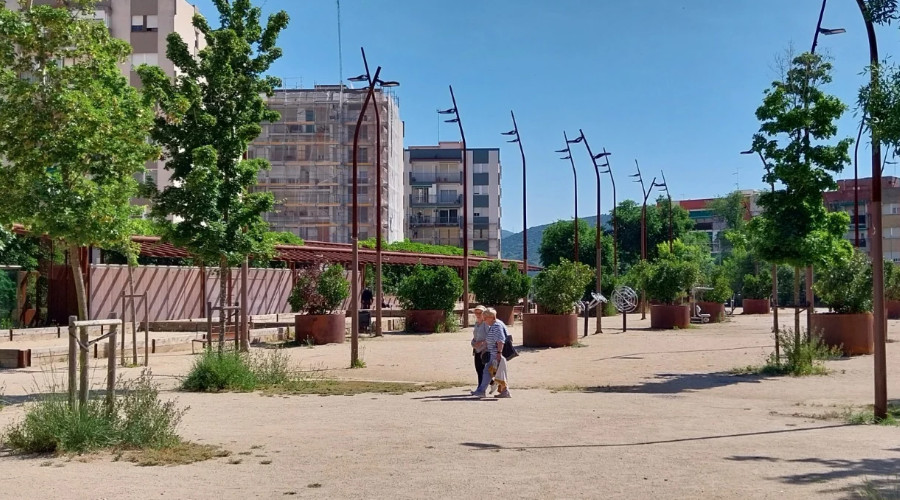
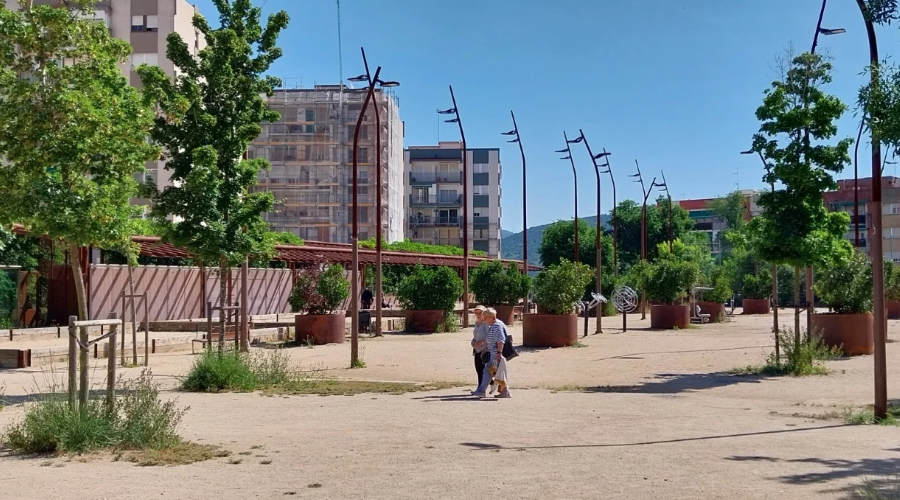
The plan foresees 32 actions between 2027 and 2031 with funding from the municipality and the Generalitat.
More than 30,000 m² of public space in an area with steep slopes will be included in the transformation plan for Ciutat Meridiana. The initiative is part of a 25-million-euro project that the Ayuntamiento de Barcelona has managed to include in the second call of the Pla de Barris i Viles de Catalunya.
The Generalitat will provide half of the budget, with the rest coming from municipal funds. The plan brings together 32 actions and will begin to roll out in January 2027, with a planned period of five years and a possible extension of three.
Spaces between blocks and new facilities
The largest allocation, 10 million euros, will go to the inner courtyards located around Perafita and de les Agudes streets. The planned works aim to improve accessibility, organise parking, renew services, and expand urban greenery in the spaces that remain to be developed between blocks.
The project will also promote the community facilities planned in the Parc de l’Aqüeducte. In this phase, the projects will be drafted and the necessary urban planning procedures carried out for their construction. The plan also includes improvements to the Centre Cívic de la Zona Nord and the Font Muguera space.
Lifts and housing refurbishment
The lack of lifts and the difficulty of installing them in a neighbourhood with challenging terrain can worsen isolation. To address this, the Ayuntamiento will reserve 1 million euros to facilitate up to 10 new installations, with support for processing residents’ agreements and financial subsidies.
There are also plans to refurbish the interiors of more than 150 homes of vulnerable people through training and employment projects. The plan includes support for replacing lighting and appliances with more efficient options, facilitating the installation of fans, and improving shared elements of residential buildings with energy efficiency criteria. Climate control systems will be installed at the Institut Pablo. R. Picasso.
Shade and connections with the natural environment
Adapting to heat includes creating more than 1,200 m² of shade in spaces such as the Ciutat Meridiana metro square and the Parc de l’Aqüeducte. Water play areas will also be installed and trees planted in public spaces; the programme includes pergolas and other cooling points.
Among the environmental actions are the renaturalisation of the lower part of the Vall de Can Cuiàs, which separates Ciutat Meridiana from Montcada, and improvements to access to Collserola. The plan adds the expansion of urban greenery and improvements to cycling infrastructure.
In another urban mobility intervention, Barcelona plans to improve 12 waiting areas for interurban buses from 2028, as detailed in this information about improvements to stops.
Sport, training, and community life
For teenagers and young people aged 12 to 25, outdoor sports spaces will be set up using the playgrounds of educational centres. A socio-educational programme will accompany the activity with actions for emotional wellbeing, coexistence, and the prevention of risk behaviours, including violence, hate speech, and toxic masculinities.
The project includes measures to prevent unwanted loneliness among teenagers and older people, as well as support for families during adolescent upbringing. It also includes Aprendizaje y Servicio projects, a welcome programme for new professionals and new residents, and exploratory walks with different perspectives to improve public space.
Employment training will have a strand aimed at combating the feminisation of poverty and another linked to new training specialities at the Ins. Pablo R. Picasso. Support will be given to the Aula de Formació de Persones Adultes Ciutat Meridiana, community artistic activity, and the recovery of popular memory; reading will also be promoted in school libraries and through the reading plans of the centres.
The list is completed with a social prescription app, circular economy projects to make use of surplus from school canteens and encourage shared resources with the Ateneu de Fabricació, and actions to open stalls in the Mercat de Ciutat Meridiana with a social or training return.
These actions will be added to the municipal Pla de Barris already underway in the Zona Nord —Torre Baró, Ciutat Meridiana y Vallbona— with 11.3 million euros planned. Municipal intervention in the area has been ongoing for almost ten years and includes educational and community improvements, new escalators, and projects for early childhood care and against unwanted loneliness. Social, residential, urban, and economic indicators continue to place Ciutat Meridiana among the neighbourhoods most in need of intervention.