
News
How to attend art presentations in Barcelona without missing what matters
Barcelona is experiencing intense weeks of exhibitions, performances and art activities. This guide explains where to look, when to book and what to check before going.
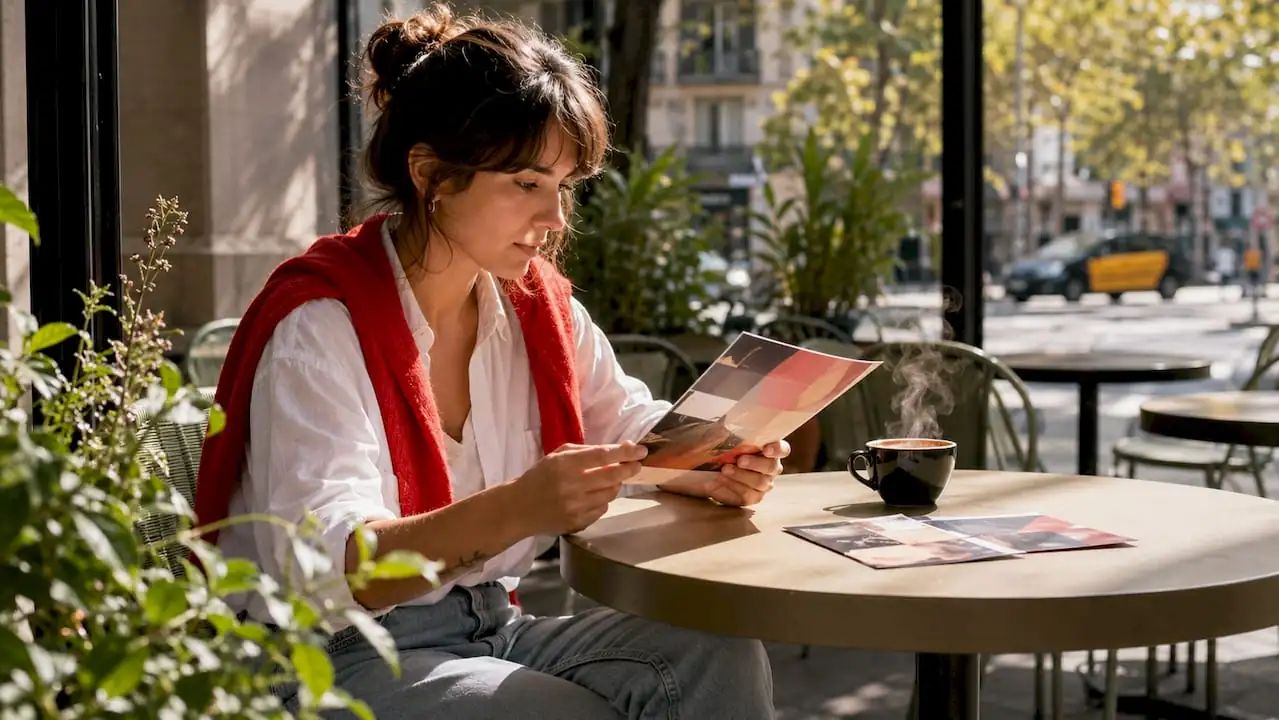
How to attend art presentations in Barcelona without missing what matters
Barcelona does not experience art only inside museums. In a single week you can find a free architecture exhibition, a performance linked to the Grec, an end-of-year show at a design school, or a guided visit at a neighbourhood cultural centre.
The key is not only knowing what is on. It is knowing what kind of activity it is, whether it requires a booking and how much leeway you should allow before going. In many cases, the difference between getting in and being left out lies in a small detail: prior registration, a specific timetable or a parallel activity with limited capacity.
What counts as an art presentation
Not every art event works in the same way. An exhibition lets you move around the room at your own pace. An opening usually has a more social element, with artists, curators or sector audiences. A performance requires punctuality and attention. A guided visit provides context, but usually has fewer places. An interactive installation may ask for the visitor’s direct participation.
That is why it is advisable to read the description carefully before booking. Buying a ticket for an exhibition is not the same as signing up for a specific activity within that exhibition.
In Barcelona, these kinds of proposals appear in museums, foundations, galleries, design schools, creation centres and independent spaces. The offer is broad, but very fragmented.
Where to look for art events in Barcelona
The most practical way is to combine several sources.
Barcelona’s official agenda lets you search for activities by date, district, neighbourhood and category. It is useful for finding exhibitions, routes, family activities, open days and proposals from municipal centres.
It is then advisable to check museums’ and foundations’ websites, especially if you are looking for activities with context: guided visits, talks, performances, openings or public series. Spaces such as MACBA, Museu Tàpies, MNAC, Museu Picasso, Fundació Joan Miró and Fundació Mies van der Rohe publish their own programmes and access details.
For galleries, schools and independent centres, registration may appear on external platforms, the space’s newsletters or event pages. Here it is always important to confirm the information on the organiser’s website before travelling there.
Three events that clearly explain how the 2026 agenda works
Elisava Gradshow 2026 is a good example of an open, concentrated event with several moments within the same programme. It takes place from 16 to 18 June at Elisava and CEM Colom, on La Rambla, from 11:00 to 21:00. In addition to the general tour, it has an opening on the afternoon of 16 June and a closing on 18 June.
The exhibition of the Fundació Mies van der Rohe collection shows another side of Barcelona’s cultural agenda in 2026. It forms part of the context of Barcelona Capital Mundial de la Arquitectura and brings together more than 500 pieces, including models, drawings, videos and materials linked to the EUmies Awards. It is open at the Palau Victòria Eugènia until 5 July 2026 and admission is free.
The project Extramuros. Dora García, at the Museu Tàpies, points to a more lively, urban format. The proposal expands from the museum into public space and is linked to the Grec Festival de Barcelona. Here it is not enough to look at the museum’s general opening hours: dates, meeting points and specific activities must be checked.
How to book without making a mistake
The first step is to distinguish between general admission and a specific activity. An exhibition may be open for weeks, but a guided visit, a talk or a performance may have only one session and limited places.
Before you go, check five things:
Exact date and time of the activity.
The specific place, not only the name of the institution.
Whether prior booking is required.
Whether free admission also requires registration.
Whether there are last-minute changes in the confirmation email or on the organiser’s website.
In Barcelona, many free cultural activities operate with limited capacity. That means “free” does not always mean “walk-in admission without booking”.
What to expect depending on the format
If you go to an exhibition, you will normally be able to view it at your own pace. Even so, it is worth checking whether there are special hours, free admission in a particular time slot, or reduced access because of installation, an opening or a private activity.
If you go to a performance, arrive with time to spare. These formats usually start at a particular time and do not always allow late entry.
If you go to a guided visit, allow between 60 and 90 minutes. It is one of the most advisable formats if you do not know the artist or want to understand an exhibition better without reading all the gallery texts.
If you go to an opening, expect a more social atmosphere. There may be more people, less silence and less time to look at the works calmly. It is a good format for discovering artists and spaces, but it is not always the best time for an unhurried visit.
Common mistakes
The most common mistake is to think all the activities in an exhibition have the same access. That is not the case. You may have admission to the show and not have a place for a guided visit.
Another mistake is relying only on an aggregator. Platforms help to discover events, but the final timetable, capacity, access conditions and last-minute changes are usually on the museum’s, gallery’s or organising centre’s website.
It is also advisable not to leave the journey too tight. Many galleries and independent spaces are on small streets, in shared buildings or at less clearly signposted premises. Arriving 10 or 15 minutes early avoids starting the experience stressed.
If you have little time, choose like this
If you want an easy experience, look for an exhibition with broad opening hours and clear admission.
If you want context, prioritise a guided visit.
If you are looking for something more special, choose a performance, an opening or an activity linked to a festival.
If you want a free plan, check Barcelona’s official agenda and foundations with open programming, but always confirm whether prior registration is needed.
And if you are going with someone who does not usually visit exhibitions, it is better to begin with a short, visual and well-located format. A bad first experience usually has more to do with logistics than with art.