
News
Digital chronicle of 2 May
On 2 May 1808, Madrid’s streets erupted in an uprising against the French occupation, beginning the Spanish War of Independence. This article immerses the reader in the atmosphere of those days through chronicles, contemporaries’ memoirs and literary works, and presents the heroes and monuments, revealing how the memory of that feat endures today in museums and digital archives.
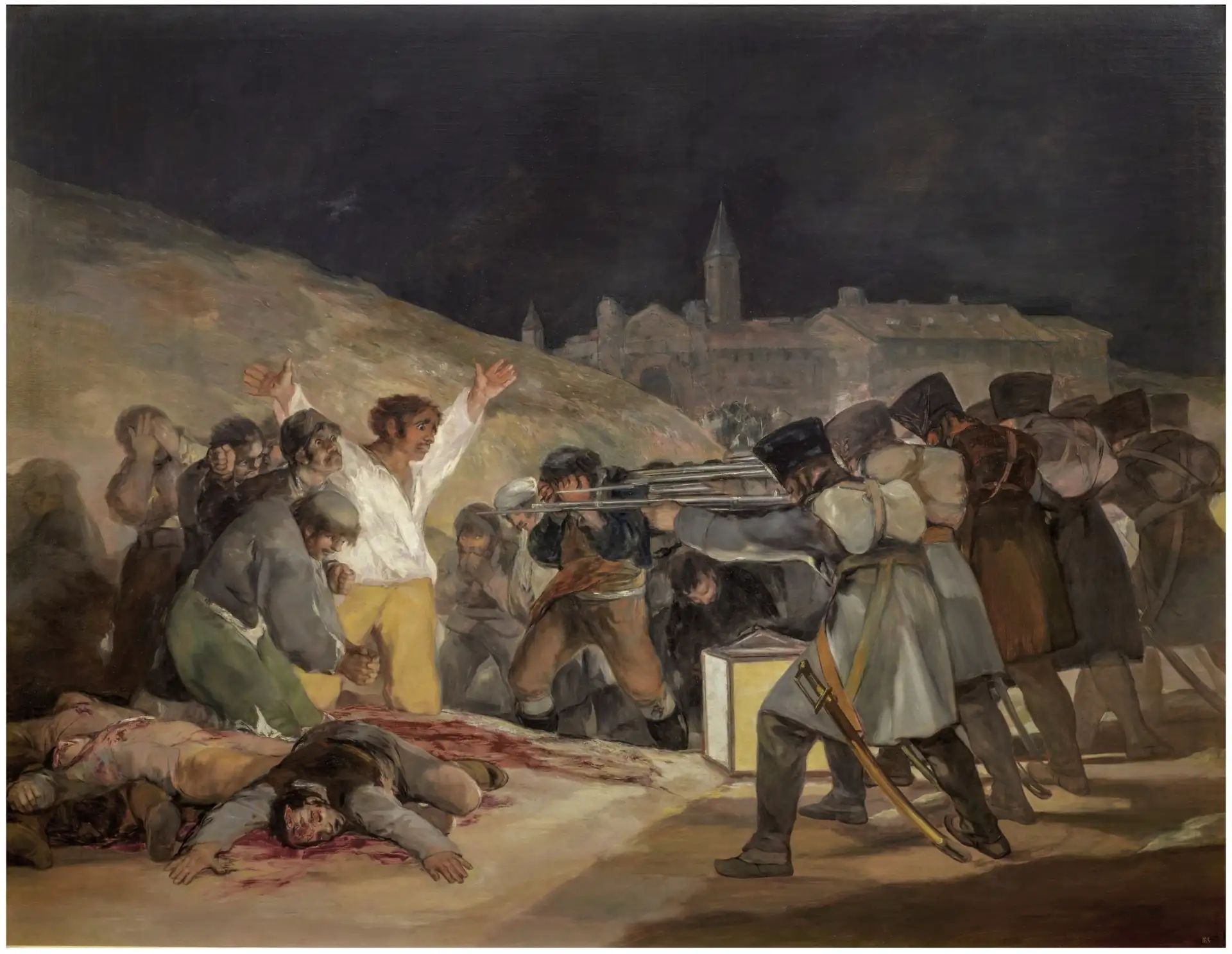
On 2 May 1808, the streets of Madrid suddenly erupted in a wave of popular anger. Spaniards rebelled against the government of José Bonaparte, Napoleon’s brother, whom the French emperor had imposed on the country after the forced abdication in Bayona of Carlos IV and his son Fernando VII. That day was the spark that ignited the Spanish War of Independence, an epic struggle that marked modern Spain’s path towards national consciousness and freedom.
The uprising broke out spontaneously, but a deep internal organisation could be perceived. It was expressed both in the mass impetus of the crowd and in the outstanding actions of ordinary citizens. Today, the memory of these events remains alive in the celebrations of Comunidad Autónoma de Madrid and especially in the Malasaña neighbourhood. The neighbourhood’s name immortalises the young embroiderer Manuela Malasaña, who bravely passed gunpowder and cartridges from the balcony of her home to the defenders of the Monteleón artillery park.
Photo by de.wikipedia.org
Monument to Daoiz y Velarde in Plaza del 2 de Mayo, Madrid
The Plaza del 2 de Mayo now extends over the site where that park stood. Nearby stand Museo de Historia de Madrid and the Conde-Duque cultural centre, true treasures where documents, canvases, musical scores and sketches for monuments of incalculable value dedicated to the heroic May days are preserved.
The people in motion
On that fateful day, the revolt spread through the whole city like a fire. Waves of men, women and even children poured through the streets of Madrid. People grabbed the first things that came to hand: kitchen knives, burning torches, carpenters’ axes and hammers. The air vibrated with furious shouts of «Death to the French!» and «Down with Napoleon!». The crowds headed towards the main scene of events, Plaza Mayor and Puerta del Sol, where they confronted French soldiers desperately defending the key points of the capital.
Events of 2 May 1808 at the Prado Photo by Tomás LÓPEZ ENGUÍDANOS
Madrid. 2 May 1808 Photo by Auguste RAFFET [painter] [1804-1860]
Uprising of 2 May 1808 in Madrid Photo by Bartolomeo PINELLI
2 May 1808. Sheet of 24 Aleluyas Photo by memoriademadrid.es
First motion of the day of Dos de Mayo Photo by Juan CARRAFA
Chaos and fury reigned everywhere. The people of Madrid threw themselves beneath the hooves of the cavalry, tried to tear off saddles and harnesses, and fought the regular army with bladed weapons. On 2 May 1808, Madrid literally came alive in a unique and unstoppable popular impulse; the sons and daughters of Spain showed that an unarmed people can defy a powerful conqueror.
The vision of literature and chronicles
Literature has vividly captured the atmosphere of those days from different perspectives. The Cuban classic Alejo Carpentier, in his novel «El siglo de la Ilustración», described the uprising in Madrid as the powerful culmination of the revolutionary wave that began with the execution of Louis XVI and spread through Europe and the New World.
Benito Pérez Galdós, in his epic cycle «19 de marzo y 2 de mayo», recreated in detail the first battles in Plaza Mayor. Armed inhabitants of poor neighbourhoods, including women and adolescents, bravely faced French bayonets.
Another valuable historical source is the diary of the actor Rafael Pérez, preserved in Biblioteca Histórica de Madrid. It offers a precise, almost journalistic picture: the people of Madrid tried to prevent the transfer of Spanish troops to France, and battles were fought beside Palacio Real and the artillery park. The artillerymen inflicted heavy losses on the occupiers, but without ammunition they could not hold their positions.
Aleluyas and visual chronicle
Another valuable testimony to the events is the unique series of 24 aleluyas, popular prints with text, preserved in Museo de Historia de Madrid. These sheets, like frames from a newsreel, tell the story sequentially, from the first clashes beside the palace to the tragic shootings of 3 May. Since the 16th century, aleluyas have been a powerful instrument for spreading news and ideas among ordinary people.
Hundreds of prints, pamphlets and caricatures from the War of Independence period (1808-1814) are preserved in the collections of museums and libraries. They include scenes of the abdication of the Bourbons, the triumphant entry into Madrid of Napoleon and Fernando VII, as well as sharp satirical depictions of the Bonaparte family, which still surprise today through their artistic force and topicality.
Photo by Francisco Goya, Public domain, via Wikimedia Commons
The second of May 1808 in Madrid
Heroes and monuments
The names of Luis Daoiz and Pedro Velarde, the commanders who fell in the defence of the Monteleón park, are engraved forever on the map of Madrid. Their streets and the monument in Plaza del 2 de Mayo remind future generations of their courage. The paintings by Manuel Castellano devoted to these exploits once adorned the meeting room of Casa de la Villa and can now be seen at Museo de Historia.
Photo by Francisco Goya, Public domain, via Wikimedia Commons
Allegory of the city of Madrid
The famous «Alegoría de la ciudad de Madrid» by Francisco de Goya is also preserved there. Initially, the medallion bore the portrait of José Bonaparte, but it was later replaced by the laconic inscription «2 de mayo». The museum also displays portraits of Fernando VII and documents related to the liberal Constitution of 1812, approved by the Cortes de Cádiz during the years of the king’s exile.
In 1815, the authentic anthem of the insurrection was born. The music was composed by Benito Pérez and the lyrics by Juan Bautista Arriaza. It was performed on several occasions at Teatro de la Cruz and can now be heard in virtual recordings on the «Memoria de Madrid» YouTube channel.
The memory of the past today
The digital library Memoria de Madrid offers free access to archives, paintings, scores and documents. Thanks to it, anyone can approach history without leaving home.
2 May 1808 changed forever the face of Madrid and all Spain. The popular uprising became an eternal symbol of the dignity, unity and unbreakable will of the Spanish people, a symbol that remains alive in the stone of monuments, in artists’ canvases and in the sounds of patriotic melodies.