
News
The secret archive beneath the Sagrada Família that reveals its history
Beneath the Sagrada Família there is a space that most visitors will never see. It is an archive reserved for the basilica's staff, where documents, plans, publications, and original pieces are kept that help to understand how Barcelona's most famous temple has developed.
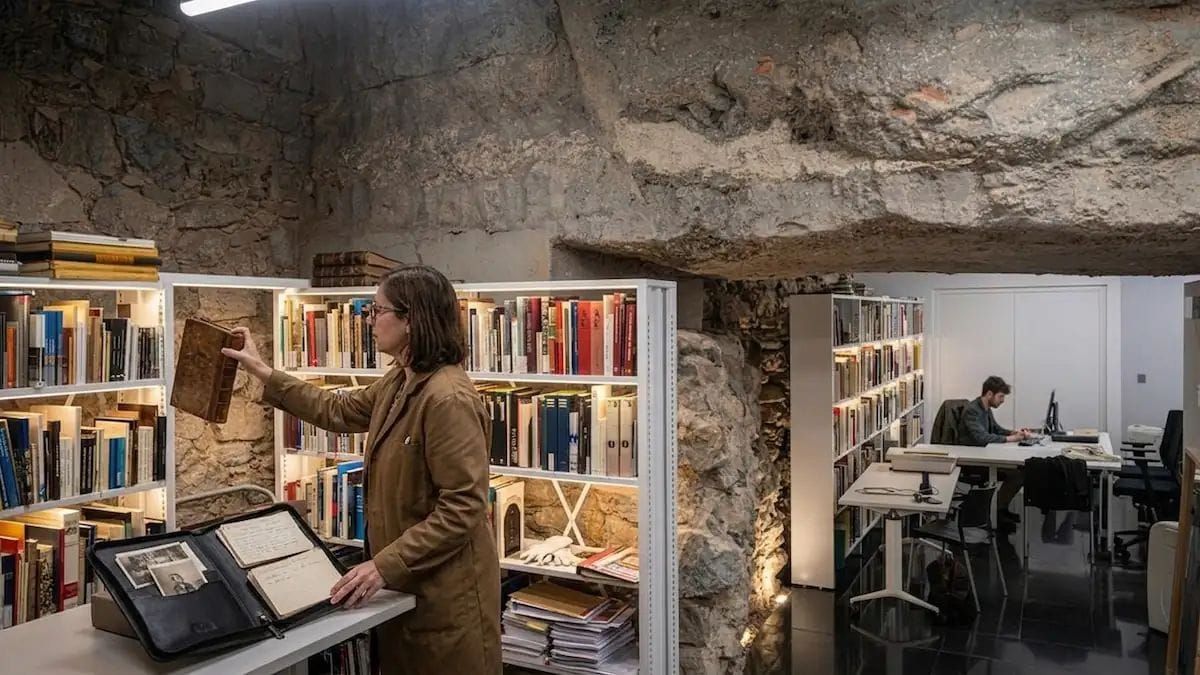
This is not just another room in the monumental complex. It is a kind of underground memory of the Sagrada Família, with movable shelves, temperature control and materials that explain decisions taken during decades of works, changes and reinterpretations of Antoni Gaudí’s project.
Its location makes it even more special. Part of the archive walls coincide with the exterior walls of the original crypt, built in 1882 by Francisco de Paula del Villar, before Gaudí took over direction of the temple.
That detail changes the way one looks at the basilica. The crypt was not only the first space built: it also shaped the subsequent development of the building and its fit within the Eixample grid. A work began there that would end up changing Barcelona’s silhouette forever.
Today, the crypt forms part of the historic heart of the temple and contains Gaudí’s tomb. But only from the archive can one touch the outer perimeter of that first enclosure, a privilege reserved for very few people and far from the usual tourist route.
Among the most valuable holdings are the Álbumes del Templo, four publications edited between 1915 and 1929 by the El Propagador de la Devoción a san José association. They recorded progress of the works, future plans, texts and testimonies that now serve to follow the evolution of the basilica almost from within.
Gaudí did not leave a major written work, which is why these documents carry special weight. Many of these publications are considered among the closest ways of accessing his thinking, his priorities and the way he imagined the temple’s future.
For Barcelona, this archive recalls that the Sagrada Família is not only an attraction full of visitors. Beneath the constant movement on the surface, a silent part of the city is preserved: papers, walls and pieces that explain how an unfinished work has ended up forming part of the everyday life and emotional landscape of several generations.