
News
A 45-metre stretch of the 14th-century wall discovered during works on the Rambla
The redevelopment of the Rambla has uncovered a section of 14th-century wall almost 45 metres long and a pentagonal tower measuring more than eight metres, revealing a forgotten chapter of medieval Barcelona.
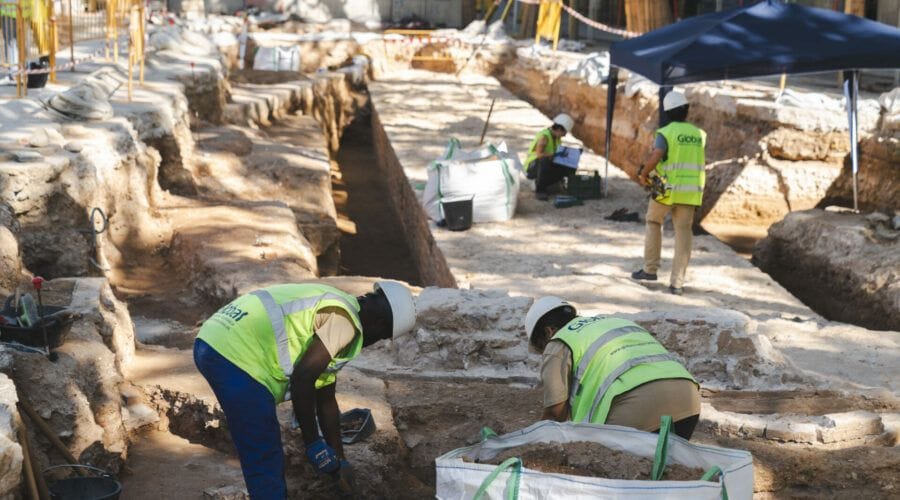
The excavation, led by archaeologist Irene Cruz (Global Geomática) on behalf of BIMSA, confirms the scale of the defensive system that protected the city before the construction of the Raval wall.
The work, begun in July in the Santa Mònica sector, has combined surface machinery with manual test pits to study the foundations. Among the finds are layers dragged along by ancient floods, remains of everyday life from the 16th century and even an unusual discovery: the skeleton of a small donkey buried among dozens of bronze needles.
The archaeologists have also confirmed the use of lime mortar to strengthen the stone joints, a detail that shows the effort to protect the wall against the frequent floods of the Rambla. In addition, a large semicircular structure of stone and mortar appeared, dating from the beginning of the 19th century and linked to the first urban development of the promenade.
This intervention adds to other recent finds — such as the old Estudi General and the Real Fundición de Artillería — and will make it possible to document nearly 100 metres of medieval wall in the very heart of the city, a unique opportunity to delve deeper into Barcelona's urban memory.