
News
Akadèmia reinvents Pinocchio in Barcelona: an uncomfortable look at fatherhood
Collodi's classic arrives at Teatre Akadèmia with a version that challenges Disney's image. Two Italian actors explore fatherhood and childhood through harshness and imagination. Poverty and parental responsibility set the work's rhythm.
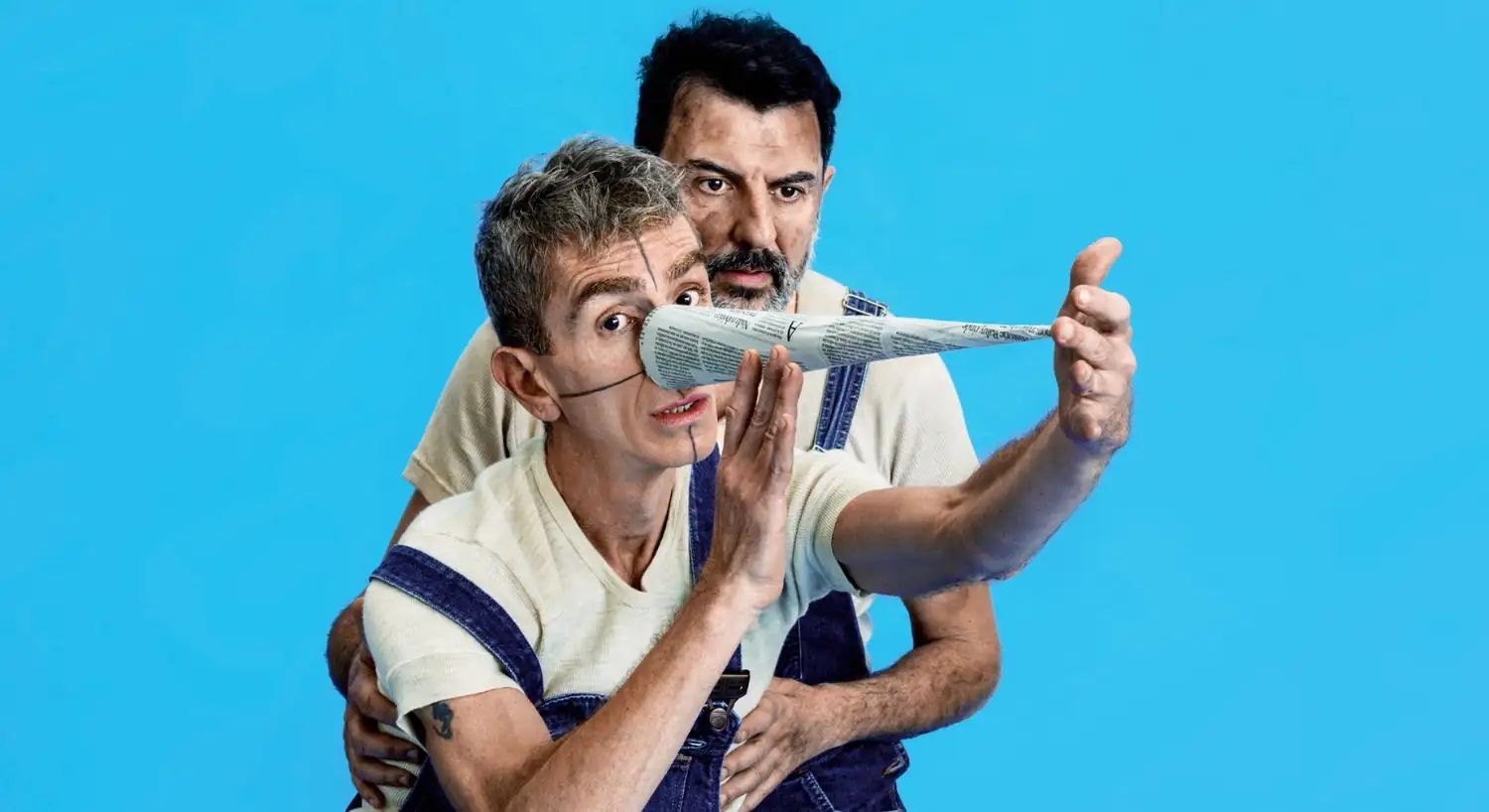
The Collodi classic comes to teatro Akadèmia with a version that challenges the Disney image. Two Italian actors explore fatherhood and childhood through harshness and imagination. Poverty and parental responsibility set the rhythm of the work.
Barcelona is preparing for a version of Pinocchio that breaks the mould and challenges childhood memories. From 11 March, teatro Akadèmia hosts an adaptation that moves away from the Disney universe and immerses itself in the harshness and darkness of Carlo Collodi’s original text. The production, directed by Enrico Ianniello, who also plays Geppetto, with Moreno Bernardi in the role of the puppet, invites reflection on fatherhood and the complexity of being a child today.
The work, entitled «Pinocchio or the spectacle of fatherhood», is performed in Spanish and Italian and lasts eighty minutes. Ianniello, a 55-year-old father, acknowledges that his interest focuses on parents’ responsibility and on the kind of world passed on to children. The staging shows a Geppetto surrounded by rubble and piles of used clothing, in an atmosphere of poverty that is essential to understanding the story. Imagination becomes the character’s only refuge.
Moreno Bernardi, with an unsettling physical presence, takes on the challenge of bringing to life a Pinocchio who is much more than a mischievous child. For him, playing the puppet requires both mental and physical work, since he is a wooden being, barely an outline of a person. Bernardi, who for the first time allows himself to be directed by another person after thirty years of career, highlights the importance of exploring Ianniello’s vision, as he himself played Pinocchio in his youth.
Both artists share Italian roots, a generation and theatrical references, which allows them to approach Collodi’s novel from an intimate and critical perspective. They consider the work to be a coming-of-age novel much more complex and darker than other Italian classics, and recall how the television series of the 1970s marked their childhood more than Disney’s sugar-coated version.
The adaptation emphasises the harshness and anarchy of Pinocchio, a character who rejects rules and seeks freedom, even at the cost of his own safety. Economics and poverty run through the plot, with a Geppetto who lives in an old neighbourhood cinema and uses fragments of films projected onto a screen to feed fantasy. The music of Isao Tomita accompanies the action and reinforces the dreamlike nature of the production.
The cruelty present in the original text is forcefully brought to the stage. Geppetto exercises a harshness that turns Pinocchio into a martyr of his own father and the other characters, all played by Ianniello. The talking cricket, far from being the likeable Pepito Grillo, is a nameless insect that Pinocchio crushes without remorse. The Blue Fairy becomes the fairy with turquoise hair, faithful to Collodi’s spirit.
Teatro Akadèmia, located in the Eixample, has established itself as a leading venue for daring, high-quality stage productions. Its commitment to internationalisation and collaboration with European creators has enabled productions such as this Pinocchio to find a curious and demanding audience. The venue, with a programme combining classics and new dramaturgies, has become a meeting point for those seeking different theatre experiences in Barcelona.