
News
The former Llars Mundet theatre is reinvented as a neuroscience centre in Barcelona
A forgotten Barcelona theatre will become a scientific centre. The renovation will cost €11.8 million. The project seeks to preserve the architectural heritage. Debate over its transformation remains open. Find out how this emblematic space will change.
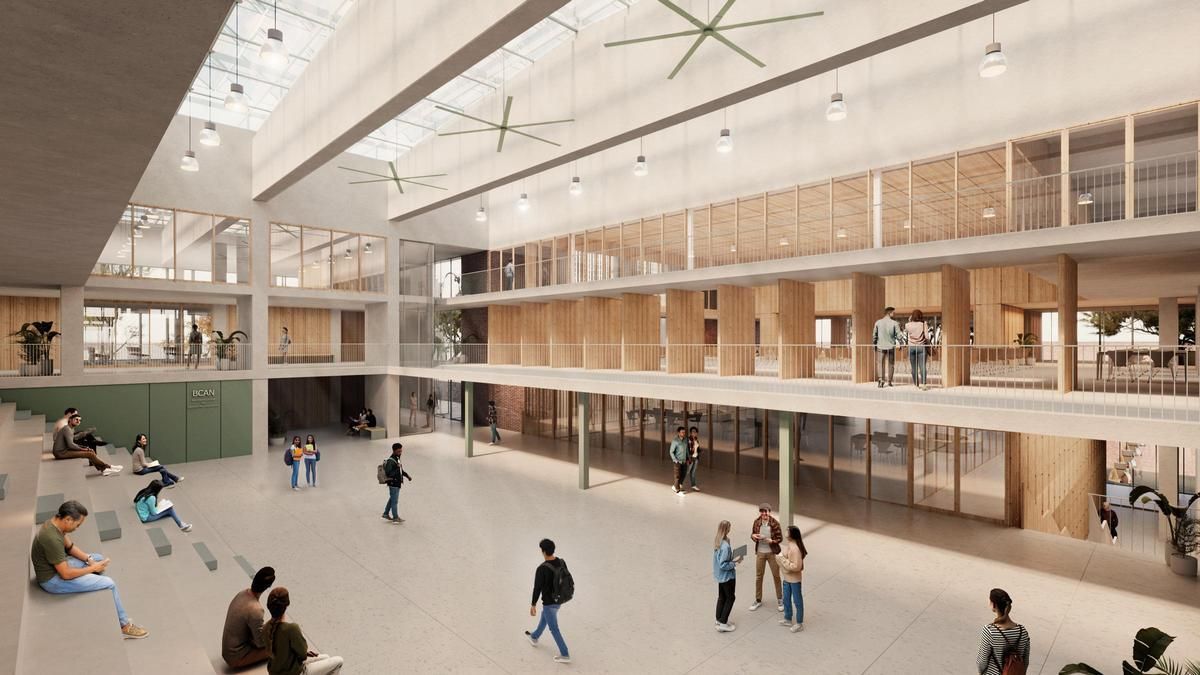
The historic Llars Mundet theatre, in the upper part of Barcelona, will leave decades of neglect behind to become the Barcelona Center for Applied Neurosciences (BCAN). The project, promoted by the Universitat de Barcelona and the Provincial Council, has European funding and plans to transform the former children’s space into a modern brain-research centre. The refurbishment, valued at 11.8 million euros, aims to open its doors in 2029.
The complex, opened in 1957 as an orphanage for children, was for years one of the city’s largest care complexes. The theatre, which became Barcelona’s largest cinema auditorium with 1,300 seats, has been unused for more than three decades. Although some classes have been held there, the stage and stalls have been consigned to oblivion.
The transformation of the theatre into a neuroscience centre has sparked debate among architects and heritage defenders. Architect Jaume Ratera warns of a possible loss of heritage value, since he considers the building one of the last examples of 1950s architecture in Barcelona. However, both the Universitat de Barcelona and the Provincial Council state that the refurbishment will respect the historic elements, although the property is not officially listed.
The architectural project, led by SCOB Arquitectura i Paisatge and Barceló Balanzó Arquitectes, must preserve the original volume and the artworks housed by the theatre, such as frescoes by Josep Guinovart, a mosaic by Armand Olivé and ceramic murals by Julio Bono. The Col·legi d’Arquitectes de Catalunya supports the initiative, highlighting the ability to adapt historic buildings to new uses without losing their identity.
The theatre’s great hall will become the core of the new laboratories and offices, while the former seating area will be a central atrium retaining part of the original tiered seating. Those responsible for the project insist that the challenge is to bring the building to life without sacrificing its architectural essence.
Some experts regret that the theatre has undergone progressive decay and believe it could have been used for other cultural purposes. However, the BCAN promoters argue that the space is ideal for a cutting-edge research centre, given its size and characteristics.
The transformation of the Llars Mundet theatre marks the beginning of a new stage for this emblematic building, which aims to become an international scientific reference point without renouncing its historic legacy. The refurbishment process will be accompanied by exhaustive documentation to preserve the original elements as far as possible.