
News
Lavapiés becomes an open-air gallery again with the CALLE festival
Lavapiés has once again done something that is already part of its identity: turning its streets into a roofless gallery. The 13th edition of the CALLE festival brings together 50 artists this year across 50 façades and businesses, with interventions that can be explored on foot in different parts of the neighbourhood until 31 May.
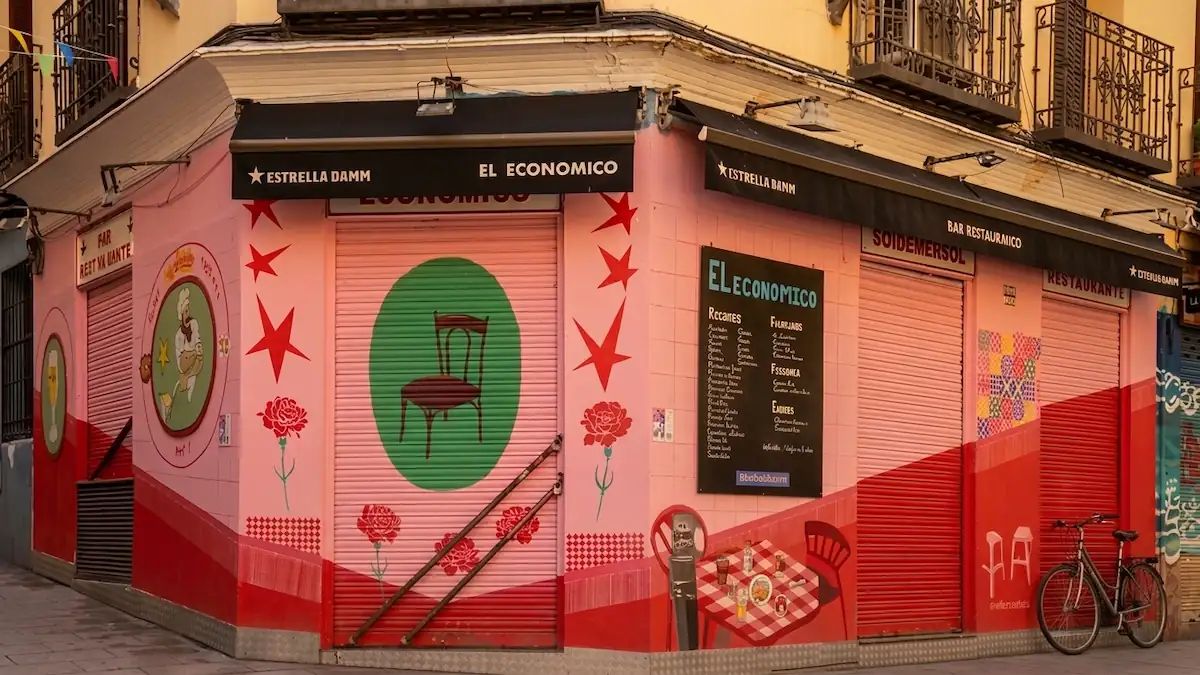
The festival, promoted by the Asociación de Comerciantes de Lavapiés Distrito 12, does not aim to take art out of museums as a hollow phrase, but to place it where life is already happening: a shop, a shutter, a façade, a market or a bar. That explains why it works so well in a neighbourhood such as Lavapiés, where commerce, the street and cultural mix almost always go together.
This edition already has a winner. The first prize, worth €2,000, went to ¿Está ocupada?, by Señorita Escarlata, installed at El Económico, at 9 Calle Argumosa. The artist, Sandra Fernández Dorado, has been recognised for a work that engages with the neighbourhood from a traditional Madrid perspective, close to it and carefully conceived for the space in which it stands.
The second prize, of €1,200, went to Lo que habita en el silencio, by Cecilia Astiazarán, located at Mercado de San Fernando, at 41 Calle Embajadores. The public prize, worth €800, went to Altar Urbano, by Guacamaya Azul Tropical, at La Cigarrera de Lavapiés, at 26 Calle Valencia.
Beyond the prize list, CALLE retains its value because it invites people to view the neighbourhood differently. Anyone walking through Lavapiés these days does not simply go from one work to another: they enter streets they may not have walked along, discover shops they did not know and stop in front of shop windows they would normally have passed without looking.
This year, moreover, the festival has strengthened its community dimension through collective interventions and intergenerational proposals. Among them, the participation of the so-called “graffiti grandmothers” stands out: a group of older women who have turned urban art into a form of neighbourhood presence and memory.
Lavapiés already has a very close relationship with urban art, but CALLE adds something important: a direct connection with small businesses. The works do not appear in neutral spaces, but in real businesses, with owners, customers and routines. That changes the experience and prevents the festival from becoming merely a pretty route for taking photographs.
In a city where many neighbourhoods feel pressure from tourism, rents and the loss of local shops, initiatives like this help sustain another idea of urban life. Lavapiés does not become creative because murals arrive once a year; it already is through its everyday mix. But CALLE manages to make that visible, celebrate it in the street and remind us that art can also help a neighbourhood look at itself with greater pride.