
News
Natural wine is gaining ground in Barcelona and Rafa Camps explains why more and more restaurants serve it
Sommelier and philosopher Rafa Camps analyses why natural wine has ceased to be a rarity in Barcelona and recommends labels to begin to understand a trend that is increasingly visible in restaurants and bars.
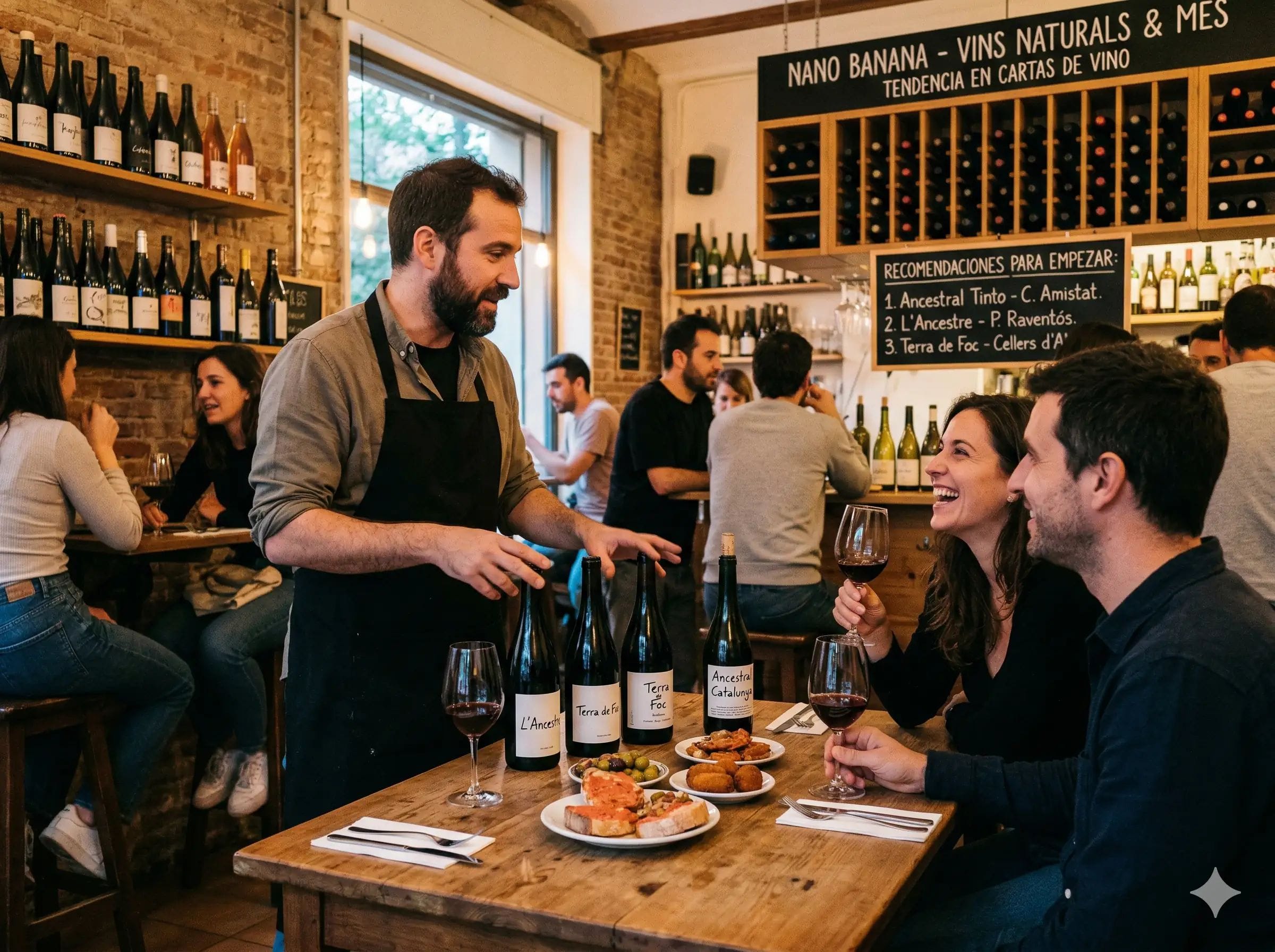
Natural wine is winning over the wine lists of Barcelona’s most prominent restaurants. Rafa Camps, philosopher and sommelier, explains how this trend is transforming the way people drink and understand wine. Discover why each bottle is a unique experience and which wines he recommends for getting started.
In Barcelona, natural wine has ceased to be a rarity and has become a leading feature of the best wine lists. More and more venues are opting for wines with no intervention, made from organic or biodynamic grapes and fermented only with their own yeasts. This revolution changes not only the taste in the glass, but also Barcelonans’ relationship with the land and local craftsmanship.
Rafa Camps, sommelier and philosopher, has made communicating about natural wine his banner. His path is not that of a conventional expert: he comes from contemporary art and, after organising festivals in Empordà, one day he tried a natural wine that shattered all his assumptions. He discovered radically different aromas and nuances, with clear hints of fruit and grapes, and since then has applied a philosophical outlook to every bottle.
For Camps, drinking natural wine is an act of investigation. Each glass raises questions and turns the consumer into an explorer of what lies behind each label. Wine ceases to be just a drink and becomes food, a direct connection with the landscape and local culture.
Many consumers feel intimidated by conventional wine terminology, often cryptic and far removed from everyday experience. Camps argues for returning to simplicity: in natural wine, the first thing perceived is fruit, not wood, vanilla or alcohol. According to him, these wines are more like "traditional wine" than today’s much more intervened wines with sulphites, a practice with barely four decades of history.
Natural wine carries a reputation for strange aromas or animal notes, but Camps clarifies that this is due to the presence of Brettanomyces bacteria, common on grape skins or in barrels. However, he assures that by 2026 most natural wines no longer have those extreme smells. The sector has evolved and now seeks to escape homogenisation: every bottle has its own character, something that rarely happens with classic wines.
For those who want to get started, Camps recommends two wines. La Figa, a wine with 80% Grenache and 20% Carignan, with no barrel ageing, stands out for its fruity and direct profile, almost like juice but with the complexity of wine. La Ploma, meanwhile, brings back the sumoll variety, which had almost disappeared in the 1980s and 1990s, and offers a more transparent colour and aromas that evolve as it opens. This wine is made from Penedès grapes and vinified in Empordà, reflecting winegrowers’ struggle to rescue native varieties.
One of Camps’ aims is to popularise natural wine without vulgarising it. He wants it to cease to be only for fanatics and reach more people, showing that it is an expression of craftsmanship, landscape and local culture. He insists on removing the solemnity surrounding wine: it is not only for experts, but another food that anyone can enjoy and share.
La Natural, the space launched by Rafa Camps, has become a reference point for those seeking authentic, artifice-free wines in Barcelona. Its proposal connects with a generation that values transparency, sustainability and local identity in every glass. The rise of natural wine in the city reflects a global trend, but here it takes on its own nuance, linked to the territory and the creativity of those who make it.