
News
Retiro mobilises to stop the eviction of 87-year-old Maricarmen
Maricarmen is 87 and has lived in the same Retiro flat for 71 years. This week, her name has moved beyond the block's stairwell to become the symbol of a bigger struggle: that of people who fear losing their home in a city where rent already pushes out even people who have lived in the neighbourhood all their lives.
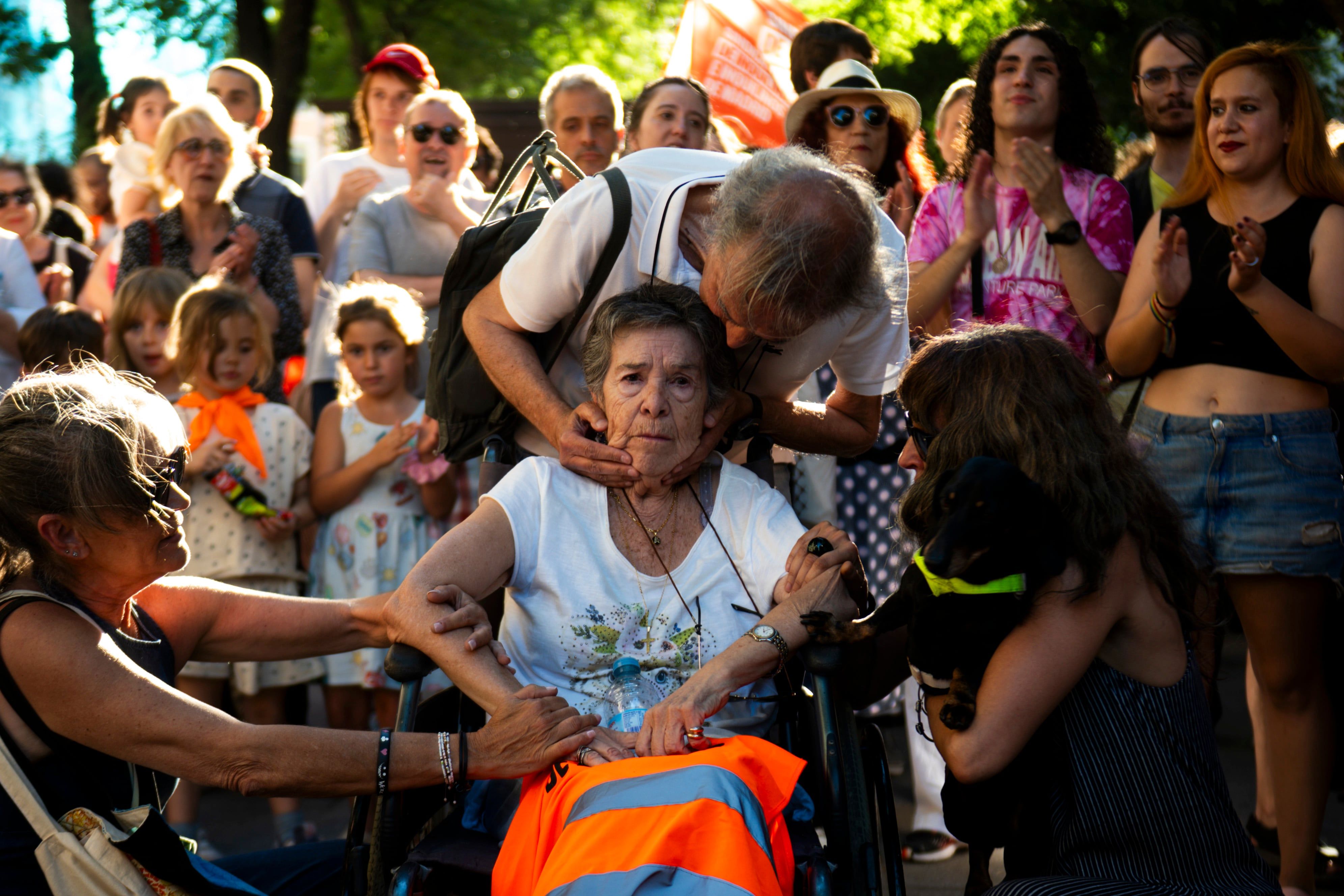
Hundreds of local residents gathered this Tuesday on Alcalde Sainz de Baranda street to support her and demand a solution. There were banners, music, families, children from the neighbourhood and an image that is hard to erase: an older woman surrounded by people who did not want to leave her alone in the face of the threat of eviction.
The eviction has been postponed for three weeks, until 24 June, but the uncertainty remains. The Sindicato de Inquilinas de Madrid considers that the extension resolves nothing and fears it merely seeks to defuse neighbourhood mobilisation. For Maricarmen, every day gained matters, but it does not clear up the underlying question: where to live if she is ultimately forced to leave.
The conflict goes back a long way. The building was sold in 2018 and the home ended up in the hands of a company that initiated legal action to terminate the contract. In 2025, Maricarmen received a rent increase of 2,650 euros, an impossible amount for her which turned her long-standing home into an economic threat.
The battle reached the Supreme Court, which ultimately ruled in favour of the property owner. The judgment limits succession to old contracts in cases like hers, unless there is a disability above 65%. Maricarmen has a recognised disability of 50%, so she falls outside that protection.
During the gathering, the resident asked public authorities to intervene. She did not speak as a professional activist, but as someone who does not understand how she can be left without a home after more than seven decades paying and living in the same place. That simplicity explains why the case has connected so quickly with the neighbourhood.
The protest also received support from artists such as Rozalén and Ismael Serrano, but its main strength was in the street: neighbours, families and groups who see in Maricarmen more than an individual case. They see a warning about what can happen when buildings change hands and housing becomes a financial operation.
Retiro is no stranger to that tension. Its streets have gained value, its rents have risen and many flats that were once part of neighbourhood life are now viewed as assets. Maricarmen’s case puts a face to that change: an older woman, a lifelong home and a city that will have to decide whether it still knows how to protect those who sustained it before it became so expensive.