
News
Barcelona faces another heatwave with a metro system pushed to its limits by the stifling heat
The fourth heatwave of the summer is once again testing those who use the Barcelona metro. Extreme temperatures have turned many platforms into uncomfortable spaces, especially during rush hour, when the heat, humidity, and lack of ventilation make waiting increasingly unpleasant.
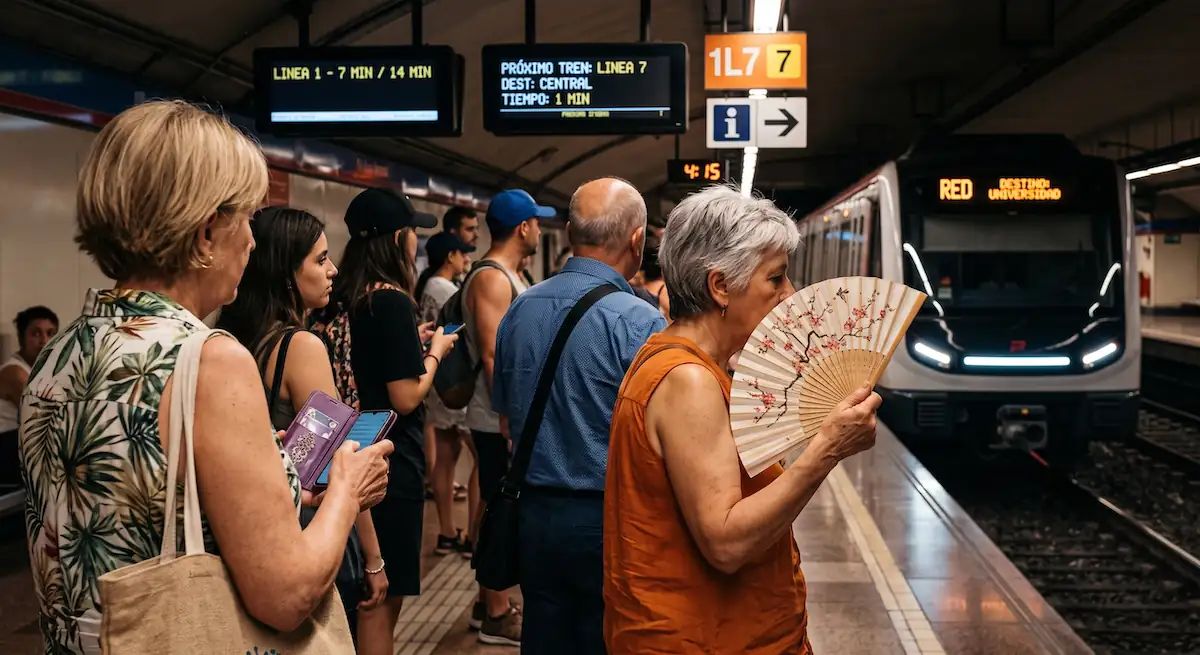
The main complaints are concentrated in heavily used stations such as Plaça Catalunya and Plaça de Sants. There, many users say that spending a few minutes on the platform is enough to notice a feeling of stifling heat that contrasts with the much cooler atmosphere inside the trains. Hand fans, water bottles and the search for any current of air are now part of many travellers’ routine.
Transportes Metropolitanos de Barcelona has spent years seeking solutions to reduce high temperatures underground. However, the characteristics of the older lines make any definitive improvement difficult. The main obstacle is the so-called “piston effect”: every time a train enters the station, it pushes the hot air accumulated in the tunnels towards the platforms, cancelling out much of the effect of cooling systems.
Experimental devices installed in recent years, such as the cooling tubes at Plaça Catalunya (L1) and Plaça de Sants (L5), continue to operate, although many users consider the relief still insufficient during episodes of extreme heat. Older people or those with health problems are the ones who suffer most from the high temperatures while waiting for the next train.
Failures in the trains’ air-conditioning systems are now less frequent than a few years ago, which improves comfort once the journey begins. Even so, the experience on the platforms remains one of the network’s main challenges during the summer months, especially when high temperatures and a large influx of passengers coincide.
The automated L9 and L10 lines offer a very different reality. As more modern infrastructure, they have independent ventilation systems and a design that limits the entry of hot air from the tunnels, making it possible to maintain far more stable temperatures in the stations.
Air-conditioning the platforms has become one of the great challenges of public transport in Barcelona. The combination of a century-old network, the increase in heatwaves and the growing number of travellers makes it necessary to seek solutions that improve comfort without compromising the operation of the metro. Meanwhile, thousands of users continue adapting their journeys to avoid the hottest times underground.