
News
Heat in Madrid schools sparks protest from families and teachers
Heat in Madrid’s public schools is no longer an end-of-term nuisance. In many schools, classrooms exceed 30 degrees and families, teachers and management teams say that studying, teaching or taking exams in those conditions has become a daily problem.
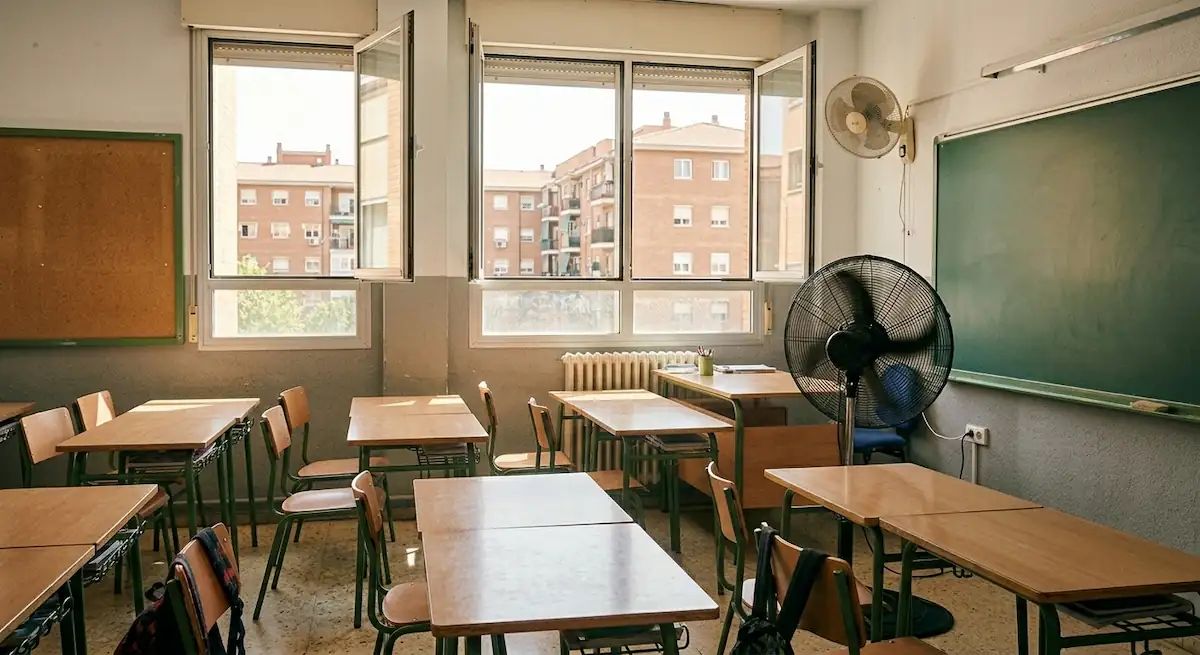
Tension has grown following statements by the Culture Minister, Mariano de Paco, who described heat in classrooms as a “source of inspiration”. The phrase has gone down particularly badly in an educational community that has spent years demanding real measures for schools without climate control, poorly insulated and prepared for a climate that no longer resembles that of decades ago.
In many schools, the solutions remain improvised. Water bottles, lowered blinds, cooling breaks, spray bottles or fans when available. None of this changes much when the classroom accumulates heat for hours and pupils lose concentration even before the morning ends.
The problem is more noticeable in older buildings. In schools such as CEIP Nuestra Señora de la Paloma, the lack of insulation affects both winter and summer. Its headteacher, Sandra Valiente, has warned of extreme temperatures in spaces such as the dining hall, where 42 degrees have been recorded.
Families have also begun to organise. Mothers’ and fathers’ associations and heads of state secondary schools are recording classroom temperatures and preparing complaints to the Ombudsman. Discontent is growing after a popular legislative initiative to climate-control schools, backed by more than 72,000 signatures, was rejected in the Madrid Assembly.
For teachers, heat already directly affects the right to learn. Teachers report dizziness, tiredness, lack of attention and greater difficulty following classes, especially during exam periods. The situation affects everyone, but becomes harsher for young children, teenagers with health problems and vulnerable pupils.
The Education Department refers to the 2026 Action Plan for High Temperature Episodes, which recommends adapting timetables, staying hydrated and taking extra precautions. It also assures that investment in climate control will increase for the next school year. In schools, however, the feeling is that responses arrive late and do not resolve this week’s heat.
The debate is no longer only about installing air conditioning. It is about adapting schools, playgrounds, dining halls and timetables to increasingly long summers and more extreme springs. While that reform arrives, thousands of pupils continue to spend the morning in classrooms where heat conditions health, attention and school life.
UPD: Pressure has also begun to shift to local councils. Torrejón de Ardoz says it has already climate-controlled its 21 state schools with municipal investment of around 7 million euros, while other municipalities such as Rivas, Alcorcón, Las Rozas, Boadilla and Pozuelo have activated their own measures to adapt schools to the heat. The Community of Madrid maintains that it has allocated 35 million over three years to measures against high temperatures, but families and unions insist that the response remains uneven and arrives too late for many schools and secondary schools.