
News
A gas leak paralyses several Metro lines and sparks criticism over the response
Tuesday brought one of those scenes Madrid knows all too well when the Metro fails: crowded platforms, travellers looking at their phones without knowing which alternative to take, and stations closed for hours. A gas leak in the Ventas area, caused by a pipe breaking during works, forced service to be interrupted on several lines and completely disrupted the routine of thousands of users.
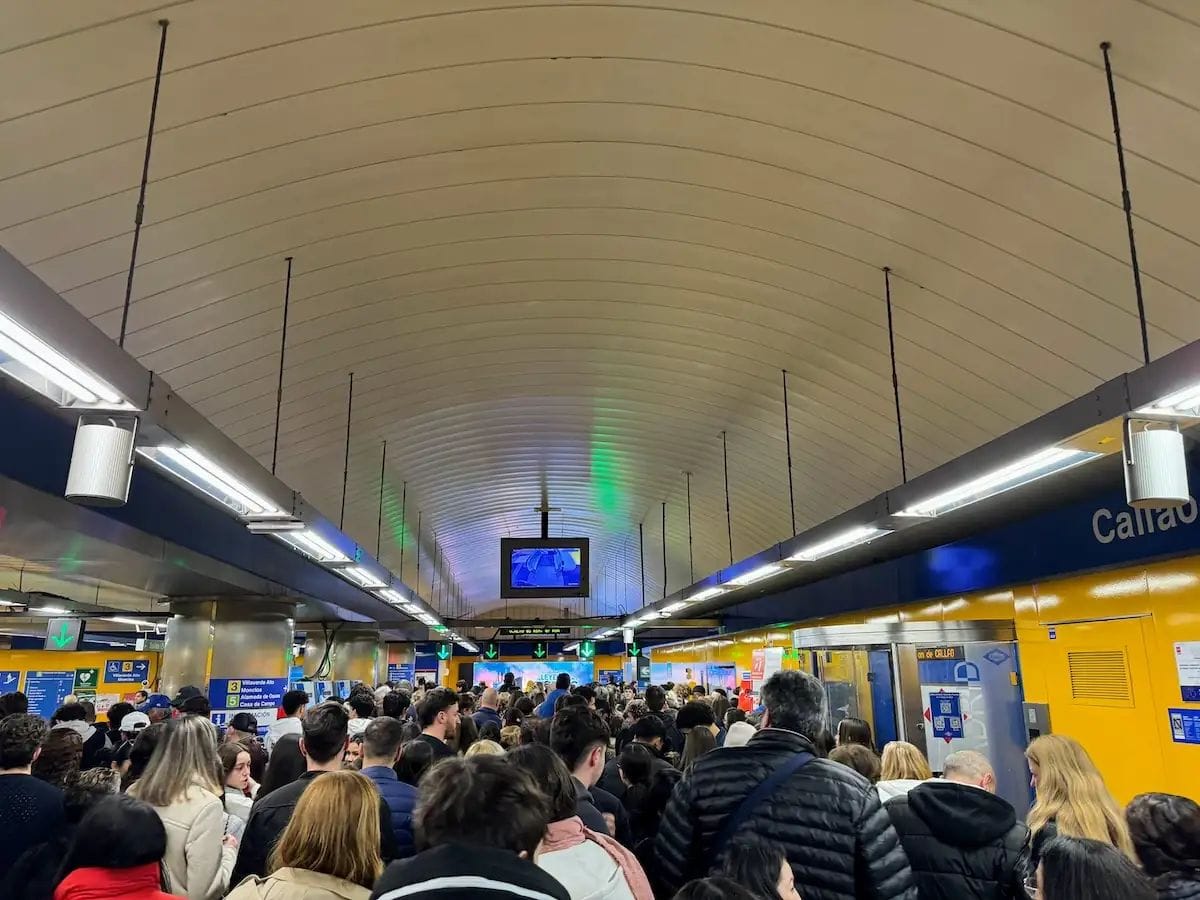
The incident particularly affected lines 2 and 5, although line 6 also suffered temporary closures. In total, up to 31 stations were affected at different times during the operation. Line 5 returned to normal after around six hours of work, while line 2 kept several stations closed for much of the afternoon.
The problem was not only the closure, but also the uncertainty. Many travellers encountered changes on the fly, impossible interchanges and overcrowded alternative routes. In a city where the Metro supports much of daily travel, a breakdown of this kind is immediately felt on buses, streets and nearby stations.
The political response came quickly. Más Madrid described the episode as one of the most serious incidents suffered by the underground and accused the regional government of a lack of investment and maintenance. Its transport spokesperson, María Acín, said the problem spread through the network like a chain of dominoes and called for explanations of the protocols applied.
PSOE also called for an internal investigation to clarify what happened during the works and whether there had been prior risk reports. MP Isabel Cadórniga pointed to a possible lack of foresight and coordination in safety matters, especially as this was an intervention capable of affecting critical infrastructure.
The council activated the Procedimiento de Incidentes Complejos and brought together the Centro Integrado de Seguridad y Emergencias to coordinate the response. José Luis Martínez-Almeida acknowledged the difficulty of the situation and defended the introduction of alternative measures to reduce the impact on mobility.
The trade unions, for their part, insisted that preventive evacuation was necessary whenever there was any suspicion of gas accumulating in tunnels or stations. Comisiones Obreras recalled that the underground has already experienced delicate episodes in other areas and stressed that, in such cases, safety must take precedence over continuity of service.
The Ventas incident once again leaves an uncomfortable question on the table: to what extent is such an extensive and heavily used network prepared to absorb serious failures without bringing half the city to a standstill? For users, the answer is measured quite simply: whether they can get to work, home or a medical appointment on time without a breakdown turning the day into an obstacle course.