
News
Montjuïc Castle opens two rooms on memory, war and the working world
Montjuïc Castle adds two exhibition spaces to view Barcelona's history from unusual angles. The rooms address linguistic diversity during the Civil War and Seat's role in the city's social transformation, different subjects connected by one idea: how collective memory is built.
The first exhibition, Viure, conviure i sobreviure: Brigades Internacionals i multilingüisme, looks at the foreign volunteers who arrived for the Guerra Civil and had to live together amid a mix of very different languages, cultures and literacy levels.
The exhibition explains how that diversity was not only a practical difficulty. It also shaped how they organised themselves, communicated and survived in an extreme context, where learning from one another could be as important as any military decision.
The second room is devoted to La Seat: Fàbrica de Transformacions, a look at the impact of the car company on Barcelona’s working, urban and social life. The exhibition does not linger on industrial nostalgia, but examines the tensions that ran through the factory during Francoism.
The route focuses on labour control, the clandestine organisation of the workers’ commissions and the demands that made Seat one of the major arenas of the labour movement. For many Barcelona families, that history is not remote: it forms part of the memory of parents, grandparents and entire neighbourhoods.
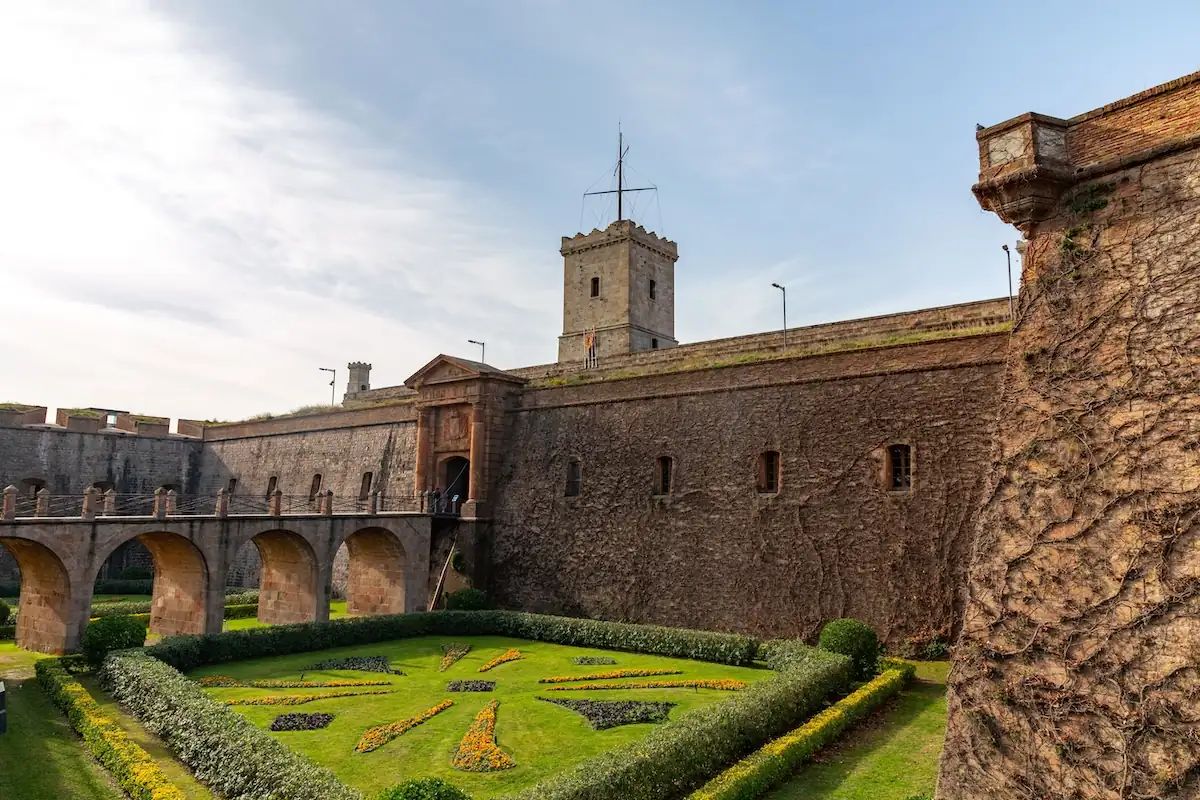
With these two exhibitions, the castle expands its role beyond that of a tourist viewpoint. Montjuïc remains one of the city’s most history-laden places, and each new room helps explain episodes that do not always appear on the more usual routes.
The location also matters. Going up to the castle allows visitors to look at Barcelona from above, but these exhibitions invite them to take the opposite path: to step down from the postcard and enter the stories of those who experienced wars, factories, labour struggles and social change from within.
The new rooms add a stop with more depth than a simple temporary exhibition. They are a way of understanding how Barcelona has also been built from mixed languages, industrial work, social conflict and shared memory.