
News
Kiosk closures leave Madrid without an urban ritual
Madrid is losing one of its most recognisable urban rituals: going down to buy the newspaper, greeting the newsagent and glancing at the front pages before carrying on. Every closure leaves more than an empty structure on the pavement; it erases a small meeting point from the neighbourhood routine.
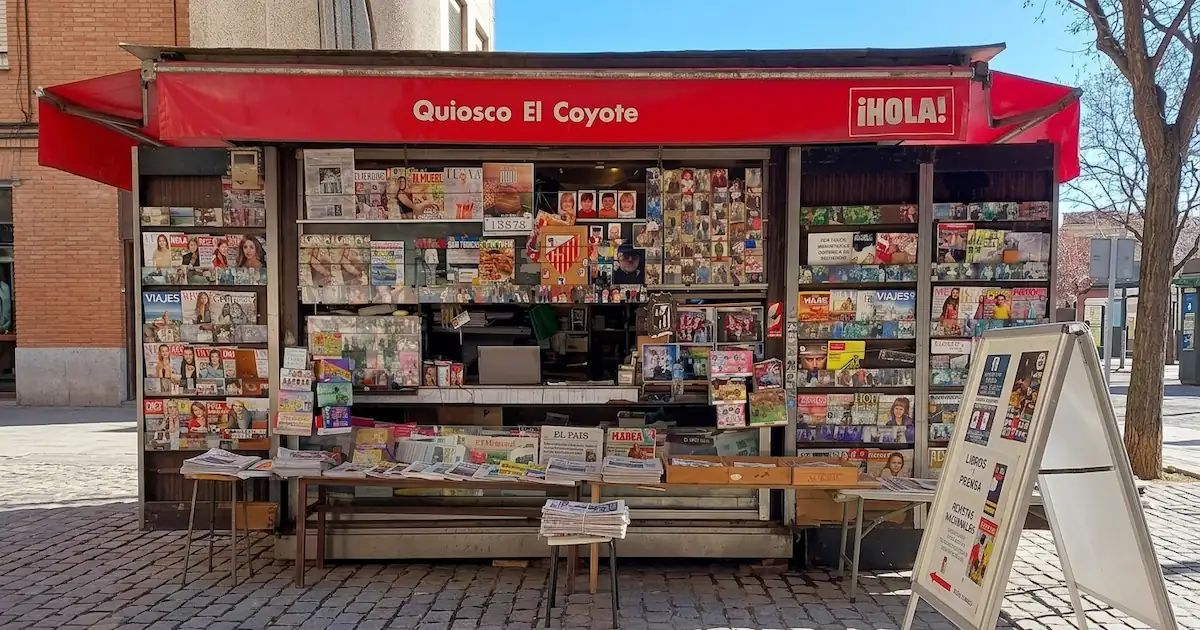
The decline is obvious. Where there used to be newspapers, magazines, stickers, collectibles and quick conversation, there are now closed kiosks or spaces trying to survive by selling other products. The city keeps working, but it loses part of that everyday life that made no noise.
The change has been coming for a long time. Print reading has fallen, news is consumed on mobiles, the pandemic hit purchasing habits and many regular customers have grown older. For many kiosk owners, selling newspapers is no longer enough to sustain the business.
Around 300 active kiosks remain in Madrid, a figure far from the 800 the city had at the start of the century. The decline has accelerated in the last decade and is especially worrying because of generational renewal: many sellers are close to retirement and there is not always someone willing to continue.
Added to that uncertainty is the horizon of 2029, when many municipal concessions expire. The sector demands clarity about what will happen to the kiosks and what room they will have to adapt to a city where consumption, mobility and local commerce have changed completely.
Some kiosks are already trying to reinvent themselves. Alongside newspapers and magazines, they add coffee, drinks, parcels, vinyl records, small accessories or useful neighbourhood services. The idea is simple: stop depending only on paper without losing the essence of a nearby, visible and easy-to-use point.
The problem is that not all can make that transition. There are kiosks that are too small, locations with little footfall, older licence holders or investments that are difficult to take on. That is why many closures happen without major announcements, almost silently, until a resident discovers they can no longer buy the Sunday paper there.
The disappearance of kiosks speaks of a more digital, faster and also somewhat less conversational Madrid. It is not only nostalgia for the printed press: when a kiosk closes, the neighbourhood loses a place to ask a question, exchange a couple of words, buy something in passing and recognise a familiar face in the middle of the street.