
News
El Clot turns shop shutters into an urban-art route
Closing a shop no longer means shutting down the street in El Clot. Seventeen neighbourhood businesses have turned their metal shutters into large murals with the help of Barcelona artist Roc Blackblock, creating a new urban-art route that appears only when the establishments pull down their shutters.
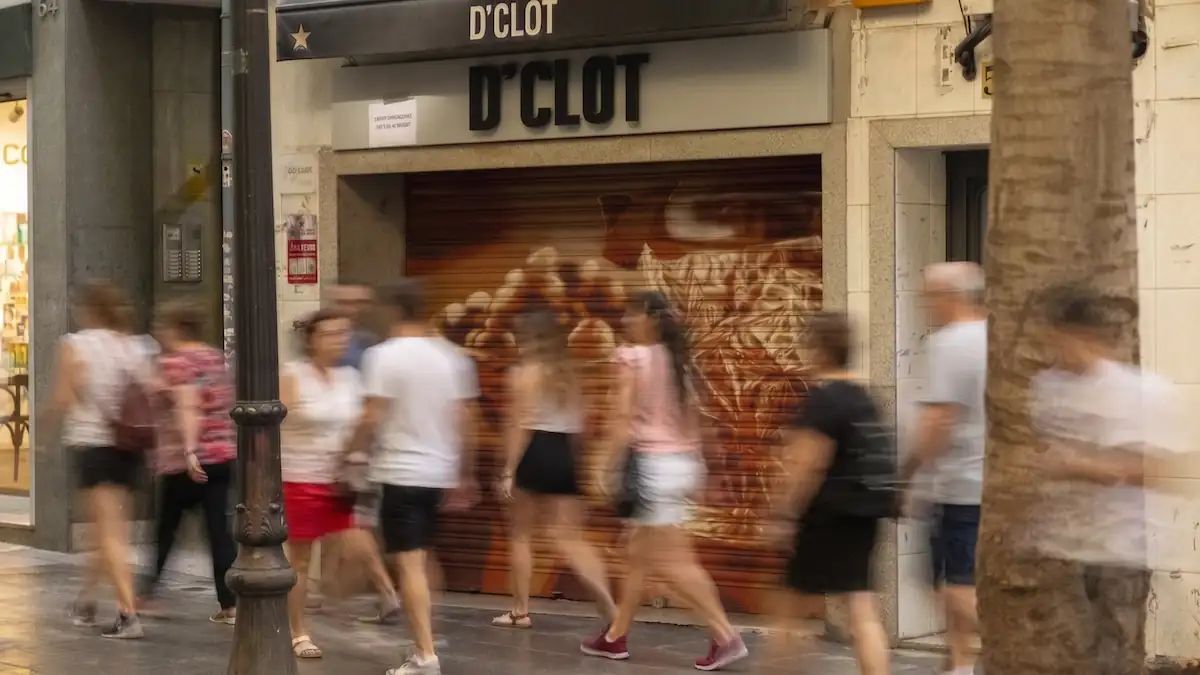
The initiative is part of Persianes que fan barri, a project that uses design and artistic creation to strengthen local commerce. In el Clot, the works have been carried out with the collaboration of Eix Comercial del Clot and seek to ensure that each painting has a direct connection with the history, activity or personality of the business behind it.
Blackblock has chosen an aesthetic reminiscent of old photographs, with a range of sepia tones and scenes linked to trades and everyday life. The result turns shutters that were previously grey surfaces or covered in graffiti into recognisable images for people who regularly live and shop in the neighbourhood.
The route passes through very different businesses. These include historic establishments such as Pastisseria Gual, open since the beginning of the 20th century, Xarcuteria Bosch and Bar Elias, alongside businesses such as Pastisseria La Palma, Merceria Mariona, DigiCopy Clot, Gelateria Mallorca and the restaurant A'Cañota.
On each shutter, the drawing starts from what happens inside the establishment. Coffees, sweets, cured meats, haberdashery items and other everyday elements help identify the businesses even when they are closed. The proposal thus turns the neighbourhood’s night-time or Sunday shopfronts into a small open-air gallery.
The Clot project forms part of a much larger intervention in Barcelona. A total of 185 businesses across the ten districts are taking part in Persianes que fan barri this year, with eleven artists and collectives linked to fifteen business associations. The initiative is being developed to coincide with the European Capital of Local Commerce title held by Barcelona in 2026.
In el Clot, the effect is particularly visible because the murals are spread along streets such as Mallorca, Rogent, València, Independència, Aragó, Clot and Muntanya. There is no need to enter an exhibition hall to see them: it is enough to walk around the neighbourhood when the establishments are closed.
The transformation also seeks to give the streets a second visual life outside trading hours. Where there was previously a succession of metal shutters, there are now scenes related to the businesses and the everyday memory of el Clot, turning the closing of shops into the moment when another way of discovering the neighbourhood begins.