
News
Sant Adrià guarantees the future of the tennis club before creating a riverside park
Club de Tennis de Sant Adrià de Besòs will continue operating with legal guarantees as long as it remains active. The Ayuntamiento has proposed an urban planning formula that protects the facilities’ current sporting use, while preparing the site’s future as a large green park beside the river.
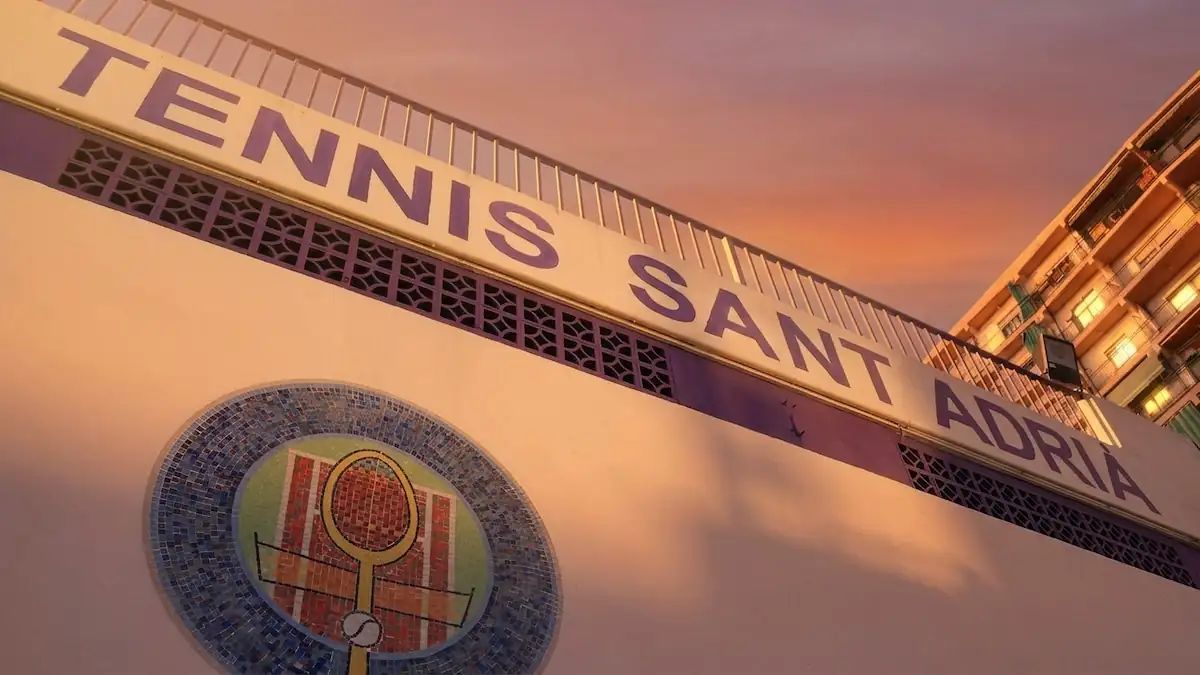
The proposal forms part of the municipal objections to the new Metropolitan Urban Development Master Plan. The aim is to avoid uncertainty for members, users and sports organisations, ensuring that the courts continue to be recognised as local facilities while the club remains open.
The change will come only when sporting activity ends permanently. At that point, the land will automatically become part of a park of socio-environmental interest, extending the green frontage on the left bank of the Besòs until it approaches the river mouth.
The operation seeks to balance two different needs. On the one hand, to maintain a sports space that forms part of the municipality’s daily life. On the other, to reserve land for a long-term environmental transformation in an area shaped for decades by infrastructure, industry and a lack of green spaces.
The plan does not affect only the club’s courts. The Ayuntamiento also wants the land on the Rambleta promenade and the strips located between the sports facilities and the river to be designated as public parkland, strengthening the continuity of the future green corridor.
The focus is on 2050, a distant but relevant horizon for planning the city in good time. Sant Adrià wants the Besòs to stop being a hard boundary and become a space for health, walking, sport and links with other metropolitan municipalities.
The mayor, Filo Cañete, frames this strategy within a broader transformation of the municipality. Recovering land for public use adds to other longstanding demands, such as calming traffic on the C-31 or dismantling the TERSA incinerator.
For many residents, Club de Tennis de Sant Adrià is not merely a sports facility. It is a meeting point, a neighbourhood routine and a space that has survived urban-planning changes in an environment heavily shaped by major infrastructure.
That is why the Ayuntamiento avoids proposing an immediate replacement. The idea is not to close the club to create a park, but to guarantee its continuity while it remains active and ensure that, when that stage ends, the land is not available for any use but for public green space.
The future of the Besòs bank will be decided in decisions such as this one. Sant Adrià wants to gain green areas without abruptly erasing spaces that already form part of local life. The challenge will be to ensure that the transition does not set sport against nature, but allows the city to care for what it has today while preparing a healthier environment for future generations.