
News
Comics take over the Metro: more than 5,000 people from Madrid rediscover Nave de Motores
The free exhibition Metro Cómic, a journey through panels, has attracted thousands of visitors in only three months. Nave de Motores is establishing itself as a meeting point between urban culture and transport memory in Madrid.
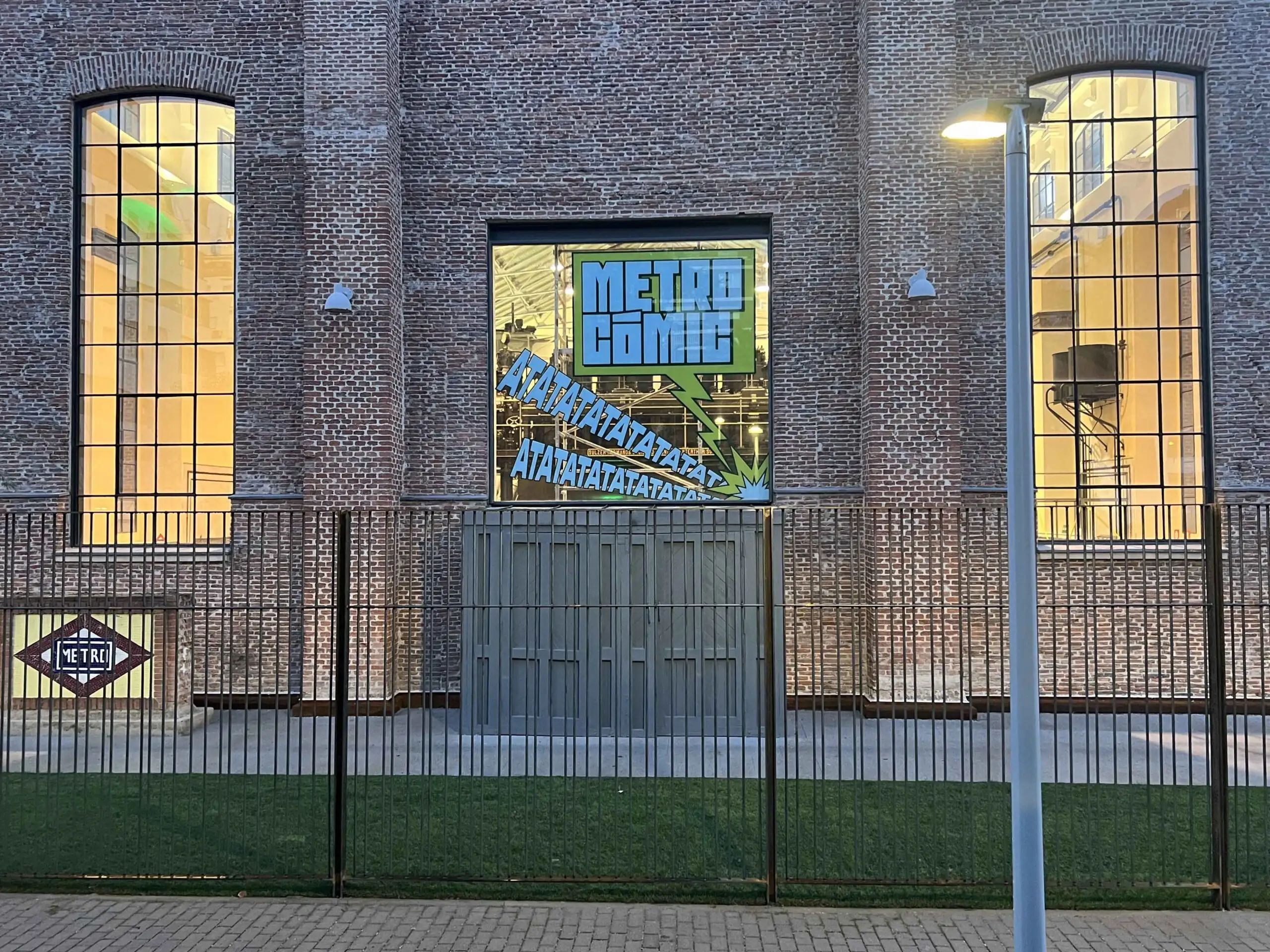
Madrid's cultural pulse is finding new spaces in which to mingle with everyday life. In just three months, more than 5,000 people have visited the free exhibition 'Metro Cómic, a journey through comic panels', installed at the Nave de Motores de Pacífico. The figure confirms Madrid residents' interest in proposals that connect art with the urban experience and public transport.
The exhibition, which can be visited until 7 April, makes the Metro the protagonist of national and international graphic stories. The route begins with a look at the fantasy and imagination that have accompanied underground travellers since 1980. Through different thematic areas, visitors explore how stations and trains inspire narratives and characters, and how comics become a way of telling the story of the city.
During the visit, visitors can also discover the project 'Metrografías: Tales of the Metro, energy and Madrid', which uses comics to tell the story of the origins of the underground railway and its relationship with electricity. The exhibition is open on Friday afternoons, and on Saturdays and Sundays in the morning and afternoon, making it easier for both families and curious people looking for different weekend plans to visit.
The Nave de Motores, one of the most distinctive spaces in Madrid's industrial heritage, thus reinforces its role as a cultural landmark. The Regional Minister for Housing, Transport and Infrastructure, Jorge Rodrigo, stresses that the Metro is part of everyday life in Madrid and that many authors have found inspiration in its stations to create new stories.
The Nave de Motores, located in the Pacífico neighbourhood, is much more than a Metro museum. Its industrial architecture, the work of Antonio Palacios, and its history as the city's energy engine have made it a landmark for those seeking to understand Madrid's evolution. For years, the space has hosted exhibitions and activities that bring the past and present of urban transport closer to new generations. Madrid is already beginning to move in that direction: culture and mobility go hand in hand in unexpected corners.