
News
The Rodalies crisis drives up intercity bus use in Barcelona
The Rodalies crisis is changing how thousands of people get around in Barcelona and its metropolitan area. Faced with train delays, cancellations, and uncertainty, many travellers have started looking for a more reliable alternative: the intercity bus.
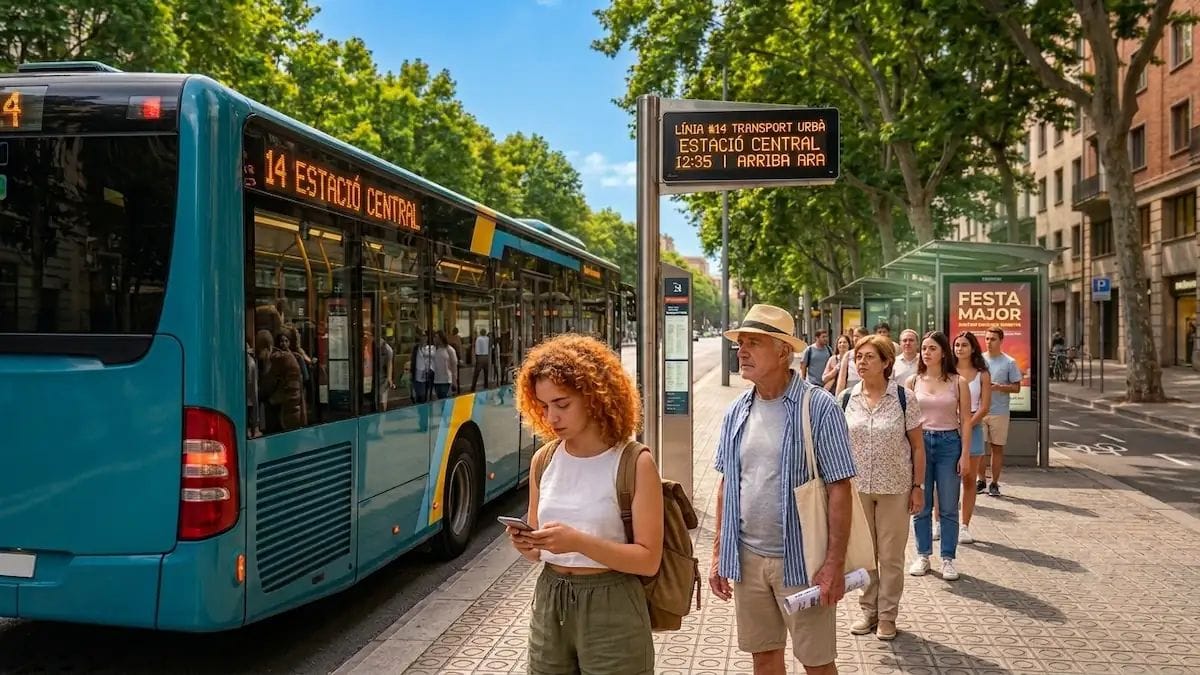
The scene is now a regular one during rush hour. Packed stops, long queues, and passengers wondering whether they'll get on the first bus or have to wait for the next. What used to be a secondary option for many journeys has become a practical way to get to work, class, or an appointment without relying on the train.
The shift is noticeable both within Barcelona and in towns connected to the city. People who have used Rodalies daily for years are reorganising their routines, leaving home earlier or trying new combinations of transport to avoid getting stuck by a disruption.
The problem is that the bus is also starting to feel the strain. On some routes, demand exceeds available capacity and buses arrive full at certain stops. Increasing frequency helps, but it’s not always enough when the transfer of passengers is concentrated in the same time slots.
The situation makes it clear just how much Rodalies supports everyday mobility in the metropolitan area. When the train fails, the impact isn’t limited to the platforms: it spills over onto the roads, bus stops, journey times, and the daily organisation of thousands of families.
It also forces us to see public transport as a complete network, not as isolated services. The bus can ease some of the pressure, but if it becomes the only reliable alternative for too many people, the system ends up shifting the problem from one place to another.
The queues at bus stops sum up the moment Barcelona is living through: travellers adapt, try new routes, and change habits, but they need certainty. As long as Rodalies does not regain reliability, every rush hour will remain a small test of endurance for those who depend on public transport to get around the city and its metropolitan area.