
News
Barcelona will open a Gaudí museum at the Teresianas in 2028
In 2028, Barcelona will add a new museum dedicated to Antoni Gaudí in one of his least visited buildings. Colegio de las Teresianas, in Sarrià, will open part of its spaces to the public and become a cultural centre that will allow residents and visitors to discover a work that has until now been difficult to access.
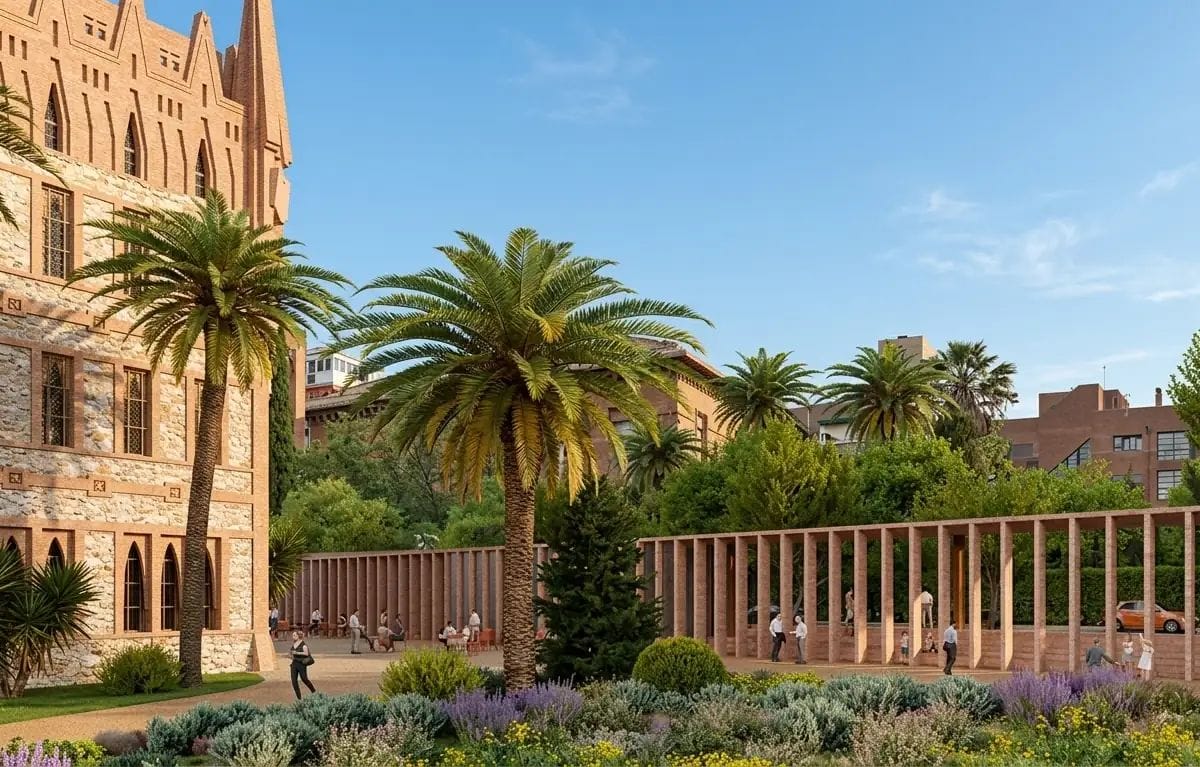
The future Museo Gaudí Teresianas aims to showcase a different side of the architect, moving away from the more familiar routes of the Sagrada Família, la Pedrera, or Casa Batlló. Its opening will allow visitors inside a building that for decades has served mainly as an educational and religious space.
The project will combine heritage, art, and technology. The proposal includes the Espacio Gaudí 360º, a floor dedicated to a permanent exhibition on the architect’s life and work, featuring audiovisuals, models, interactive modules, and panoramic projections.
There are also plans for a virtual reality room to offer a more immersive experience of Gaudí’s creative process. Another floor will be reserved for temporary exhibitions, focusing on themes such as beauty, spirituality, or transcendence.
The opening comes after final authorisation from the Vatican and will coincide with the Año Gaudí, which will fill Barcelona with activities centred on the architect. For the city, it means adding a new cultural attraction in Sarrià and spreading some of Gaudí’s appeal beyond the sites already crowded with tourists.
The Colegio de las Teresianas was built between 1888 and 1890 and stands out for a more restrained appearance compared to other works by Gaudí. The exposed brickwork, geometric forms, and overall austerity show how the architect adapted his style to a building designed for education and religious life.
That difference is precisely one of the attractions of the future museum. Las Teresianas allows us to understand a less ornamental, more restrained Gaudí, who paid close attention to the function of space. For those already familiar with his most famous works, it can be a way to complete the map of the architect in Barcelona.
The opening will bring more cultural activity and a new point of interest for visitors in a neighbourhood that is usually off the main tourist routes. For Barcelona, the museum adds another layer to the understanding of Gaudí: not only as an international icon, but as a creator connected to living, discreet buildings that are still waiting to be discovered.