
News
Rayo’s stadium is transformed: greater capacity, VIP area and new building
Estadio de Vallecas is preparing for one of the biggest transformations in its recent history. The Community of Madrid has presented a comprehensive refurbishment plan to modernise Rayo Vallecano’s ground, expand its capacity and keep the team in its neighbourhood, an issue especially sensitive for the red-sashed supporters.
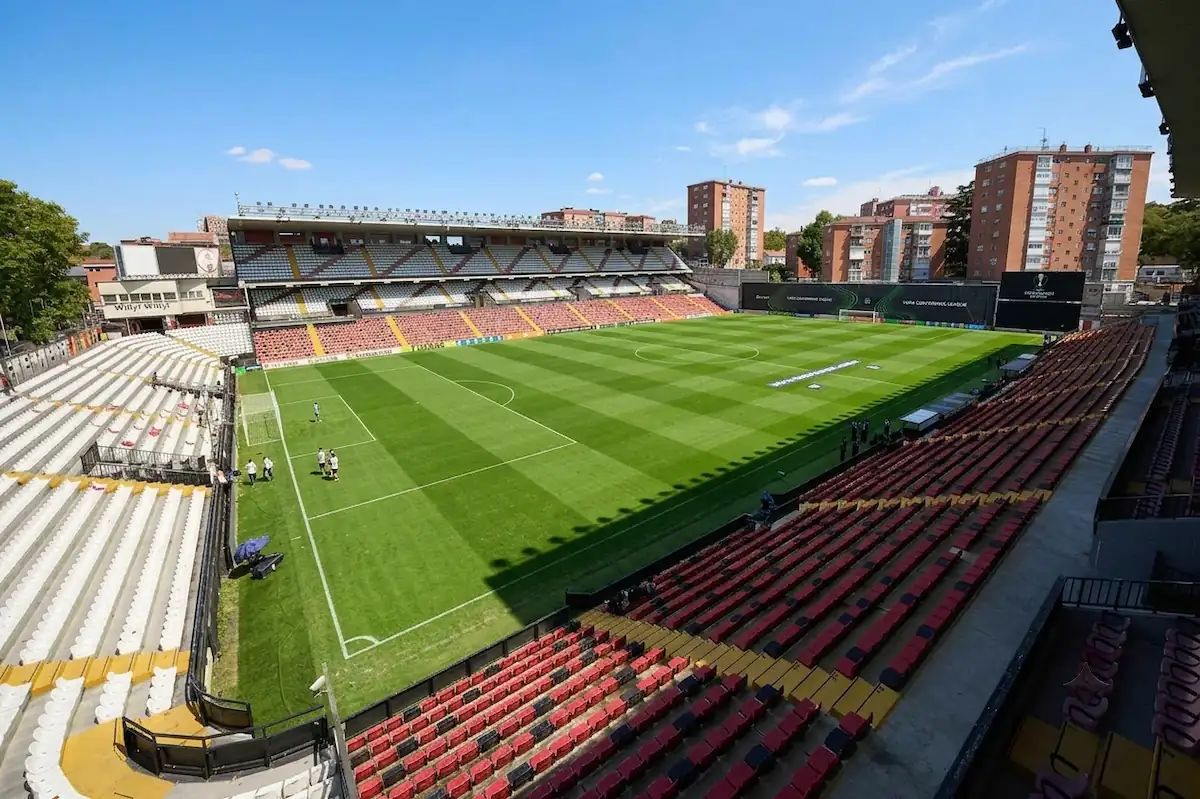
The project plans to increase capacity to at least 18,500 spectators, around 4,000 more than at present. The expansion will be achieved with a new stand and cantilevered tiers that will add space upwards without changing the stadium’s footprint, which is located right in the urban area of Portazgo.
One of the most visible changes will be the restoration of the end facing Teniente Muñoz Díaz street. The design takes inspiration from the stadium’s former layout, when it had stands on all four sides, aiming to bring back that more enclosed and compact look.
The renovation will also affect the stadium’s interior. Plans include new seats, corridors, stairways, bathrooms, changing rooms, press room, mixed zone, VIP box, and other service areas. The pitch will also be adapted to meet the standards required by LaLiga and international competitions.
The façade will be updated, though its historic identity will not be lost entirely. The stadium is partially protected under the Catálogo de Edificios Protegidos del Plan General de Madrid, so the proposal includes a double, lightweight, translucent skin that will allow part of the original structure to remain visible.
The plan also includes a new multifunctional building on a plot owned by the Comunidad de Madrid on Arroyo del Olivar street. This building will be directly connected to the stadium and will have underground parking, as well as spaces designed to expand the venue’s services.
This building could house VIP areas, facilities linked to the club’s activities, and spaces for sports or social initiatives when there are no matches. The Comunidad argues that the renovation should not be limited to improving the pitch, but should turn it into a more vibrant facility for the Puente de Vallecas district.
The planned investment amounts to 60 million euros, with an estimated completion time of 24 months, not including the construction of the annex. The regional government intends to carry out the works alongside sporting activity so that Rayo does not have to play outside Vallecas during the renovation.
The proposal comes after months of debate about the future of the club and its stadium. The president of Rayo had argued for the need for a new ground, while a significant part of the fanbase wants to maintain the connection with Vallecas. The renovation seeks to address this tension: to grow without leaving the neighbourhood behind.
The challenge will be to ensure that modernisation does not erase the stadium’s character. Vallecas is not just any ground in Madrid: it is a symbol of local identity, grassroots football, and collective memory. The question now is whether the new project can add comfort, business, and safety without turning Rayo’s old ground into a place unrecognisable to those who have filled it for decades.