
News
The Supreme Court rejects Real Madrid's appeal over Bernabéu concerts
The future of concerts at Santiago Bernabéu remains unresolved. The Supreme Court has declared inadmissible the appeal submitted by Real Madrid, but it has not decided whether music shows at the stadium are legal or illegal. The underlying issue will now return to Administrative Court No. 31 in Madrid.
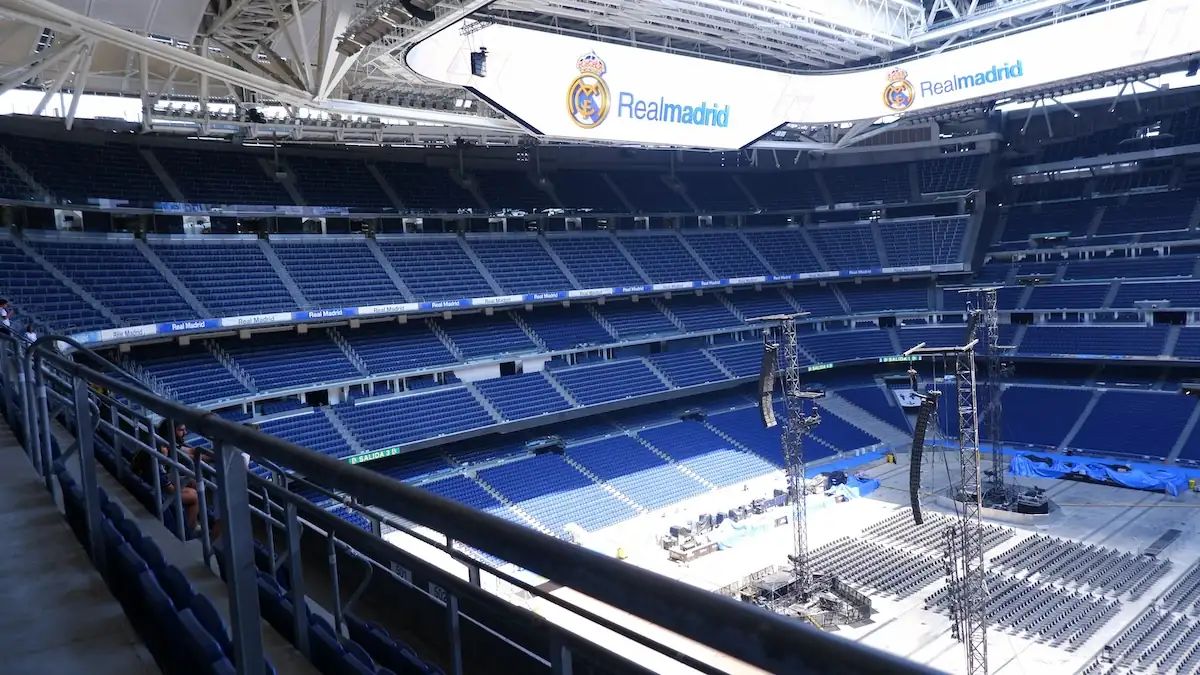
The decision keeps the dispute alive between the club, affected residents and the authorities. What must be clarified is whether the stadium's Plan Especial and the licences granted after its refurbishment allow concerts and major musical events to be held in a venue located in the heart of a residential neighbourhood.
The case stems from a claim by the Asociación Vecinal de Perjudicados por el Bernabéu, which asked the Ayuntamiento de Madrid to declare that the stadium's licences did not cover concerts. The court initially rejected the appeal, but the Tribunal Superior de Justicia de Madrid corrected that decision and ordered the substance of the matter to be examined.
Real Madrid tried to halt that course before the Supremo, but the high court has not admitted its appeal in cassation. The reason is procedural: it considers that it was not sufficiently substantiated and did not present sufficient cassational interest to create case law.
The club has responded by stressing that there is no judicial ruling declaring concerts held at the Bernabéu illegal. According to its interpretation, the Supremo has only resolved a procedural matter and the real debate remains open before the relevant court.
For residents, however, the decision means that their claim will go ahead. The conflict is not only about music, but about noise, crowds, traffic, departure times and daily coexistence in an area of Chamartín that already bears heavy pressure on match days.
The Ayuntamiento and the Community of Madrid are also awaiting the outcome. The refurbished Bernabéu aspires to operate as a major sports, cultural and leisure venue, but any decision about concerts will have direct consequences for the capital's schedule of major events.
The case goes far beyond a stadium. The city will have to decide how far the model of large-scale shows can grow in inhabited neighbourhoods and what limits should protect residents' rest. The Bernabéu may be a key part of the cultural offering, but its urban fit has yet to be resolved.