
News
The future of the convent gardens in Chamartín divides Madrid
The Ayuntamiento de Madrid has given the go-ahead for a student residence in the protected gardens of the former Damas Apostólicas convent, despite opposition from local residents and a court ruling. The change affects one of the neighbourhood's green lungs and reopens the debate about heritage protection in the city.
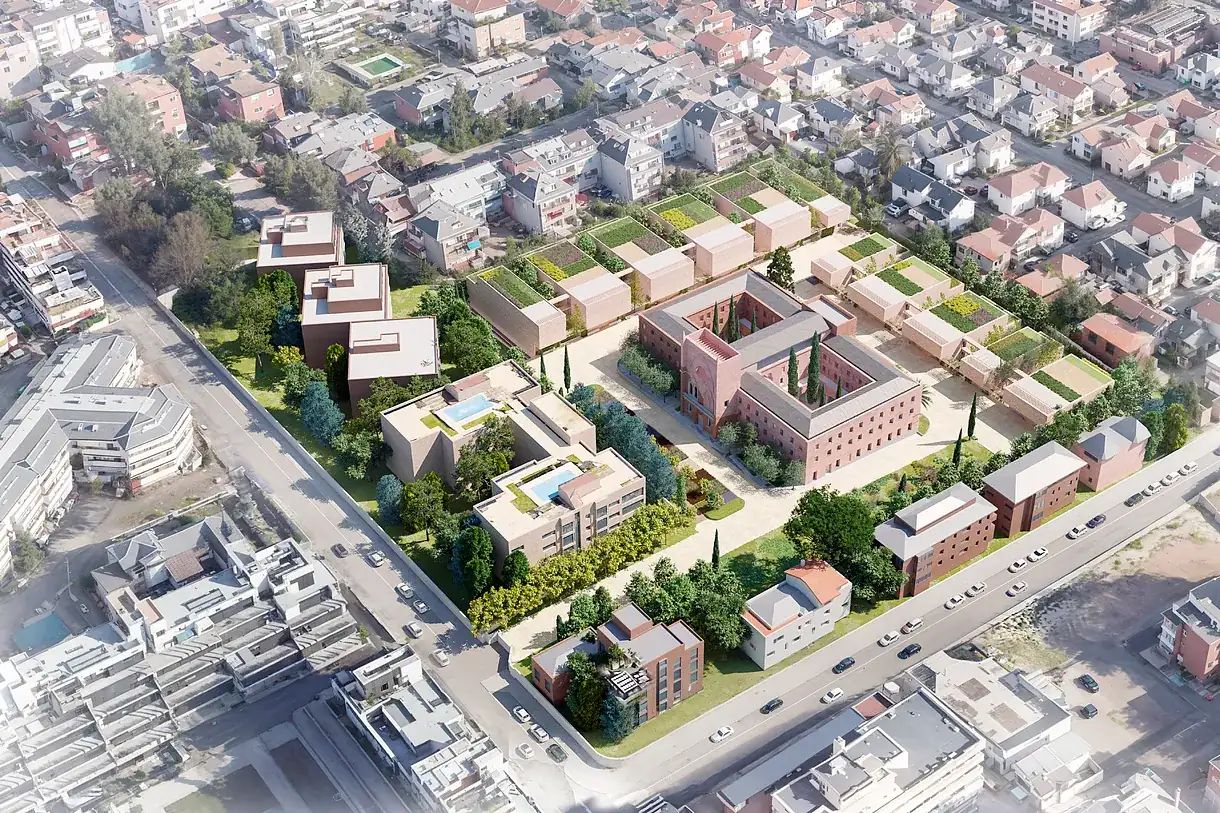
In Chamartín, the transformation of the gardens of the former Damas Apostólicas convent is no longer merely an urban-planning matter: it is an issue that touches the everyday lives of people who walk, live or seek a green respite in northern Madrid. The city council, under the leadership of José Luis Martínez-Almeida, has approved an amendment to the General Urban Development Plan that will allow a student residence to be built in this protected enclave, despite opposition from residents and a court ruling that required the complex to be preserved in its entirety.
The decision, taken alone by the municipal governing team, opens the door for Global Alchiba SL to build eleven buildings on a plot of more than 16,000 square metres. The project provides for reconstruction of the main neo-Mudéjar-style building and the creation of 850 student rooms, distributed among two- and three-storey blocks with planted roofs. To do this, more than 200 trees will need to be felled, which has raised alarm among environmental associations and neighbourhood groups.
The site was declared an Asset of Heritage Interest in 2018, although the initial protection covered only part of the gardens. A later ruling by the High Court of Justice of Madrid extended that protection to the whole complex, including the open spaces and historic orchards. However, the city council has chosen to reinterpret the limits of that protection, allowing construction in the northern and eastern areas, precisely where the ruling called for the utmost caution.
The controversy is not new. As early as 2017, the owner began the partial demolition of the convent, a 1929 building, relying on a declaration of responsibility and with municipal approval, although the plot did not appear in the updated catalogue of protected assets. The intervention was halted by the Community of Madrid after it found that the building was protected by law. Since then, the debate over the site’s future has grown, with complaints filed with the Public Prosecutor’s Office and mobilisation by associations such as Ecologistas en Acción and Madrid, Ciudad y Patrimonio.
Criticism centres on the loss of historical and environmental value. Architects and heritage groups consider that reducing the protection of the gardens distorts the original meaning of the complex, conceived as a unified space in which the orchards were an essential part of convent life. The felling of trees and construction of new buildings, they warn, will irreversibly transform the landscape and character of the neighbourhood.
The city council argues that the planning amendment is compatible with heritage protection, maintaining that the new buildings will respect historical memory through architectural and botanical requirements. However, opposition groups such as PSOE and Más Madrid reject the measure and accuse the municipal government of ignoring the court ruling and prioritising private interests over the common heritage. Both parties have submitted objections and warn that the conflict could end up in court again.
The debate over the future of this space does not affect only those who live in Chamartín. The transformation of one of the district’s few historic gardens affects the supply of green areas, the identity of the neighbourhood and the way Madrid manages its heritage amid urban change. The city is adjusting its rhythm once again, and the outcome will set the pace of local life in the coming years.
The former Damas Apostólicas convent, with its neo-Mudéjar architecture and tree-lined gardens, has for decades been a quiet refuge amid Chamartín’s growth. Beyond its heritage value, the site has served as a green lung and meeting point for generations of residents. Its history reflects Madrid’s evolution: from a religious space to an enclave contested by urban-development interests, through years of neglect and debates about its future. Today, its fate is once again at the centre of the conversation about how the city balances development and memory.