
News
The Gremi de Floristes warns: Sant Jordi fills with rose stalls and loses La Rambla this year
Barcelona will experience a Sant Jordi marked by the saturation of rose stalls, the absence of La Rambla because of works and the forecast of record sales in other areas of the centre.
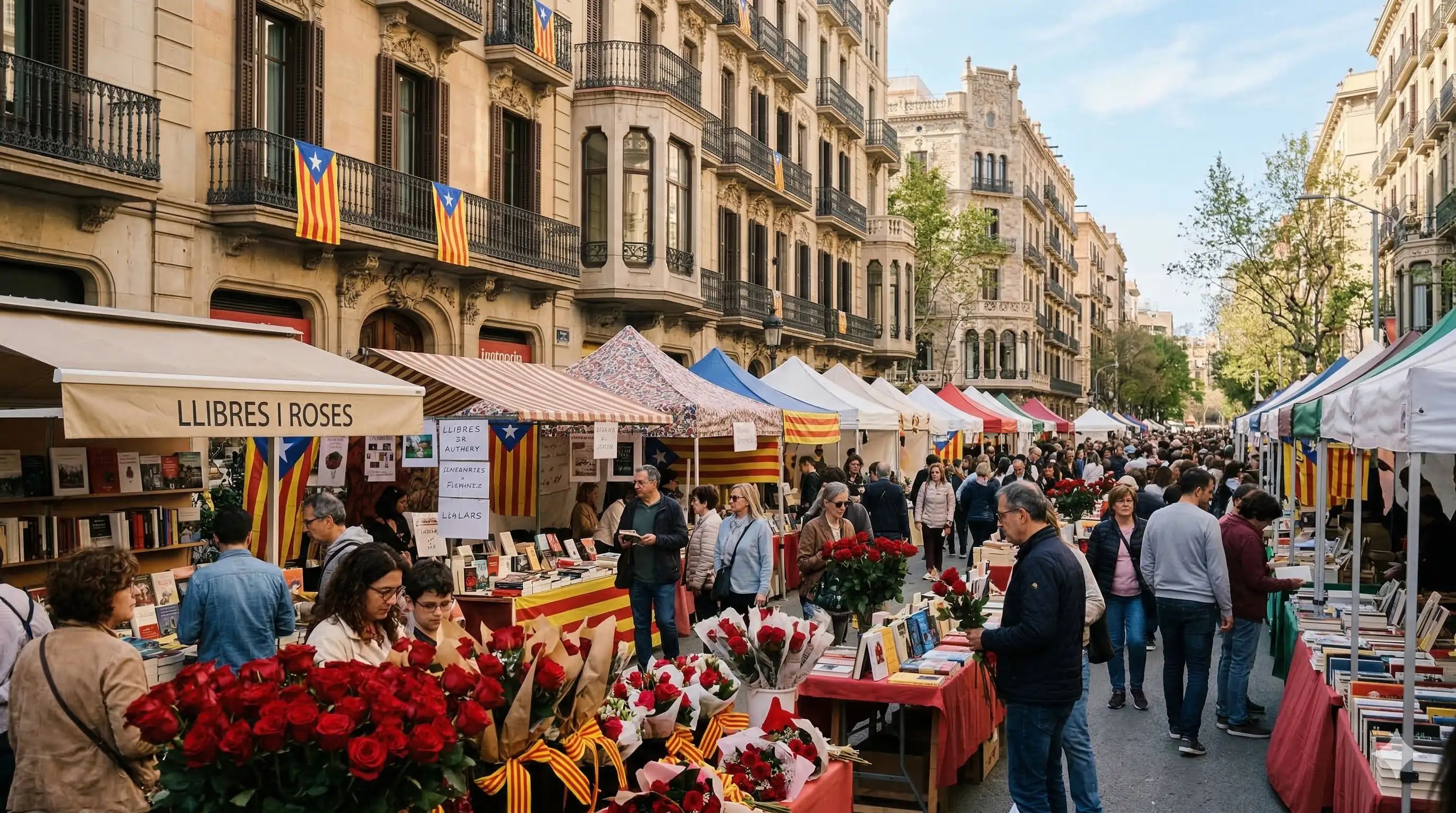
The Gremi de Floristes warns about the excess of rose stalls on Sant Jordi. The municipal permit system is at its limit. La Rambla will have no stalls this year. The guild expects record sales despite the saturation.
This year's Sant Jordi celebration in Barcelona is facing an unprecedented situation: the Gremi de Floristes is concerned about the avalanche of rose stalls that will flood the streets. The ease of applying for municipal permits has driven up demand, to the point that the system has been strained by thousands of applications registered in a very short time, according to the Gremi de Floristes. Far from improving the experience, this saturation threatens to detract from the day and make sales more difficult for sector professionals.
The president of the Gremi de Floristes, Joan Guillén, believes that the current model for occupying public thoroughfares has reached its limit. He points out that the proliferation of stalls run by individuals and organisations not only does not benefit consumers, but may negatively affect the quality and price of roses. According to Guillén, the points of sale located between the literary superblock, Portal de l’Àngel and Avinguda de la Catedral already more than cover the city's demand.
This year, moreover, La Rambla will be left without rose and book stalls due to the works. The guild accepts the loss of this emblematic location, although it hopes to return in 2027. Despite this setback, florists remain optimistic and expect Sant Jordi to record historic sales figures, driven by anticipation and the concentration of people in other central areas.
The absence of La Rambla as the festival's traditional epicentre makes it necessary to redraw the Sant Jordi map in Barcelona. Organisers and sellers are adapting to the new routes, while the city prepares to experience one of the largest and most complex editions of recent years.
In recent years, the literary superblock has established itself as one of the key Sant Jordi spaces in Barcelona. This major pedestrian axis, which spans several central streets, allows visitors to move around more freely and brings together cultural activities, author signings, and book and rose sales. Its success has transformed the festival experience, making it a benchmark for Barcelonans and visitors who want to enjoy the tradition in a more accessible and safe setting.
For many Barcelonans, Sant Jordi is as much the smell of a freshly cut rose as the game of getting lost among stalls and signing books in the street, and this year that feeling will arrive by other routes: La Rambla will no longer be the main axis; rather, the literary superblock and the new central corridors will draw that map of stalls, queues and impromptu photos. Amid the debate over saturation and the licensing model, something remains intact: the desire to fill the city with flowers and books, even if the board has moved a few metres further up.