
News
ALS gains visibility in Barcelona with Unzué and the law, but hundreds of families remain at their limit
Fundació Catalana d’ELA Miquel Valls and Juan Carlos Unzué's involvement have made visible a disease affecting around 800 people in Catalonia, although intensive care, the lack of technical equipment and the burden on families remain enormous.
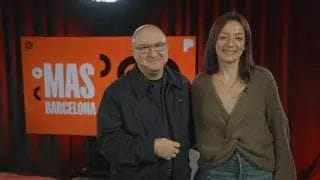
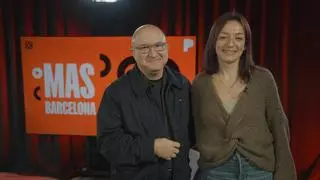
The visibility of Amyotrophic Lateral Sclerosis in Barcelona has changed radically. The work of Fundació Catalana d'ELA Miquel Valls and Juan Carlos Unzué’s involvement have been key. More than 800 families live the reality of ALS in Catalonia. The new law is progress, but daily challenges persist.
In Barcelona, the lives of hundreds of families have changed in recent years through the fight against Amyotrophic Lateral Sclerosis. Fundació Catalana d'ELA Miquel Valls, headed by Esther Sellés, supports every day those living with this disease and their loved ones, seeking to improve their quality of life and give a voice to a reality that until recently remained invisible.
Juan Carlos Unzué has marked a turning point. His involvement has brought ALS into headlines and sparked the interest of politicians and the media. Thanks to his presence, fundraising for research has exceeded €3 million and approval of Ley ELA has ceased to be a utopia. Without his drive, the foundation acknowledges, the situation would be very different.
However, uncertainty still weighs over the causes of the disease. In Catalonia, around 800 people face the challenges of ALS each day, while experts point to environmental and chemical factors or even stress as possible triggers. The foundation stresses the importance of emotional education from childhood to strengthen resilience in the face of the unexpected.
The Fundació Miquel Valls team, made up of around thirty professionals, cares for those affected both in their homes and in the city’s specialist units. Care is constant and personalised, adapting to each family’s changing needs.
The reality of ALS in Barcelona also brings the debate on euthanasia to the fore. The dependency law barely covers a minimal part of care, forcing families to take on most of the burden. When care becomes unmanageable and dependency is total, some patients choose to request euthanasia so as not to become an unsustainable burden on their relatives.
The new Ley ELA recognises the need for continuous supervision, since a lapse of only minutes can be fatal. Dependence on ventilation devices requires permanent monitoring, and any failure can have irreversible consequences, as foundation teams have experienced on more than one occasion.
Fundació Catalana d'ELA Miquel Valls has for years been a benchmark in supporting people with ALS in Catalonia. Its work goes far beyond care support: it promotes research, encourages social awareness and fights for affected people’s rights. The daily work of its professionals has made it possible to weave a support network which, though insufficient given the scale of the challenge, represents essential relief for many families in Barcelona and its surrounding area.
Foundation origin: Founded in 2005 in Calella (a family affected by Miquel Valls); more than 500 patients/year in 2024.
Ley ELA details: Oct 2024 (unanimous Congress vote); dependency level III+ (24-hour care); €5,000–€15,000/month progressively (8–24h); 100 deaths in Catalonia without aid in the first year (until Oct 2025).
Specific challenges: Technical equipment (hoists/beds) not covered by Ley Dep.; difficulty hiring specialised carers (tracheotomy); 100 deaths in Catalonia without aid in 2024–25.
Juan Carlos Unzué: Events 20 Nov 2023 (Univ. station); talks/outreach Sant Pau/Neuromuscular BCN.
ELA Cat: around 800 affected people (confirmed 10 Mar 2026); stress/chemical/environmental factors debated.