
News
Robert Capa's legacy moves away from Vallecas after the international veto
The future Peironcely, 10 cultural centre loses the support of Fundación Robert Capa. Madrid City Council will not be able to use the photographer's name. The space's change of direction creates discontent among residents and cultural organisations.
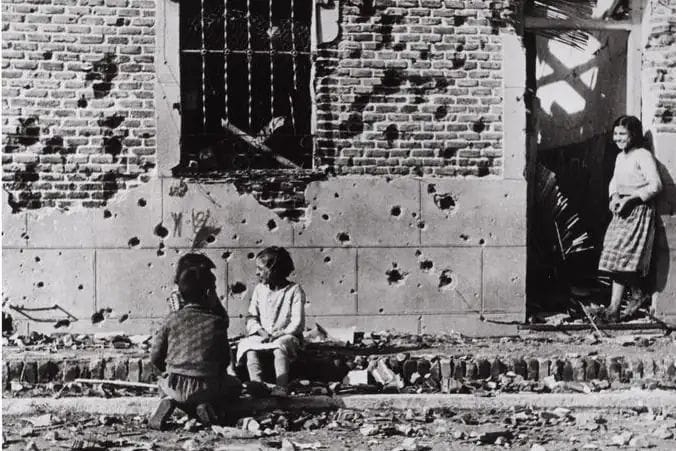
The project to transform the home at Peironcely, 10, in Entrevías, into a cultural landmark for Madrid begins amid controversy. Fundación Robert Capa, through New York's International Center of Photography (ICP), has informed the City Council that it does not authorise the use of the celebrated photographer's name, image or legacy in the new cultural centre planned for the neighbourhood. The decision comes after the municipal shift, which has set aside the original proposal driven by Plataforma #SalvaPeironcely10, made up of local residents and artists who fought for years to save the house where Capa captured one of his most iconic images of the Guerra Civil.
The City Council had announced the creation of a Centro de Experimentación Cultural Robert Capa, aimed at young people at risk of exclusion and managed by Fundación José María de Llanos. However, the change in focus — from a Guerra Civil interpretation centre to a youth cultural space — has generated rejection among neighbourhood groups and cultural organisations. The platform denounces that handing the building over to a foundation unconnected to the original project distorts a decade of work and breaks the consensus reached to preserve the site's historical memory.
The international reaction has been swift. In a letter, the ICP has warned that any attempt to link Robert Capa's name to this new plan will lack institutional legitimacy and international backing. In addition, the Capa Haus Initiative in Leipzig has regretted the loss of the opportunity to twin the two historic spaces and has supported the academic and artistic work of the Madrid platform.
The future of the building, acquired by the City Council in 2021 after years of abandonment, now lies in becoming a centre for artistic activities for children and young people from the neighbourhood. The council plans to invest more than one million euros in its rehabilitation and open the space in 2028, after a year of technical studies. Meanwhile, the platform and the ICP insist that the social project should be relocated to another municipal space and that Peironcely, 10, should retain its value as a symbol of Madrid's democratic memory.
Peironcely, 10, is much more than an address on the map of Vallecas. The small brick house, immortalised by Robert Capa in the midst of the Guerra Civil, has become an emblem of neighbourhood resistance and the city's historical memory. For years, the deterioration of the building was a cause for concern and mobilisation in the neighbourhood. Today, its future continues to generate debate about how Madrid manages spaces with history and the role of citizens in defending cultural heritage.