
News
The Liceu commits to the Ring of the Nibelung and shakes up the cultural scene
The Liceu sets out to programme Wagner’s complete tetralogy. Four years, four operas and an unprecedented artistic and logistical challenge. The collaboration with Munich’s Bayerische Staatsoper marks a milestone. Barcelona will experience a unique Wagnerian event.
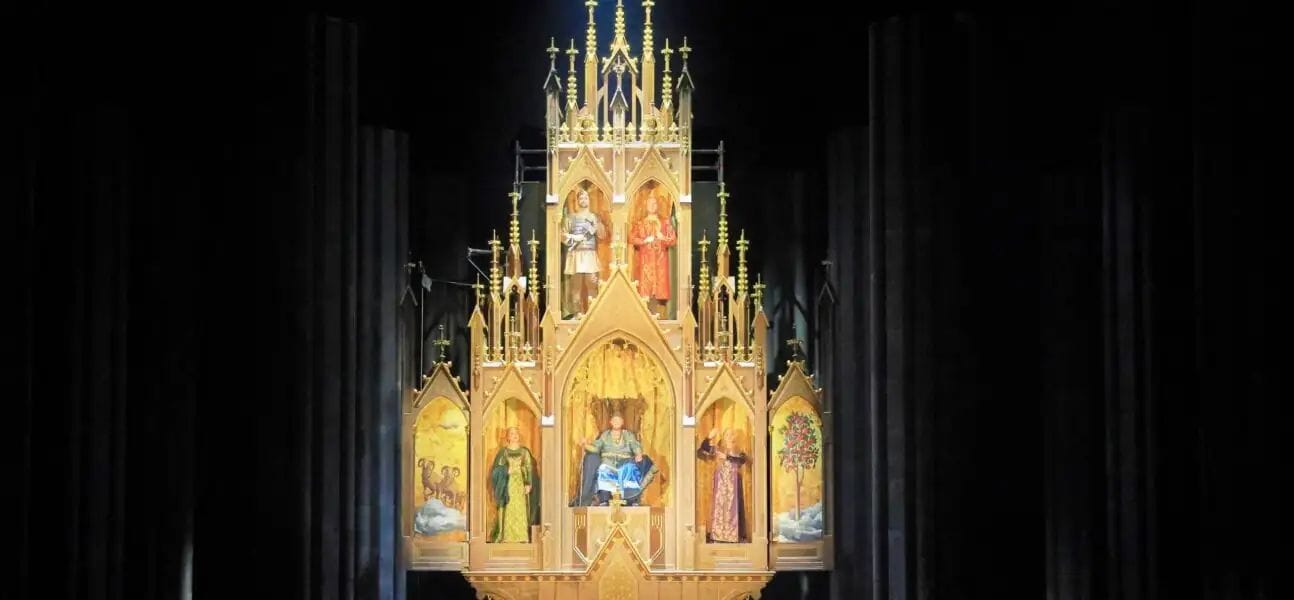
The Liceu is embarking on staging Wagner’s complete tetralogy. Four years, four operas and an unprecedented artistic and logistical challenge. The collaboration with Munich’s Bayerische Staatsoper marks a milestone. Barcelona will experience a unique Wagnerian event.
Barcelona is preparing for a musical occasion that will shape the cultural calendar for the coming years: the Liceu has decided to embark on the ambitious adventure of staging the complete tetralogy of Richard Wagner’s Ring of the Nibelung. This decision not only strengthens the city’s historic relationship with the German composer, but also represents a monumental challenge for the La Rambla theatre, its musicians and its public.
Over the next four seasons, each January or February, the Liceu will host one of the four operas that make up Wagner’s masterwork. Das Rheingold will open the cycle in 2027, followed by Die Walküre in 2028, Siegfried in 2029 and Götterdämmerung in 2030. The production, the result of collaboration with Munich’s Bayerische Staatsoper, promises a contemporary, realistic staging, far removed from abstraction and with nods to the present day.
The Liceu’s new music director, Jonathan Nott, will make his pit debut with this monumental score, while stage direction will be led by Tobias Kratzer, who has already left his mark in Munich and now brings his vision to Barcelona. The challenge is enormous: sixteen hours of music, an orchestra of extraordinary dimensions and the need to bring together voices capable of meeting Wagnerian demands.
The Liceu’s artistic management acknowledges that this project involves an unprecedented economic and logistical effort. The institution wants the city to feel involved in and proud of a tetralogy that aims to become a benchmark for a whole generation of enthusiasts. The undertaking comes after years without staging the complete Ring, despite the theatre’s Wagnerian tradition, and after failed attempts in previous decades.
Kratzer’s stage vision, inspired by Nietzsche’s famous phrase about the death of the gods, draws a parallel between mythical characters and contemporary figures, in a context of magical realism that connects with the present. For Nott, the experience of living through the Ring goes beyond musical knowledge: it is an inward and collective journey that invites reflection on life and human relationships.
With this decision, the Liceu not only revives one of the great works of the universal repertoire, but also challenges the city to immerse itself in a long-form artistic experience that promises to leave its mark on Barcelona’s cultural memory.
The Gran Teatre del Liceu, opened in 1847, is one of Europe’s most emblematic opera venues. Its history is marked by fires, reconstructions and programming that has combined tradition and the avant-garde. The Liceu’s relationship with Wagner dates back to the end of the 19th century, when the city became one of the main Wagnerian centres outside Germany. Over the decades, the theatre has hosted memorable productions and has been the setting for major international debuts, consolidating its prestige and central role in Barcelona’s cultural life.