
News
A map shows which Barcelona terraces have sun or shade each hour
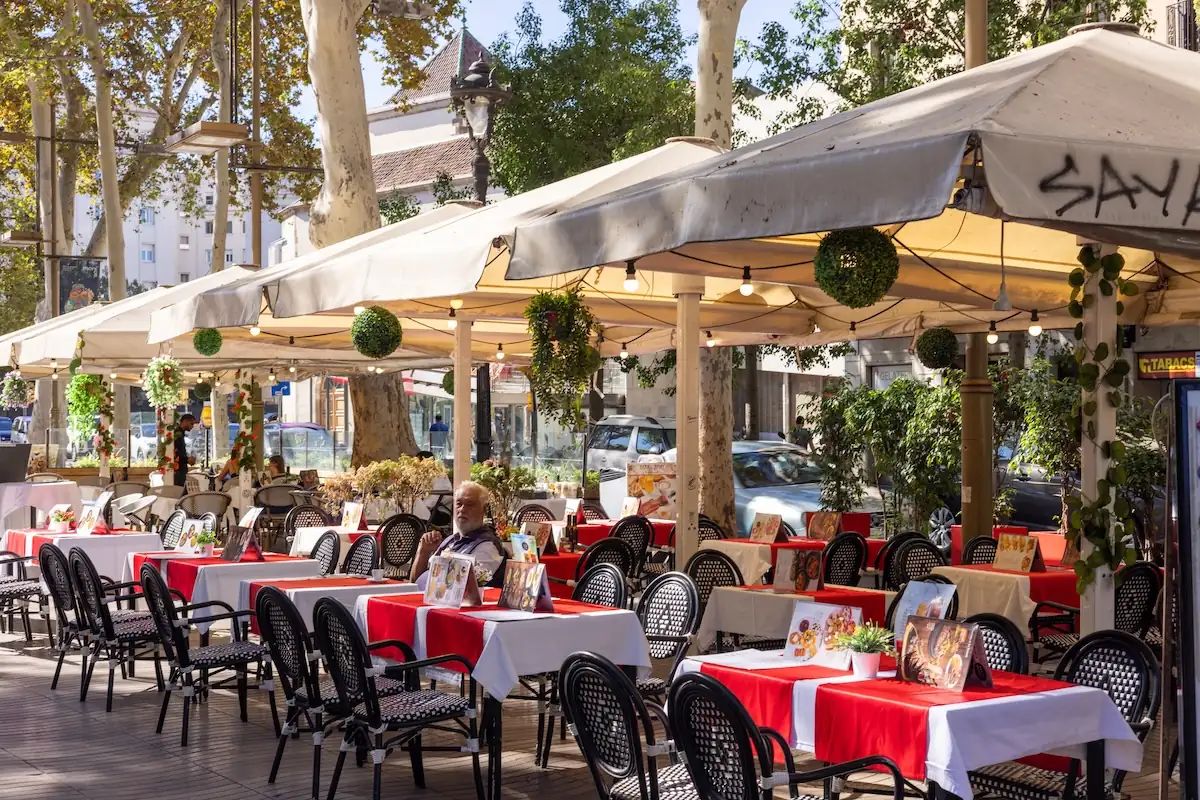
Choosing a terrace in Barcelona no longer depends only on whether there is a free table. With the heat approaching, another very practical question also matters: will there be direct sun or shade? A new interactive map lets people check before leaving home and see how light changes on thousands of terraces depending on the time of day.
The tool brings together 6,899 licensed terraces in Barcelona and was created by Josep Moragues, a journalist at RAC1. The system shows each establishment on the map and uses colours to indicate whether the terrace is in sun, shade, partial light, pending calculation or night-time hours.
Its appeal is that it does not offer a static image. Users can change the time slot and see how sun exposure evolves during the morning, afternoon or sunset. This is useful for anyone looking to have breakfast in the sun in winter, avoid a scorching table in July or find that middle point where there is still light but there is no need to squint.
The map includes a search tool to find specific bars, save favourite terraces and open the location in Google Street View. It also makes it possible to filter by neighbourhood, a particularly practical function in a city where two nearby streets can have very different conditions because of orientation, building height or road width.
The data reveal some curious clues. In the morning and until midday, Sant Andreu appears as one of the districts with the most sunny terraces, with areas stretching from La Sagrera towards Nou Barris. By contrast, Eixample has many terraces in shade, something quite logical because of its regular grid, chamfered corners and the height of its buildings.
In the afternoon, the map becomes less predictable. More terraces with partial sun appear, along with areas where the shade changes quickly: precisely the sort of information that can prevent a poor choice when the plan is to linger over a beer, coffee or meal without ending up moving your chair every ten minutes.
The idea connects with something very everyday in Barcelona: the terrace as an extension of neighbourhood life. Not all of them serve the same purpose or at the same time. There are tables suited to a cool morning, corners perfect for a vermouth in the sun and places that are only appreciated when the heat intensifies and the building opposite acts as a natural awning.
In a city where the weather determines a large part of plans, this map adds a new layer to the way people get around. It does not promise to find the best patatas bravas or the cheapest coffee, but it does answer a simple question that often defines the plan: sit in the sun, seek shade or choose precisely that point where it is still pleasant.