
News
Metro de Madrid steps up checks against street vendors
Those passing daily through stations such as Legazpi, Oporto, Plaza Elíptica or Pacífico have noticed a greater security presence at the entrances. Metro de Madrid has launched a special operation to curb street food vending, a practice that had become common at some heavily used points on the network.
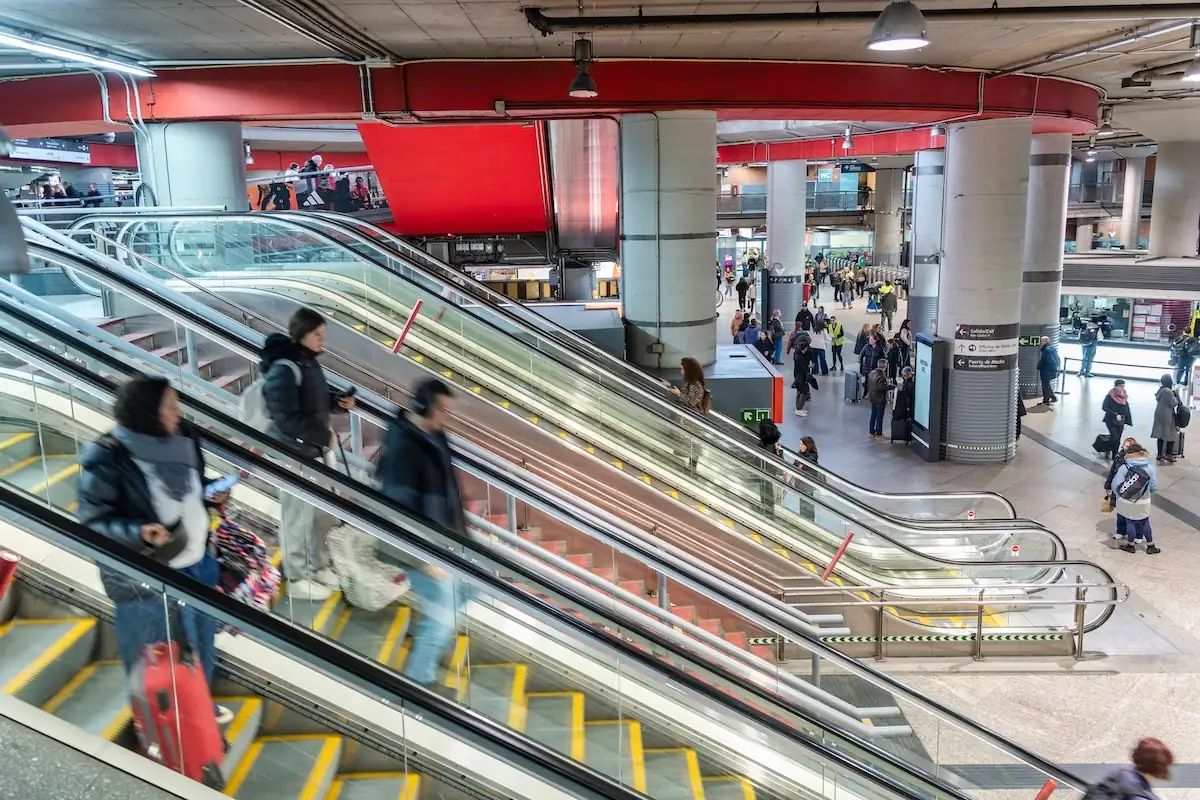
The measure seeks to prevent public-health problems and organise spaces where thousands of travellers cross paths every day. The checks are concentrated at busy stations, especially in southern areas and at interchanges where the number of people makes this kind of informal selling easier.
Over recent months, several sellers had set up with portable coolers and prepared food, including empanadas, arepas and other products popular among Latin American communities. They usually position themselves at entrances, on stairs or in passageways, taking advantage of peak travel hours and events with large crowds.
The operation began after the visit of Papa León XIV, during a week of high mobility in Madrid. In the first four days, security teams carried out 23 interventions to ask sellers to leave the facilities or their surroundings.
Metro has strengthened surveillance with plain-clothes officers and a fixed presence at the most affected entrances. There is currently no end date for the operation, which will continue while the activity persists at sensitive stations.
The sellers have also adapted their movements. In some cases, they stand on the final stretch of the stairs or alternate between the street and the interior to avoid both the Policía Municipal and underground security staff. According to the recorded interventions, most collect their belongings and leave without incident.
The phenomenon is not limited to southern stations. Cases have also been detected at Moncloa, Ríos Rosas and Avenida de América, especially alongside major events, when the flow of travellers increases and a larger customer base appears.
The increased checks offer a very concrete image of the Metro as a space where mobility, the informal economy and daily coexistence intersect. The network does not merely transport travellers: it also reflects social tensions that emerge in the city when many people seek income in places of transit and the administration tries to maintain rules of safety, cleanliness and shared use.
UPD: Metro identifies the main hotspots as Plaza Elíptica, Oporto and Legazpi, stations where much of the illegal food selling had been concentrated. The public company states that incidents have fallen from 37 during 2025 to 7 so far in 2026, a decline it attributes to continued checks and increased surveillance at the most sensitive entrances.