
News
A little-known Gaudí mosaic awaits urgent protection in Sant Andreu
Barcelona is full of Gaudí works that appear in guides, postcards and endless queues. But in Sant Andreu there is a much quieter piece, almost hidden under the feet of those entering the parish of Sant Pacià: a mosaic designed by the architect early in his career and which today raises concern because of its state of preservation.
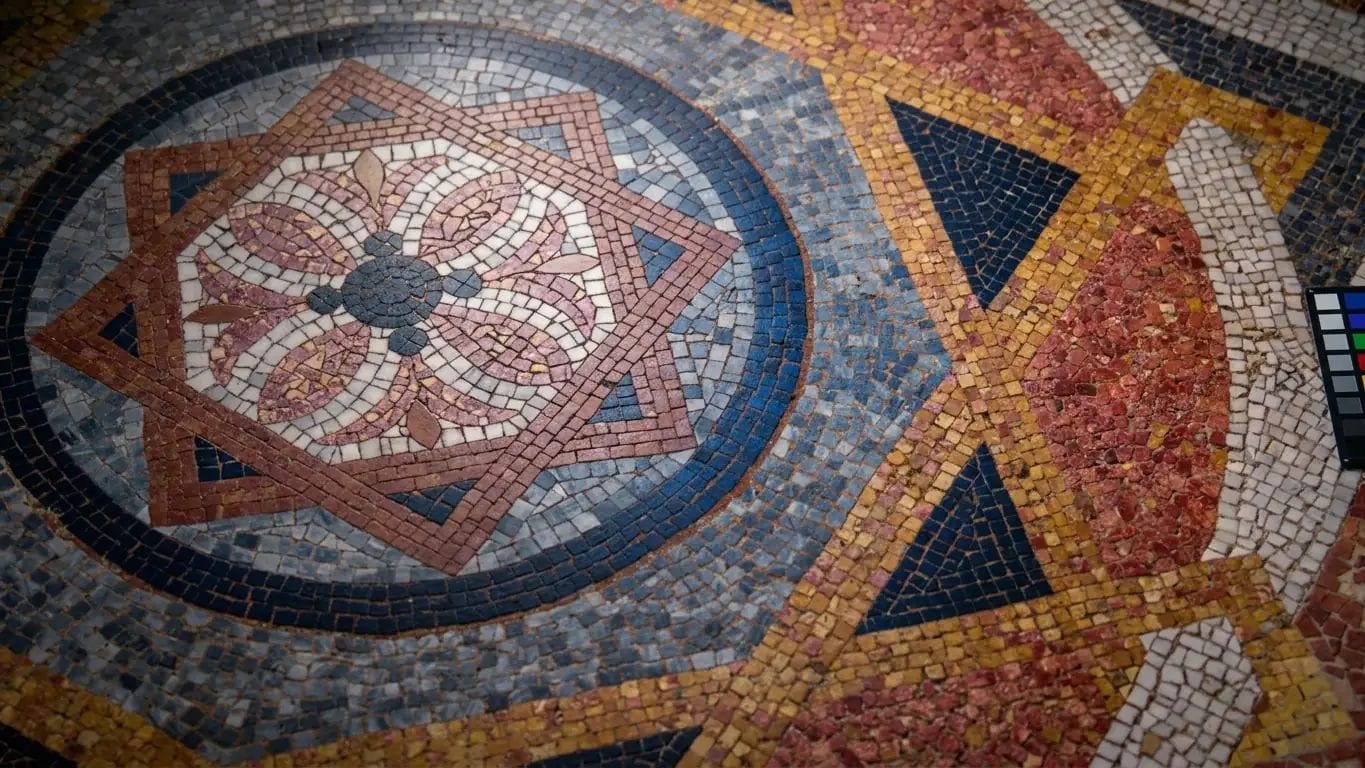
The paving covers the central nave of the church and is one of Antoni Gaudí’s earliest known interventions in the city. The commission came through Joan Torras Guardiola, the church’s architect and Gaudí’s former teacher. At the time, the building served as the chapel of the convent-school of the Religiosas de Jesús-María, which is why the design incorporates the initials J and M.
The work has historical value, but it does not yet have clear heritage protection. Its recent incorporation into the Consell Gaudí opens a door, although for now it is unknown what practical effects this will have or whether it will speed up a restoration. And the passage of time is beginning to show.
The last major intervention took place in the 1980s. Since then, the mosaic has been losing tesserae and some areas have been covered with plastic to prevent further deterioration. There is no timetable for a new restoration, which concerns those who understand the importance of this piece within the architect’s earliest period.
Sant Pacià does not appear on the usual Gaudí tourism circuit. It does not have the mass appeal of the Sagrada Família or the visual impact of Park Güell. Perhaps that is why the mosaic has survived as a neighbourhood secret: known to parishioners, local residents and a few specialists, but virtually invisible to much of Barcelona.
Gaudí also designed an altarpiece, furniture and lights for this space, although none of those survives. The furniture was moved by the nuns to other premises and the altarpiece disappeared during the Semana Trágica, when the church suffered a fire.
The church has had an eventful life. It was a convent chapel, a grain and pulse store after the fire, a parish church from 1923 and a public canteen during the Guerra Civil. Each stage left a different mark on the building, but Gaudí’s mosaic remains its most distinctive trace.
Sant Andreu preserves here a discreet but valuable part of Barcelona’s artistic memory. It is not a monumental work and does not seek to impress at first sight. That is precisely why it is so fragile: less visible heritage often depends most on someone looking at it in time.