
News
Madrid's secret bus museum reopens with more than 40 historic vehicles
Museo EMT Madrid began its second 2026 opening period this weekend. From 5 September to 28 November, the Fuencarral space again receives visitors on Saturdays, Sundays and public holidays with a collection of more than 40 historic vehicles linked to the capital's public transport.
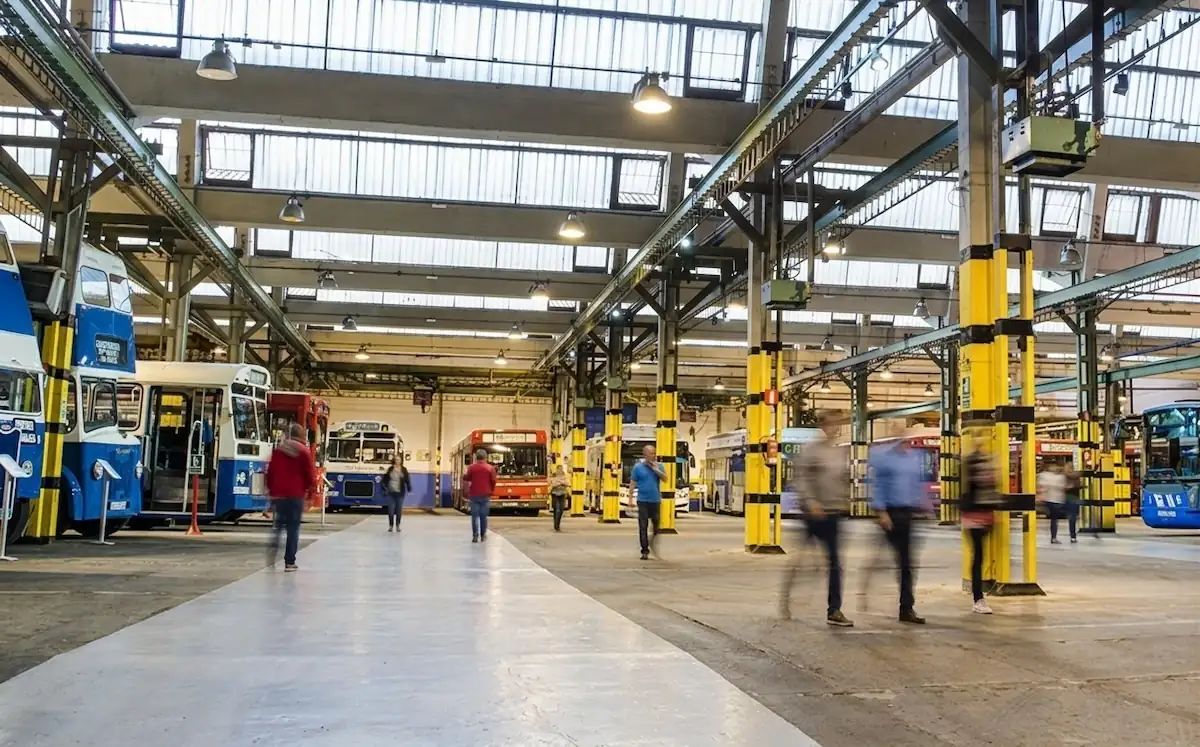
Among the most recognisable exhibits are the Guy Arab and Leyland Titan double-decker buses, the 1966 Pegaso 6035-A — the first articulated model to enter service in Madrid — and the Pegaso Sava 5720, one of the first minibuses that marked another era in the municipal network. The collection offers a journey through decades of technical and aesthetic changes without leaving a single hall.
There are also vehicles representing much more recent technological advances: EMT’s first bus powered by compressed natural gas, the first fitted with a hydrogen fuel cell, pioneering low-floor and hybrid models, and vehicles associated with the electrification of the fleet.
The main new feature for 2026 is the return of the articulated MAN NG313F to the exhibition, after approximately a year of comprehensive restoration. EMT is thus adding it to a collection that continues to grow as certain vehicles leave regular service and become part of the company’s historical heritage.
But the visit is not solely about buses. The former Nave de Conjuntos also houses engines and mechanical parts, bus shelters, seats, drivers’ and conductors’ uniforms, tickets, maps, photographs and historical documents. The route also includes a full-size replica of Belgian tram number 477, a model that operated in Madrid for much of the first half of the 20th century.
The building itself is part of the experience. The museum occupies the former Nave de Conjuntos del Taller General del Centro de Operaciones de Fuencarral, an industrial building dating from the 1950s and 1960s that remains part of an EMT workplace. For this reason, it is not possible to enter freely and explore it on your own.
Visits for individuals take place on Saturdays, Sundays and public holidays. During these first weeks of September, there are four time slots: 11:00, 12:30, 17:00 and 18:30, lasting approximately one hour. Tickets must be booked and purchased online in advance, and places are limited.
General admission costs 5 euros, while students, unemployed people, large families, people over 65, people with disabilities and other groups can enter for 3 euros. Children up to the age of four enter free, although they must be linked to an adult or concession ticket.
The museum is located at Mauricio Legendre, 40, within the Centro de Operaciones de Fuencarral. It can be reached from Chamartín by Metro, Cercanías and several bus routes. This second season will continue every weekend and public holiday until the end of November.