
News
The Museu de Ciències Naturals explores time with a unique exhibition in Barcelona
Discover how science and culture interpret time. The exhibition reveals secrets about memory and perception. Did you know that plants also sense time? Immerse yourself in a journey through history and relativity. Do not miss this experience in the Ciutadella.
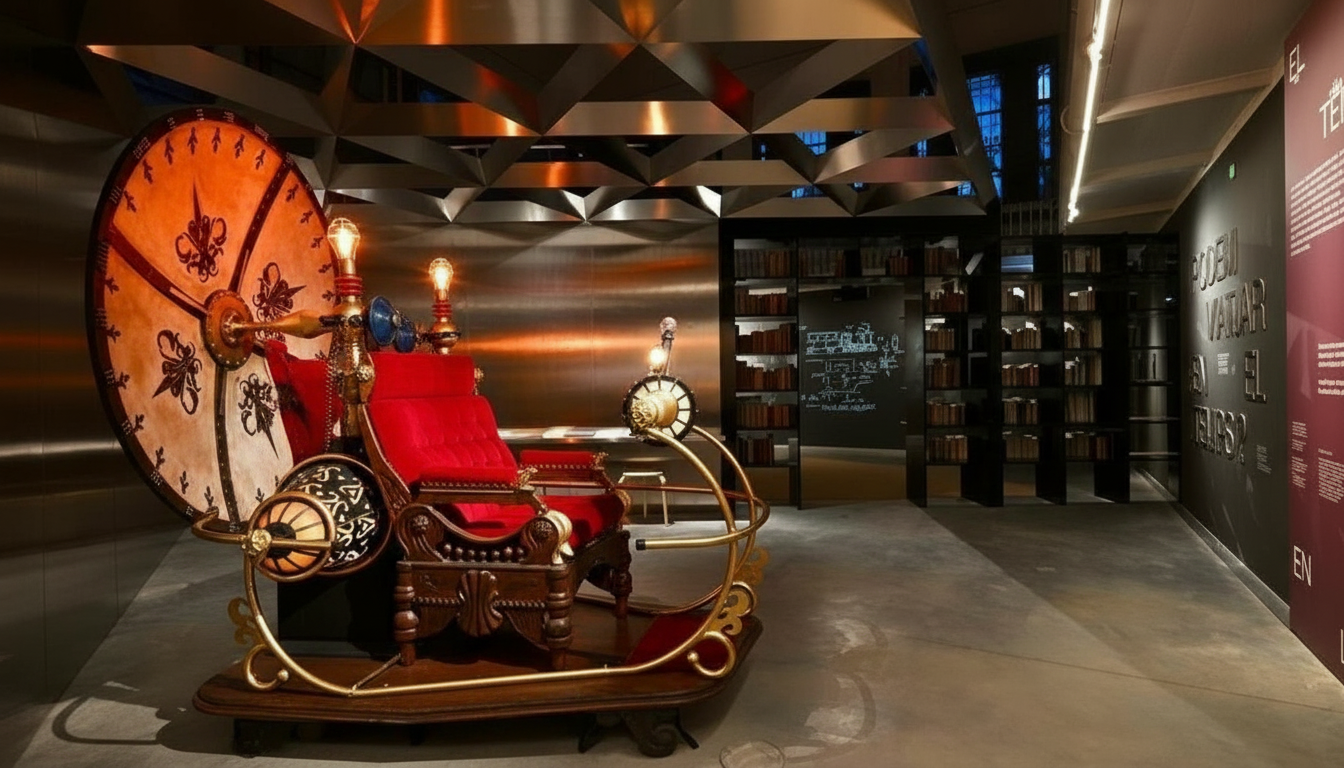
Discover how science and culture interpret time. The exhibition reveals secrets about memory and perception. Did you know that plants also sense time? Immerse yourself in a journey through history and relativity. Do not miss this experience in Ciutadella.
The Museu de Ciències Naturals de Barcelona presents 'The Invention of Time', an exhibition that invites visitors to immerse themselves in the fascinating universe of time from scientific and cultural perspectives. Available from 13 December 2025 to 30 September 2027, the exhibition is located in the renovated Centre Martorell d’Exposicions, in the heart of Ciutadella Park.
Curated by Ricard Solé, a physicist and biologist, the exhibition forms part of the Exposiciones Singulares programme and is integrated into the Ciutadella del Conocimiento project. The route is divided into two main areas: perceived time and constructed time.
In the first room, the visitor explores biological and evolutionary time, from the origin of the universe to human consciousness. Topics such as natural rhythms, memory and perception of the present are addressed, showing how living beings experience the passage of time.
The second room focuses on time as a cultural and scientific construction. Here concepts such as time measurement, relativity, time travel and chaos are explored, in a dialogue between physics, cosmology and philosophy.
Among the curiosities, the exhibition reveals that plants, although they lack a brain, can anticipate the future thanks to complex biological mechanisms. Seeds, for example, act as time capsules, waiting for the ideal moment to germinate.
The route also explains how the human brain reconstructs memories and uses past experiences to imagine the future. It highlights that in diseases such as Alzheimer's, the perception of time can be altered, and tests such as the clock test help detect these changes.
The exhibition reviews how different cultures have understood time: while in the West it is perceived as a line, many ancient civilisations conceived it as a cycle. In addition, the theory of relativity demonstrates that time can vary according to the environment, even behaving unusually near black holes.
The exhibition is full of questions and answers about one of the most enigmatic phenomena of existence. Tickets are already available on the museum's official website.