
News
Leganés promotes Puerta de Madrid with nearly 3,800 new homes
Leganés has taken an important step towards unblocking one of the municipality's major urban development projects. The Plenary Council has approved the reactivation of the Leganés Norte Urban Consortium, renamed Puerta de Madrid, with the aim of building around 3,800 homes in the coming years.
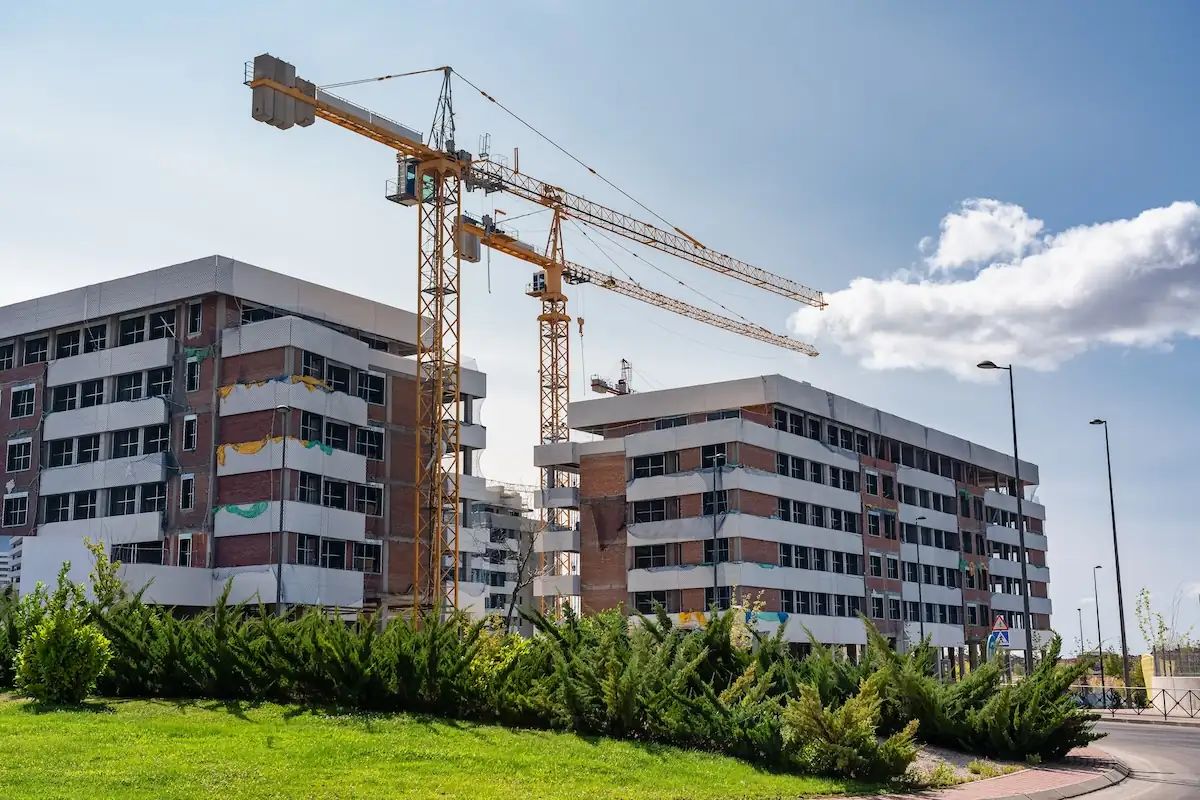
The future neighbourhood will be located between Leganés Norte and Arroyo Butarque, a strategic area for the city’s growth. The operation seeks to expand housing supply at a time when access to housing has become one of the main concerns for young families, workers and residents who want to keep living near Madrid without taking on ever-higher prices.
The project provides for 1,500 market-rate homes, another 1,500 for affordable rent under the Community of Madrid’s Plan Vive model, and 800 public-protection homes. This combination seeks to respond to different profiles: those who can buy on the open market, those looking for controlled-price rent and those who need protected housing.
The reactivation was approved with votes in favour from PP and ULEG. PSOE, Más Madrid and Podemos voted against, while Vox abstained. The municipal debate once again showed differences over how Leganés should grow, what role public housing should have and how to prevent new neighbourhoods from being born without sufficient services.
Mayor Miguel Ángel Recuenco frames the operation within the Leganés 25-40 Transformation and Development Strategy, a roadmap through which the City Council seeks to modernise the city and prepare new residential, economic and urban spaces for the coming decades.
Puerta de Madrid will not merely be a collection of flats. The development will change the balance of the municipality’s northern area and will require careful planning of connections, public transport, schools, health centres, green spaces and facilities. The arrival of thousands of new residents may energise the area, but also increase pressure on existing services.
Its location between Leganés Norte and Arroyo Butarque gives the project a linking role between established neighbourhoods and new growth. For many families, it could become an alternative to central Madrid prices without moving too far away from the capital or losing connection with the metropolitan area.
Southern Madrid has experienced growing tension for years between demand for housing, urban expansion and the need for services. Municipalities such as Leganés absorb part of that pressure, but every new development raises the same question: whether homes, transport and facilities will arrive at the same time, or whether residents will have to wait years for the neighbourhood to function properly.
Approval of the project now opens a decisive stage. On paper, Puerta de Madrid promises more housing and new opportunities for the municipality. In practice, its success will depend on something less visible but fundamental: that the neighbourhood is not born merely as a residential enclave, but as a liveable, connected area designed for everyday life.