
News
Palau de Pedralbes to become the Generalitat's second headquarters
Palau de Pedralbes is preparing for one of its most significant transformations in recent decades. The iconic building in Les Corts will be renovated to become the Generalitat's second headquarters, a change that will affect both its institutional use and the way it interacts with its surroundings.
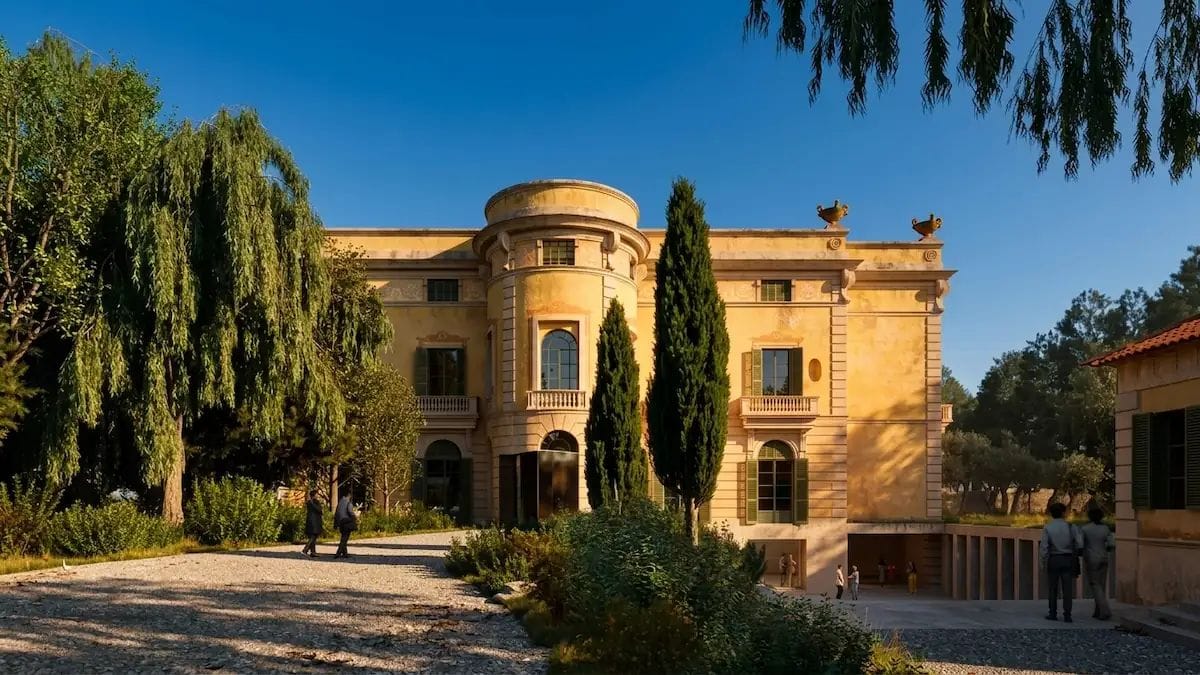
The winning project has been presented by the team made up of F87 Arquitectura e Ingeniería Facilities SLP and Brullet-de Luna i Associats SLP. Their proposal will serve as the basis for drawing up the definitive project for an intervention that seeks to combine heritage, energy efficiency and new workspaces.
One of the most visible changes will be the new access from Jordi Girona Street. The entrance will be accompanied by welcome gardens and a reorganisation of outdoor routes, with the intention of making access to a complex that has until now operated in a more closed and ceremonial way clearer and more welcoming.
The project also provides for the creation of themed courtyards, such as the orange-tree courtyard and the olive-tree courtyard, as well as a celebration garden in the western area. The operation seeks to ensure that the surroundings of the palace are not merely a green setting, but an active part of the new institutional headquarters.
Inside, the refurbishment will reorganise the spaces around a central axis with light wells. The building will incorporate offices, meeting rooms, flexible institutional areas, representational areas and accommodation intended for authorities.
The roof will also play a prominent role. The project presents it as a “fifth façade”, with vegetation and spaces to linger, reinforcing the idea of a building that is more efficient, greener and better adapted to current climate requirements.
The intervention will prioritise the conservation of the palace’s original elements. Wall coverings, murals and decorative details will be restored, with the aim of updating the building’s use without erasing the historical layers that have shaped its identity.
Sustainability will be another central axis. The refurbishment aims to minimise energy consumption and bring the building closer to emissions neutrality, a particularly complex challenge in a historic property that will have to adapt to new administrative uses.
The timetable will still be long. Once the contract has been definitively awarded, the team will have nine months to deliver the final project. Works could begin in 2028 and finish in 2030, with phased execution to allow the building to remain active during the process.
Palau de Pedralbes has a history of constant changes. It began as a farmhouse in the 17th century, was acquired by the Güell family in the 19th century and underwent one of its major refurbishments with the intervention of Antoni Gaudí. It later became a royal residence, a headquarters linked to the Republic, Franco’s residence and an institutional space.
Now, the building is changing stage again. Its conversion into the Generalitat’s second headquarters will strengthen the institutional weight of Les Corts and raise a new question about the future of Barcelona’s major historic buildings: how to make them useful to today’s city without turning them into mere backdrops from the past.