
News
Barcelona transforms La Mar Bella with more greenery, sport and space by the sea
La Mar Bella is facing a transformation that will change one of the most used stretches of Barcelona’s seafront. The future Parc Litoral will gain vegetation, shade and sports spaces and will provide continuity to the promenade between Pavelló de la Mar Bella and the Fòrum, with works extending over the coming years.
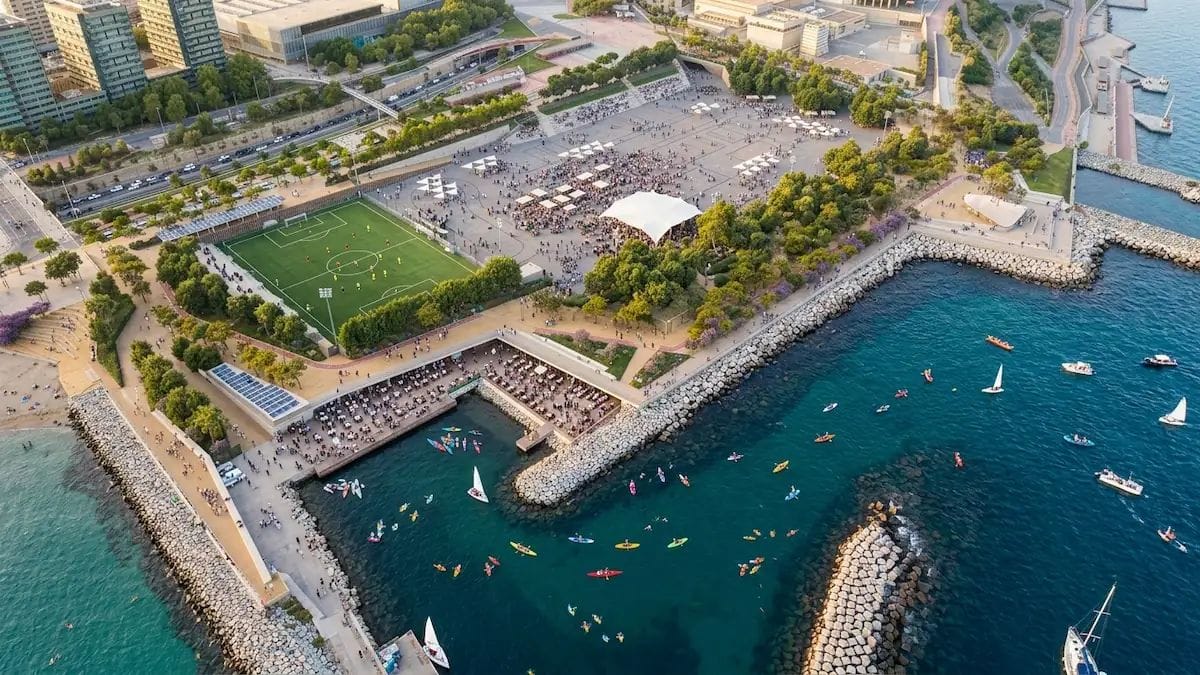
The first major intervention is concentrated around Mar Bella, where the aim is to replace part of the hard surfaces with a greener, more permeable landscape. The project includes new trees and vegetation adapted to the coast, as well as spaces for resting and spending time by the sea, rather than merely passing through on foot or by bicycle.
Sport will continue to play an important role. The reorganisation of the space will make it possible to incorporate new courts and improve areas for activities such as volleyball, maintaining the sporting character this section of Sant Martí already has. The intention is for these facilities to coexist with green areas and pedestrian routes.
Another important change will concern the connection between neighbourhoods. The continuity of the seafront promenade will make travel between Poblenou, Mar Bella, Besòs and Fòrum easier and eliminate some of the points where the route currently loses continuity or is unfriendly to pedestrians and cyclists.
The transformation also responds to an increasingly visible problem in Barcelona: heat. More trees, permeable surfaces and shaded areas will help reduce exposure to the sun along a coastal strip where open, paved spaces are still abundant during the summer months.
The City Council plans to allocate around €10 million a year over the next five years to actions linked to the transformation of the coast. The first phases will progress sooner, but the entire process extends to a horizon of 2030 and 2031.
The operation therefore goes far beyond renewing a promenade. Barcelona seeks progressively to turn its seafront into a corridor with more nature and better prepared for rising temperatures and the effects of climate change, without losing the sporting and leisure uses that bring together thousands of people throughout the year.
Mar Bella is once again becoming a site of urban transformation more than three decades after the Olympic Games. This time, the change is not about opening the city to the sea, but making the space left between them more liveable: less asphalt, more shade and a coastal route also designed for the everyday life of neighbourhoods.