
News
The expansion of Línea 11 divides the north of Madrid
The expansion of Línea 11 has reignited a deeper debate about how the Metro de Madrid should grow. The new route towards Valdebebas, IFEMA, Hospital Isabel Zendal, the future Ciudad de la Justicia, and T4 of the airport strengthens growing areas, but leaves out established northern neighbourhoods that have been waiting for a cross-city connection for years.
The project presented by the Community of Madrid breaks with the original idea of turning Line 11 into a second circular line. Instead of advancing towards neighbourhoods such as Sanchinarro, Las Tablas or Barrio del Pilar, the new approach heads towards centres of economic, healthcare, judicial, exhibition and airport activity.
The planned investment amounts to 880.6 million euros and includes a 7.2-kilometre section between Mar de Cristal and Valdebebas Norte. There will be four new stations: IFEMA-Cárcavas, Ciudad de la Justicia, Hospital Enfermera Isabel Zendal and Valdebebas Norte.
The regional government argues that the change responds to Madrid’s new urban reality. According to the Department of Housing, Transport and Infrastructure, the route conceived decades ago no longer fits a city that has shifted part of its growth towards new residential developments and major facilities.
The explanation does not convince neighbourhood associations and mobility experts. Their criticism points to a very specific issue: Madrid gains connections to expanding areas, but loses the opportunity to resolve cross-city journeys between dense northern neighbourhoods that still depend on long interchanges and indirect routes.
Sanchinarro, Las Tablas and Barrio del Pilar emerge as the major absences from the new map. They are areas with established populations, daily activity and known problems of rail connection, especially for travel between the east and west of the north without passing through the centre.
Civil engineer Samir Awad Núñez has questioned the abandonment of the line’s semicircular logic and warns that the city may be wasting a strategic opportunity. Neighbourhood associations insist that they do not oppose taking the Metro to Valdebebas, but demand that already inhabited neighbourhoods should not once again be left in the background.
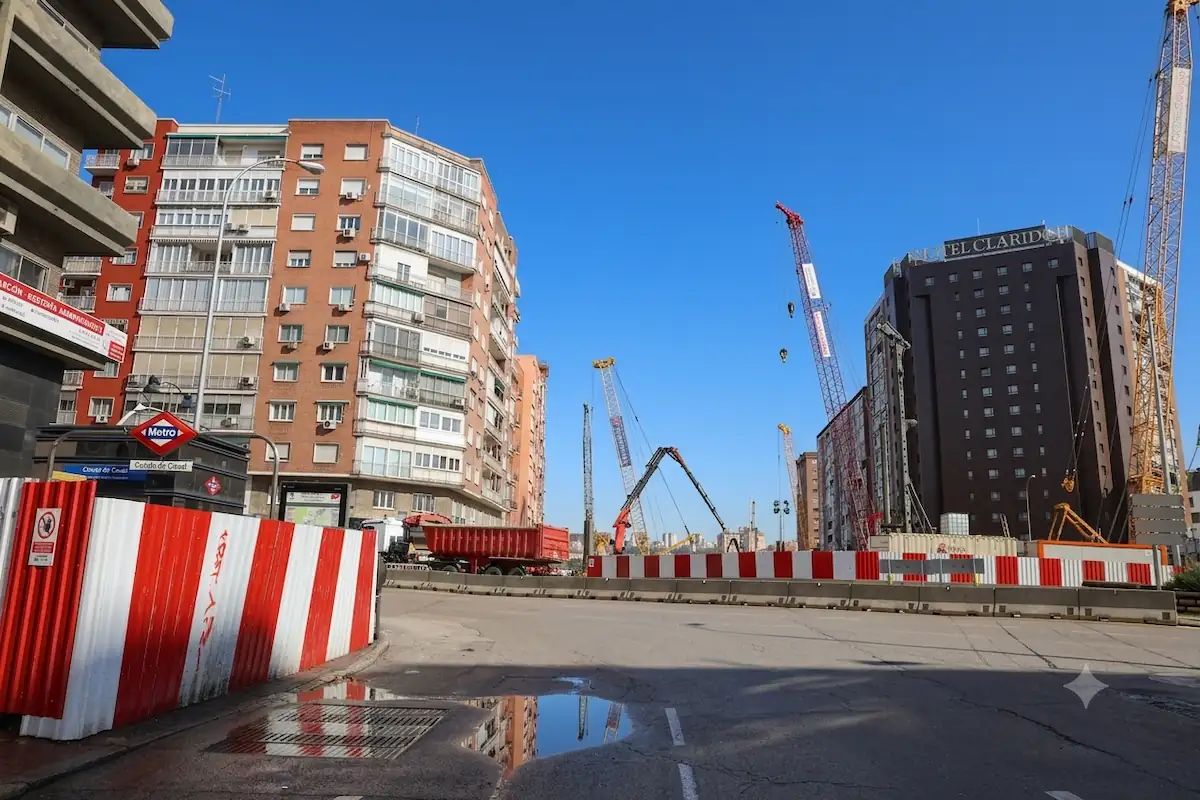
While work progresses on the southern section between Plaza Elíptica and Conde de Casal, the debate about the north remains open. Line 11 is no longer only a Metro extension: it has become a discussion about which Madrid is connected first, which neighbourhoods wait longer and to what extent the network should follow new developments or correct old deficits.