
News
Madrid unveils the train set to transform the experience on L6
Madrid now has its first new-generation automatic train for the Metro. The unit has arrived in the capital as the first step in a renewal that will change the experience on L6, the circular line, one of the busiest and most demanding in the entire network.
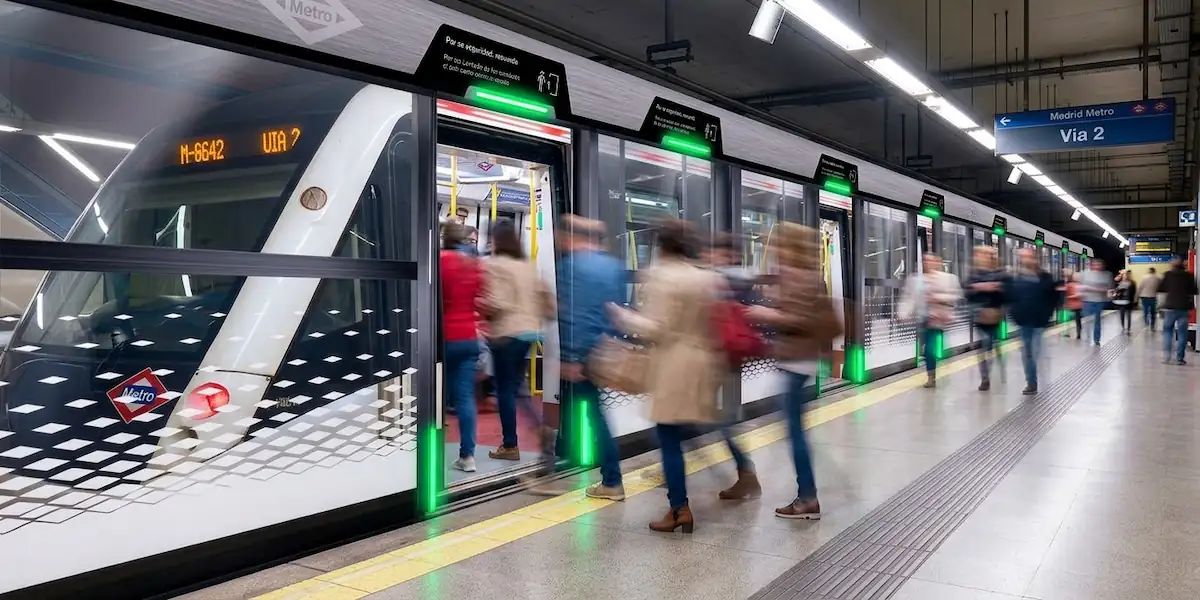
The train is intended for the future automation of L6, although it will first be tested at night and manually on lines 10, 11, and 12. These trials will allow its performance to be assessed without affecting regular service or passengers’ daily journeys.
The design stands out from the start. With no driver’s cab in its final configuration, the front features a large panoramic window, offering views of the tracks and stations along the route—an unusual sight until now on Metro de Madrid.
Each unit will have six carriages connected by wider corridors. The interior offers more space, improves movement between carriages, and is designed to better handle rush hour, when L6 sees thousands of journeys between interchanges, universities, hospitals, and densely populated neighbourhoods.
Capacity is also increased. The new trains can carry up to 1,385 passengers, with 165 seats, which is about 17% more than current trains. This improvement will be key on a line where every minute of waiting and every free metre inside the carriage matters.
Automation will allow frequencies of up to one train every two minutes during peak demand. With this, L6 could raise its daily capacity to 731,000 passengers—a figure aimed at meeting Madrid’s growing mobility needs without relying solely on expanding platforms or stations.
Sustainability is also part of the change. The trains feature more efficient traction systems and regenerative braking, able to return energy to the grid and reduce consumption by up to 20%. Materials have also been chosen with future recycling in mind.
The arrival of this first train offers a clear picture of the Metro Madrid is preparing: more capacity, more frequent service, and a different experience for users. L6 will be the first major testing ground for this transformation, but the technological leap points to a network that is more agile, efficient, and ready for a city that is on the move.