
News
Palacio de la Música turns 100 amid promises to reopen
Palacio de la Música turns 100 in a situation difficult to explain to many people from Madrid: closed, fenced off and silent in the heart of Gran Vía. Thousands of people pass its façade every day without being able to enter one of the buildings that for decades formed part of Madrid’s cultural memory.
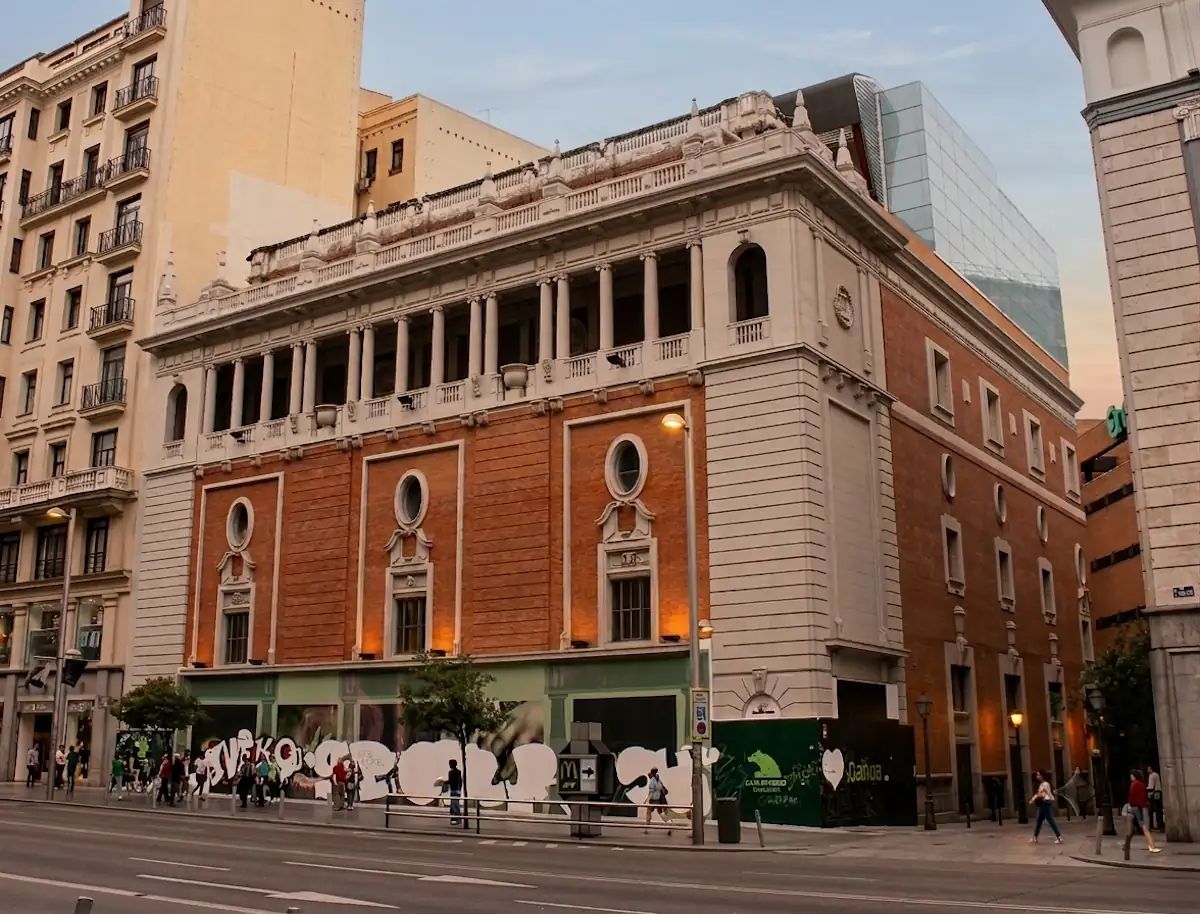
The building, inaugurated in 1926, was conceived as a concert hall and cinema. Its architect, Secundino Zuazo, designed an ambitious space for a Gran Vía that was beginning to establish itself as the axis of the capital's leisure, premieres and modern life.
For much of the 20th century, the Palacio de la Música was far more than a venue. It hosted concerts, major films and premieres that became associated with several generations of people from Madrid. Titles such as Gone with the Wind or Gilda form part of that shared memory of seats, queues and cinema nights in the centre.
It closed in 2008, amid the transformation of the old cinemas on the Gran Vía. Since then, the building has become a symbol of waiting, postponed projects and debates about what central Madrid should be: a commercial showcase or a place where culture still has its own space.
Its recent history has been long and frustrating. There was talk of turning it into a shop, then of restoring its cultural use, and later of refurbishing it as a theatre and performing-arts space. The City Council even approved that route in 2020, but the works never really got under way and the timetable was once again left up in the air.
The Fundación Montemadrid, owner for years, acknowledged that it was still looking for a viable management model and that the refurbishment had to adapt to heritage requirements. Meanwhile, the Palacio remained closed, like a huge part of the Gran Vía waiting its turn.
The change came with the arrival of the Swiss investment group Zephyros, which acquired the building with the commitment to retain its cultural use. The project proposes a comprehensive renovation over three years, with more than 7,000 square metres, a large hall for 1,200 people expandable to 1,800, and a programme combining music, theatre, exhibitions and conferences.
The possible reopening would not be just another construction project in the centre. It would mean restoring activity to an icon that recalls the Gran Vía of cinemas, theatres and premieres, before many cultural façades gave way to shops and commercial uses.
The Palacio de la Música reaches its centenary as an unfulfilled promise. Madrid does not need to recover it out of nostalgia, but because the Gran Vía gains meaning when its historic buildings are not just scenery, but living places where something can still happen.