
News
The hidden palace in the Laberint d’Horta reopens free visits until 2027
Palau del Marquès d’Alfarràs will once again receive free guided visits from this Wednesday 2 September. The building, hidden within the Laberint d’Horta setting and closed to the public for decades, can be visited on Wednesdays and Sundays until June 2027, with prior booking and small groups.
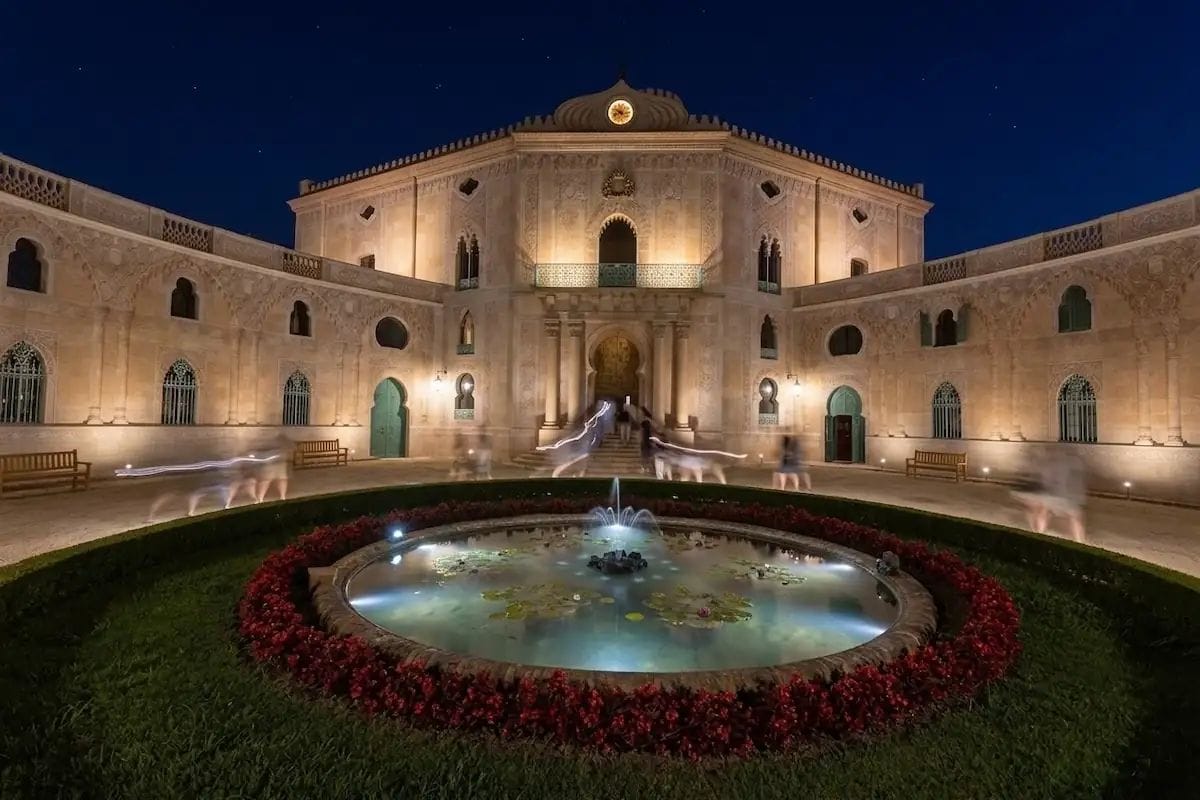
There are two sessions each day, at 10:30 and 12:00, and each tour lasts approximately one hour. The maximum capacity is 25 people and, in order to take part, you must first fill in the form set up for the visits and wait for confirmation by email. The programme will be interrupted during the Christmas and Easter holidays.
The September opening is not for a new refurbishment of the building. The palace was already restored and opened to visitors for the first time in June 2025; what begins now is a new cycle that extends that experience throughout the 2026-2027 academic year. The City Council has also contracted a permanent service to ensure the continuity of these tours over the coming years.
Going inside makes it possible to discover a building quite different from what can be guessed from the gardens. Before the works, it had sunken roofs, leaks and very degraded interior areas. The intervention, of around €4.7 million and carried out over more than 3,000 square metres, consolidated the structure, restored façades and heritage elements and protected the historical parts that had been preserved.
Its history begins long before the famous labyrinth. Within the complex is Torre Sobirana, an old watchtower whose origins date back to the eleventh century and which is protected as a Bé Cultural d’Interès Nacional. The current palace was subsequently transformed and became closely linked to the Desvalls family.
It was Joan Antoni Desvalls, Marquis of Llupià, del Poal and Alfarràs, who, at the end of the eighteenth century, promoted the Neoclassical garden that would end up becoming the estate's most recognisable image. Laberint d’Horta was designed from 1791 onwards with the collaboration of Italian architect Domenico Bagutti and uses sculptures and mythological references to create a route around love and the myth of Theseus.
Visiting the palace, however, does not mean that the plant labyrinth is open again. That part of the garden remains closed for a complete refurbishment involving the replacement of 2,211 cypresses, renewal of the paving and irrigation, and restoration of sculptures. The current forecast is that it may reopen at the beginning of 2027, once the new specimens have taken root. Access to Collserola's natural environment also continues to be subject to restrictions linked to African swine fever.
There is another reason to visit this September. Until the 27th, the palace itself is hosting free of charge the exhibitions Nicolau Maria Rubió i Tudurí (1891-1981). Lliçons de paisatge and Atlas Re-Edificatòria, linked to Barcelona 2026 World Capital of Architecture. The first can be visited from Thursday to Sunday, from 10:00 to 19:00.
Part of Palau d’Alfarràs also has another, less well-known use: since 1993, it has housed the Centre de Formació del Laberint, dedicated to gardening, agriculture and biodiversity courses. The building and gardens have been municipally owned since 1968, but for decades much of the palace remained inaccessible. Now, to join the Wednesday and Sunday visits, the key will be to book in advance: each session has only 25 places.