
News
Parc de Joan Miró faces a refurbishment with more vegetation
Parc de Joan Miró is set for a thorough remodelling to add greenery, improve water management and organise its uses better. The City Council has presented an initial proposal to local residents that incorporates some of the demands raised during the participatory process.
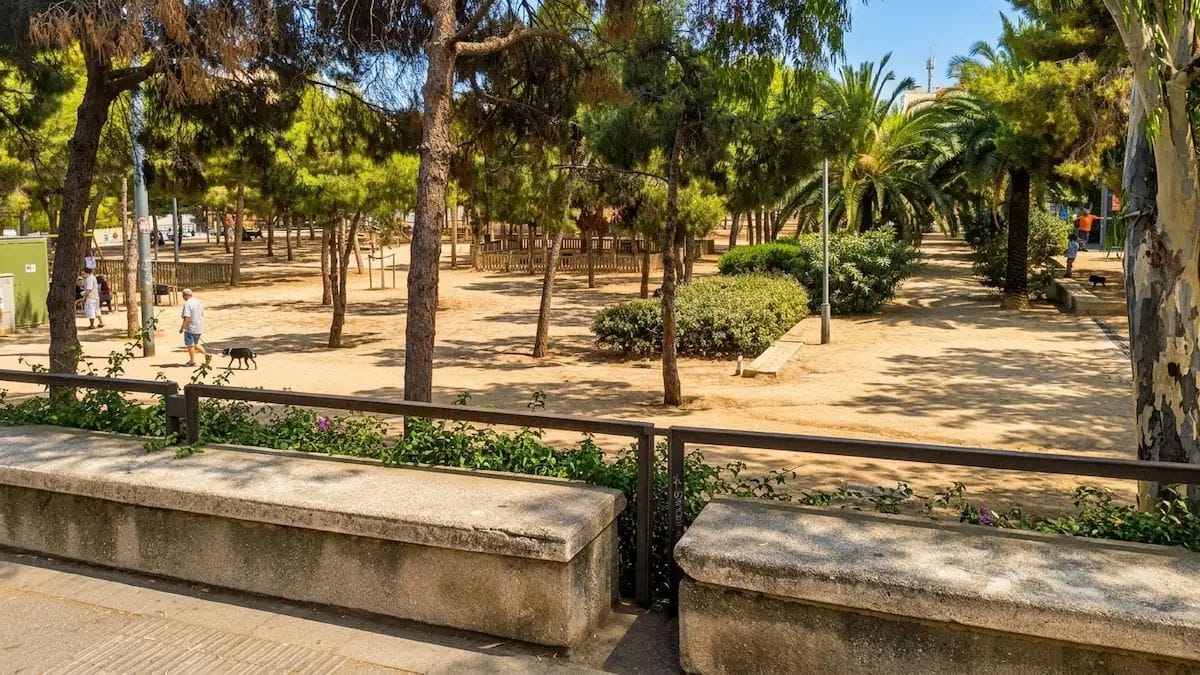
One of the main changes will be underground. The subsoil, still affected by the remains of the former slaughterhouse, will be renewed in areas without tree cover to facilitate water retention and allow new species to grow.
The refurbishment will favour more diverse vegetation, with deciduous trees and shrubs capable of providing shade, colour and changing scenery throughout the year. The aim is to reduce the feeling of a hard-surfaced square and reinforce the park's green character.
The presence of the underground car park will continue to limit planting in part of the site. Above that area, the plan is to retain a harder surface that functions as a civic hub, meeting point and space for activities.
The sports courts, water-play facilities and dog area will change location. The dog area will move away from the library, while sports and play spaces will be concentrated near the future central square.
The pergola will recover its role as a place for shade and rest. The internal paths will be made of earth and barriers will be removed to make it easier to move between the different areas, although the conditions of the surroundings prevent more entrances to the park from being opened.
Water management will be another focus of the project. The proposal provides for reusing up to 80% of the water collected within the site, a measure intended to reduce losses and maintain vegetation more efficiently.
Drafting of the final project will begin in September and the works will be carried out in phases. The planning will have to coexist with the presence of the Fire Brigade, expected at least until 2031, and with the L8 de Ferrocarrils works currently affecting part of the park.
The change will leave a less fragmented space with more shaded areas in one of the busiest parts of the Eixample. The key will lie in how vegetation, sport and neighbourhood uses coexist around the Dona i Ocell sculpture.